

Carding Attack Detection: 5 High Confidence Signals for Fraud Ops

Last updated on September 23, 2026 · 10 min read
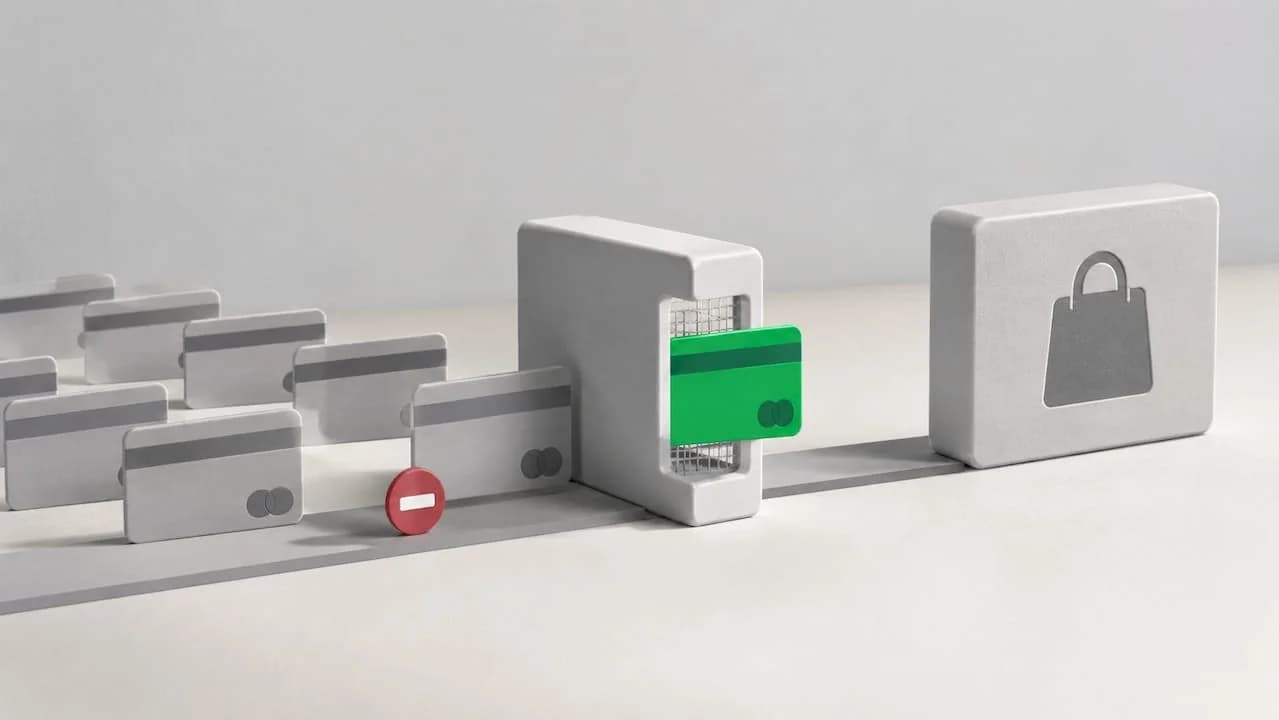
Early detection of carding attacks involves monitoring key signals in real time, such as spikes in declines, a high number of unique cards from a single device or IP, and a series of low-dollar or $0 authorizations. The correct posture is layered, signal-driven monitoring paired with step-up controls, not a single rule or a hard IP block. The first action for any fraud team is to instrument decline-rate and unique-card-rate alerts today, then build outward into device signals, velocity limits, and an incident playbook.
TL;DR:
- Monitoring spikes in decline rates, high unique-card attempts, and rapid $0 authorizations can help detect carding activity early.
- Attack scripts distribute low-dollar tests across many sessions and rotate device fingerprints to evade IP-based blocking.
- Combining velocity limits, AVS/CVV checks, and behavioral analytics offers effective layered controls without harming legitimate customers.
- Persistent device fingerprinting and risk scoring improve detection of rotating proxies and proxy-based attempts.
- Quick response steps include throttling, requiring verification, refunding low-dollar approvals, and updating rules to prevent future attacks.
What Carding Attack Detection Actually Protects Against
Carding, also called card testing or card validation, is the practice of running stolen card numbers through small or zero-dollar transactions to confirm which ones are still active. Fraudsters buy card data in bulk and need to sort live cards from dead ones before attempting a real purchase or resale, and your checkout page is the cheapest way to do that sorting.
The lifecycle matters because the testing phase is quiet compared to what follows. Once a batch of cards is validated, the same actor or a buyer downstream moves to larger purchases, gift card conversion, or resale, and that's when chargebacks, processor fees, and reserve holds start landing on the merchant. A single testing wave can also trigger acquirer scrutiny that raises your processing costs across the board. Catching the pattern during the low-dollar testing stage, before cash-out, is what separates a minor blip in your decline logs from a payments account under review.
These checks sit alongside payment-specific controls. The payment gateway fraud detection guide explains the responsibilities of the browser, merchant application and processor.
How Carding Attacks Are Carried Out
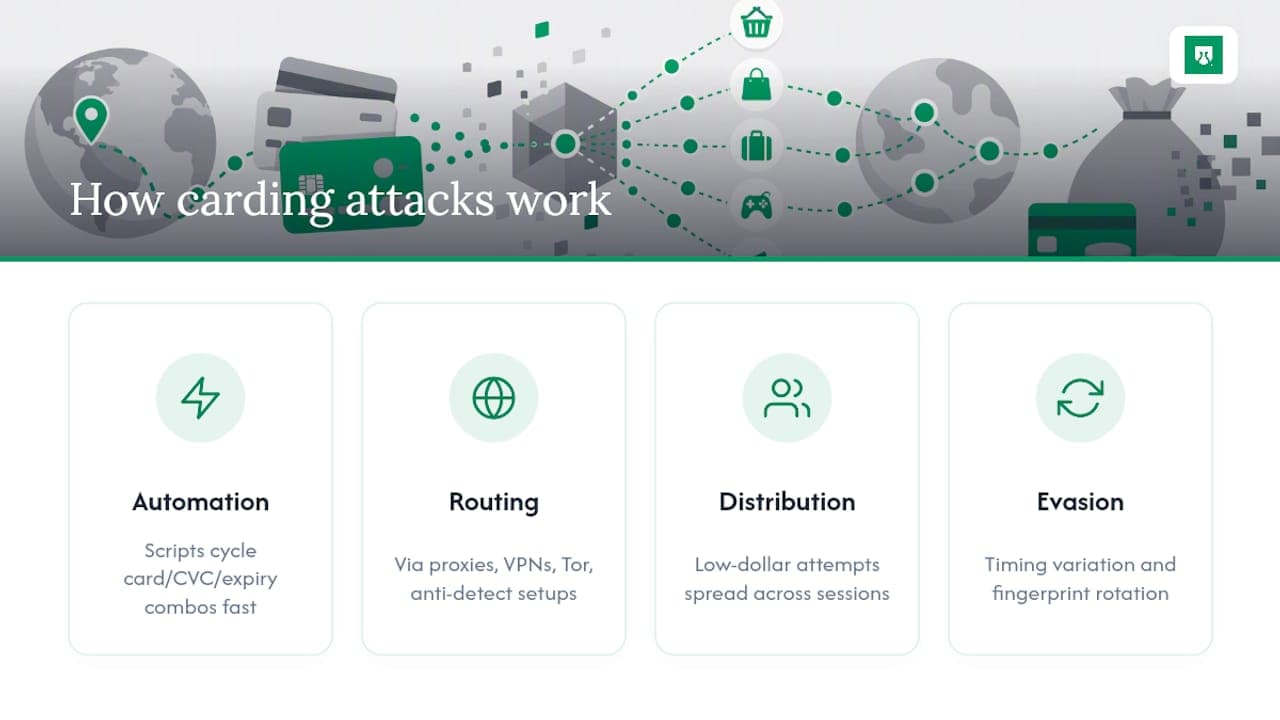
Card testing rarely looks like a person typing card numbers by hand. It's automated: scripts cycle through card number, CVC, and expiry combinations at a pace no human checkout flow would ever produce, often against a payment form or a lightweight endpoint that returns a fast authorization response.
Fraudsters route this traffic through proxies, VPNs, Tor exit nodes, and anti-detect browsers specifically to defeat IP-based blocking. Block one IP range and the traffic reappears from a residential proxy pool minutes later.
The smarter operations also spread attempts thin. Instead of hammering one endpoint with thousands of requests, they distribute low-dollar attempts across many sessions, vary the timing to avoid obvious bursts, and rotate device fingerprints where they can. Card testing is often automated and evasive by design, which is exactly why proxy and bot infrastructure shows up as a recurring theme in how these attacks scale. A team that only watches for volume spikes will miss the version built to stay under that threshold.
High-Confidence Signals to Instrument and Monitor
Not every failed payment is fraud, but certain patterns almost always are. These are the signals worth wiring alerts around first:
- A surge in declines, especially clustered around specific reason codes like expiry mismatch, incorrect CVC, or generic_decline. Stripe's own guidance flags decline spikes and retry patterns as a primary indicator of testing activity.
- A rapid unique-card-rate from a single IP, device, or session, meaning one source attempting many different card numbers in a short window.
- Repeating tiny transactions or $0 authorizations, particularly in quick succession on the same product or checkout path.
- Incremental field cycling, where the same card number reappears with a slightly different CVV or expiry date, suggesting a script guessing the missing digits.
- New account creation or card-addition spikes tied to one device fingerprint, which points to a single actor spinning up multiple identities to spread out attempts.
None of these signals is damning alone. A retail flash sale can also produce a decline spike. What makes carding recognizable is the combination: high unique-card-rate plus abnormal decline codes plus a single device or network fingerprint behind it.
Controls That Stop the Testing Before It Scales
Detection only matters if it feeds controls that actually slow the fraudster down. Here's the order that tends to work without wrecking checkout conversion:
- Rate and velocity limits on the endpoints that matter most: new-customer signup, payment tokenization, and the checkout submission itself. Cap attempts per IP, device, email, and billing address, not just per account.
- AVS and CVV verification on every transaction, and keep decline messages generic. Telling a script exactly which field was wrong (address vs. CVV vs. expiry) hands fraudsters a debugging tool.
- CAPTCHA placed strategically, not on the first attempt for every user, but triggered after a failed authorization or when velocity thresholds are crossed. Front-loading CAPTCHA on every visitor punishes legitimate customers for no reason.
- Device fingerprinting and persistent visitor identification to link attempts across sessions, even when the fraudster clears cookies or rotates IP addresses between tries.
- Behavioral analytics and risk scoring used to step up verification rather than hard-block outright. A borderline score should trigger 3D Secure or a manual review queue, not an automatic decline that also alienates a real customer whose card just happens to look unusual.
Mastercard's guidance on merchant response echoes this stack directly, recommending AVS/CVV checks, velocity limits, and device signals as complementary layers rather than standalone fixes.
Pro Tip: Never combine CAPTCHA with a blunt IP block as your only defense. Stripe and other processors have found that layering velocity controls and server-side limits catches far more testing activity than either control does alone, because fraudsters rotate IPs faster than most teams can update a blocklist.
Building the Telemetry and Alerting Behind Real-Time Detection
Detection signals are only as good as the data feeding them. At minimum, log authorization responses, decline codes, payment-element events, session IDs, device signals, and IP reputation for every transaction attempt, successful or not.
From that telemetry, build dashboards and webhooks that trigger on two conditions: a decline-rate spike above baseline, and a unique-card-rate per device or IP that crosses a threshold within a short window. The threshold itself should never be a fixed number pulled from a compliance checklist. A better approach uses a moving baseline, comparing the current 15-minute window's unique-card-rate against a rolling median for that time slot, which avoids false alarms during a legitimate sales surge tied to a promotion or holiday traffic. J.P. Morgan's guidance on early detection makes the same case for baseline-relative thresholds over static ones.
Escalation should be staged, not binary. A minor anomaly triggers a soft flag and step-up verification; a severe one triggers automatic throttling. Capture both the request payload and the full gateway response for every flagged event, since that pairing is what an issuer or acquirer will ask for during a dispute review.
What to Do the Moment You Detect a Carding Wave
Once the signals confirm an active testing wave, the next hour matters more than the next week. A short, rehearsed sequence beats improvising under pressure:
- Throttle the affected endpoint immediately, tightening rate limits on the specific payment flow or IP range involved rather than shutting down checkout site-wide.
- Require step-up verification (3D Secure, CAPTCHA, or manual review) for any session matching the flagged pattern.
- Refund or reverse suspicious low-dollar approvals before they age into disputes, and flag the associated cards internally.
- Preserve forensic data, including session traces, device fingerprints, and raw authorization responses, before logs rotate out.
- Notify your acquirer, payment gateway, and internal legal or risk team so the account isn't flagged as high-risk without context on your side.
- Tune your rules afterward: adjust velocity thresholds, CAPTCHA triggers, and decline-message wording based on exactly what got through.
That last step is where most teams fall short. A carding incident without a follow-up rule change just guarantees a repeat visit from the same infrastructure next month.
Why Visitor Identification Sharpens Carding Detection
IP blocking fails against rotating proxies because the identity behind the traffic changes faster than the block list. ShieldLabs approaches this by scoring risk from 300+ device and network signals per visit, covering VPNs, proxies, Tor, Apple Private Relay, datacenter ranges, and anti-detect browser detection, with identification persisting across sessions at 99.9% accuracy even when cookies are cleared or IPs rotate.
That persistence is what lets a fraud team connect five scattered low-dollar attempts to one actor instead of five unrelated customers. Every score ships with the specific signals behind it, so the decision stays auditable and you choose the action for each case. Integration typically involves a single JavaScript snippet, SDKs for major backend languages, and an OpenAPI spec, with published pricing for teams that want to scope a proof of concept before committing.
Tuning Rules Without Blocking Real Customers
Most teams overcorrect after their first carding incident, tightening every threshold at once and watching legitimate conversion drop the following week. The better path is gradual: raise sensitivity in small increments and watch the false-positive rate on each change before making the next one.
The highest-confidence actions combine device signals with transaction telemetry rather than either alone. A device seen across a dozen card numbers in an hour is meaningful; a device seen once with a single declined card usually isn't. Treat that combination as the trigger for step-up logic, not a lone metric in isolation.
Yahor Papou, CMO at ShieldLabs
Trying ShieldLabs Against Your Own Carding Traffic
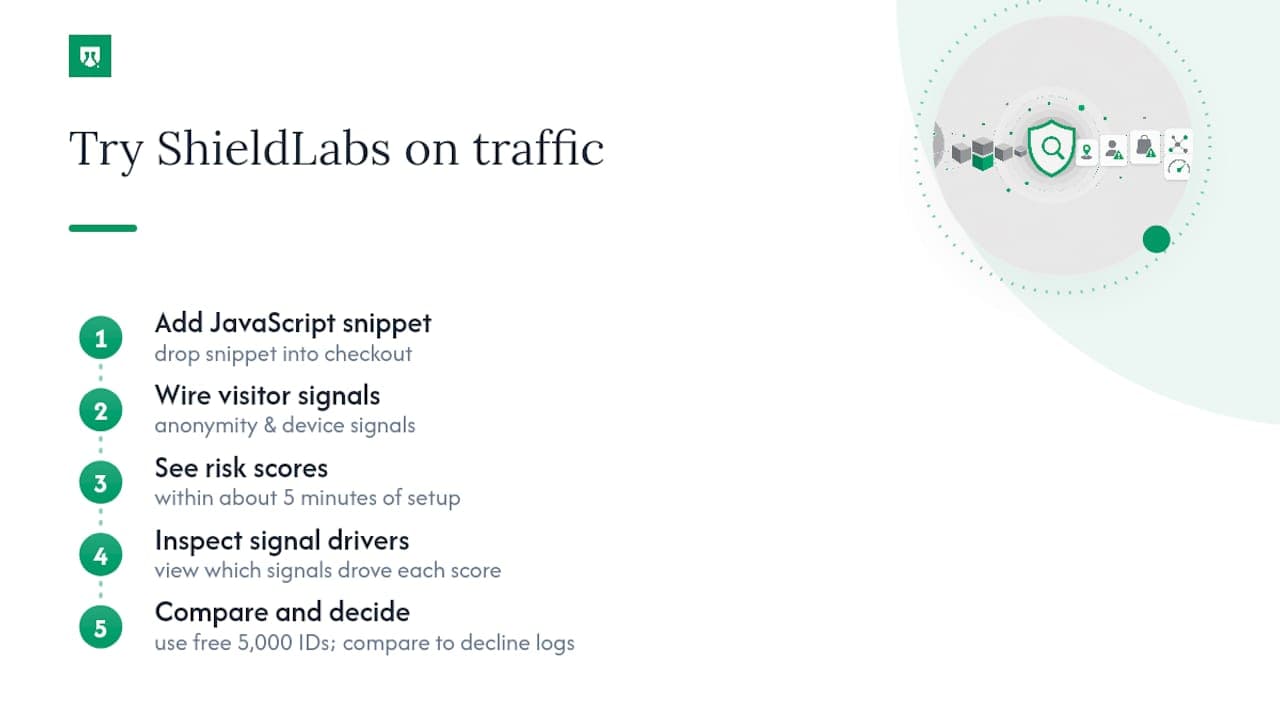
Testing this against real traffic doesn't require a procurement cycle. ShieldLabs offers 5,000 free identifications, one time, with no card required and no expiry, so a payments engineering team can drop in the JavaScript snippet, wire up the visitor identification signals, and see actual risk scores against live checkout traffic within about five minutes of setup.
For engineering evaluation, the risk scoring product shows exactly which signals drove each score, which matters when you're deciding whether to trust an automated flag or route it to manual review. For procurement, published pricing at 99, 399, and 999 USD per month, with a 20% discount on annual billing, means no sales call is required to understand the cost curve as identification volume grows. ShieldLabs surfaces the risk signals, and you choose the action for each case: throttling, step-up, or decline. Start with the free tier against a current traffic segment and compare the flagged sessions against your existing decline logs.
Where to Go Deeper on Card Testing Defenses
For decline codes and testing mechanics, see Stripe's card testing guide. For merchant-side controls, review Mastercard's response guidance and PayPal's carding protection article. Finance teams building broader controls may also find Vopify's payment fraud prevention guide useful for cross-team alignment.
Sources
- What Is Card Testing Fraud? | Stripe
- Protect yourself from card testing | Stripe docs
- Card testing fraud explained: how merchants can respond | Mastercard
Recommended
Related articles
The 11 best ecommerce fraud prevention tools for small businesses in 2026
Compare 11 ecommerce fraud prevention tools for small businesses in 2026 by pricing, signal depth, and self-serve fit, plus a framework to choose.

How to prevent buy now, pay later (BNPL) fraud
What BNPL fraud is, the main types from account takeover to loan stacking, why the model is so exposed, and how to prevent it with device-level signals.

How to prevent friendly fraud with device evidence
Friendly fraud is when a real customer disputes a purchase they made. How it works, why it is hard to prove, and how device evidence helps you fight it.