

Stop card testing at checkout
Catch card testers cycling stolen cards across multiple checkout sessions
Prevent card testing, anonymous checkout abuse, and account compromise without adding friction for real buyers, through persistent identification and real-time risk scoring
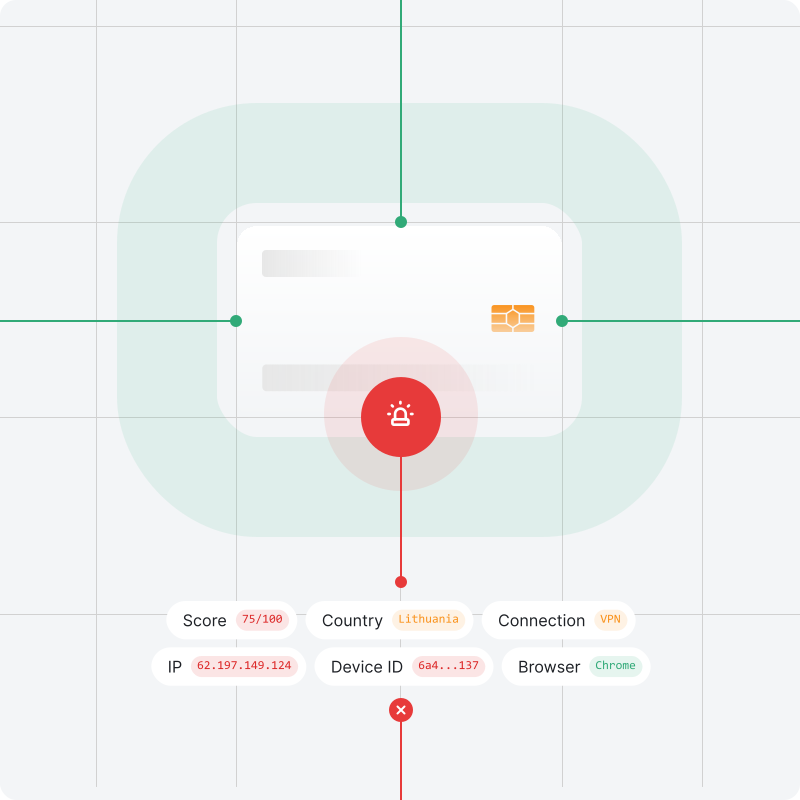
Catch card testers cycling stolen cards across multiple checkout sessions
Identify buyers hiding behind VPN, proxy, and anti-detect browser infrastructure
Stop fraudulent transactions before they reach payment processor dispute thresholds
Legitimate buyers complete checkout without verification friction or added steps
ShieldLabs recognizes the real visitor behind every anonymous session, so your team can act at checkout in real time
Identify returning visitors and users across sessions, cleared cookies, rotated IP and incognito mode
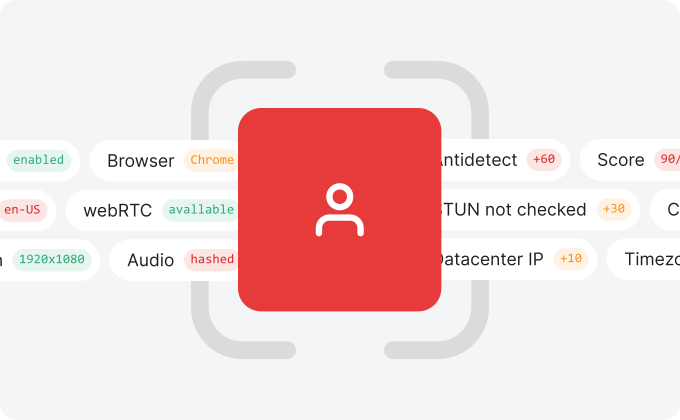
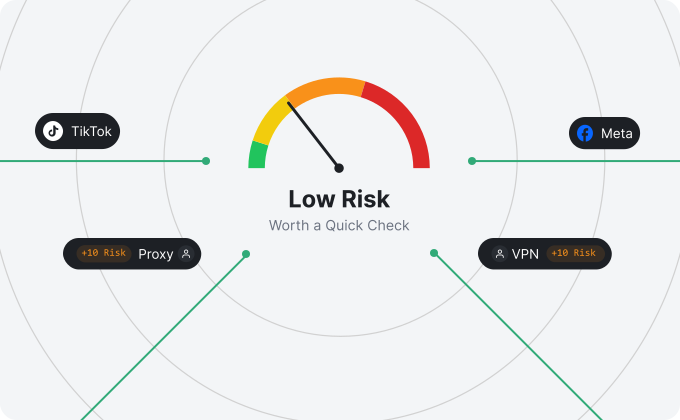
Detection of VPN, proxy, Tor, anti-detect browser, geolocation spoofing, IP reputation and other risk signals on every visit, with 99.9% risk signal detection accuracy
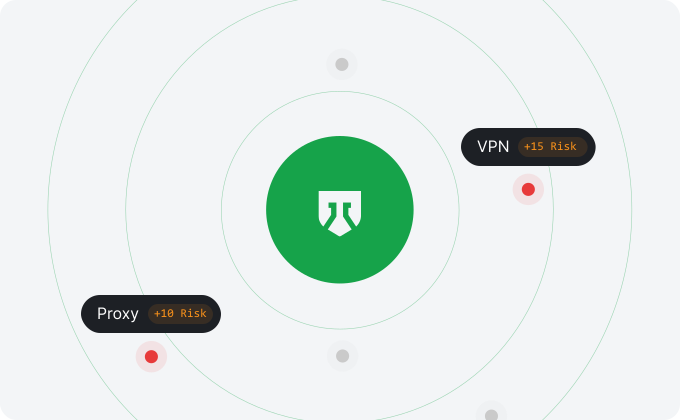
A ready-to-use score reflecting the risk of each visit, with the weight of every signal behind it
High-Risk Events detected out of the box: multi-accounting, account sharing, impossible travel and account takeover, each with Medium or High confidence
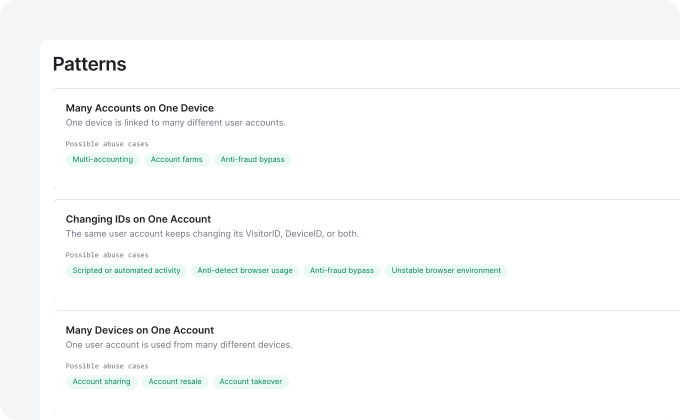
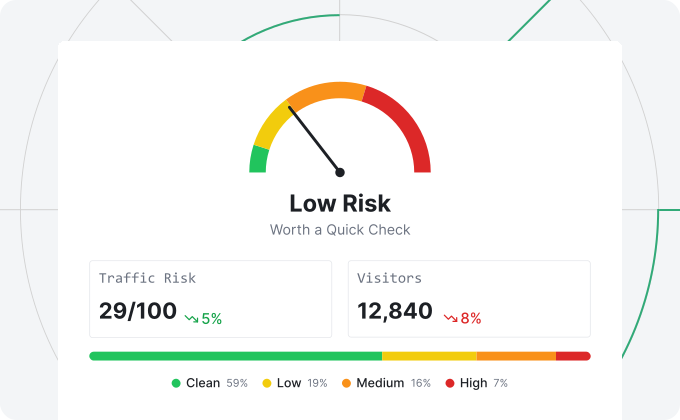
See how much of your traffic is masked, with an overall quality score and a breakdown of the sources sending your visits
Integrate into any checkout or payment flow
Get 5,000 free identifications
It identifies every visitor and returns their risk signals and a risk score
See how much of your traffic is masked, with an overall traffic score
Get the risk score, risk signals and High-Risk Events in your backend to stop fraud and abuse
{
  "request_id": "0c284695-cf0b-4755-8beb-0a2e9536595e",
  "visitor_id": "aa8c616a-8a25-4a5e-bee2-a9a08e5128a4",
  "device_id": "6a45967d-1371-9652-ba99-b01ea3992208",
  "user_hid": "u_9f2a41c7",
  "public_ip": { "ip": "62.197.149.124", "country": "United States" },
  "local_ip": { "ip": "45.83.91.7", "country": "United States" },
  "connection_type": "vpn",
  "os": "Windows",
  "browser": "Chrome",
  "device_type": "desktop",
  "risk_score": 85,
  "signals": [
    { "name": "antidetect_browser", "weight": 60 },
    { "name": "vpn", "weight": 15 },
    { "name": "timezone_mismatch", "weight": 10 }
  ]
}Free 5,000 one-time identifications, with transparent pricing that scales with your needs
Payment fraud detection scores the risk of each checkout session in real time, before the transaction clears, by analyzing the buyer and the device rather than only the card. A typical approach combines device and connection signals, persistent identity, velocity and reuse patterns, and a risk score that combines these into a single number with the reasons behind it. ShieldLabs returns this score and breakdown on the first visit.
Card testing and account takeover are the most common online payment fraud types, and both leave the same trace: one device acting as many different buyers or accounts.
ShieldLabs ties each session to a persistent identifier, so this one-device-many-buyers pattern surfaces across cookie clears and IP rotation before any transaction clears.
ShieldLabs surfaces the risk signals and High-Risk Events behind common checkout fraud.
Payment fraud prevention solutions cut chargebacks and flag risky checkouts by adding a layer of analysis on top of the transaction itself. Payment processors analyze the transaction, card details, billing address, velocity checks. Device intelligence analyzes the visitor and device on the session, before the transaction is submitted. ShieldLabs covers the session layer: it flags anonymous buyers and returning fraudulent buyers in real time.
No. ShieldLabs helps block fraudulent and abusive checkouts while real buyers pass through. A VPN alone raises the score modestly, not enough to block on its own. A high score usually comes from several signals firing together. You choose the action for each case: which sessions get extra verification and which pass straight through.
Device fingerprinting gives every checkout session a persistent identifier, so one device acting as many buyers becomes visible even when it clears cookies or rotates IPs, a direct indicator of card testing or account takeover.
ShieldLabs surfaces these high-risk sessions with 99.9% risk signal detection accuracy before the transaction completes.