

Stop iGaming fraud before
it drains your promo budget
Keep welcome offers and free bets going to real players, and stop
one person from opening a hundred accounts to claim the same promo
How ShieldLabs helps
Trust your player metrics
Keep registrations, retention, and player value free of farmed accounts
Protect your promo budget
Keep promo spend on players who deposit and play, not on bonus farms
Make bans and exclusions stick
Stop banned and self-excluded players returning under a new account
Keep real players friction-free
Legitimate players sign up and play without extra verification steps
How ShieldLabs protects iGaming operators from abuse
ShieldLabs recognizes the real visitor behind every anonymous session, to flag one person behind many accounts before a bonus is paid
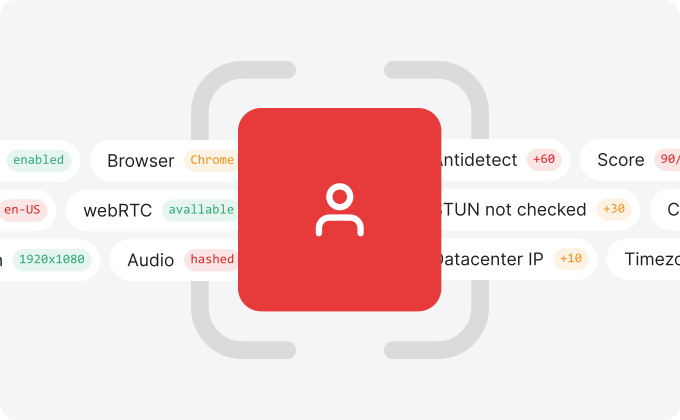
Accurate Identification
Identify returning players across sessions, cleared cookies, incognito mode, rotated IP, and fresh accounts
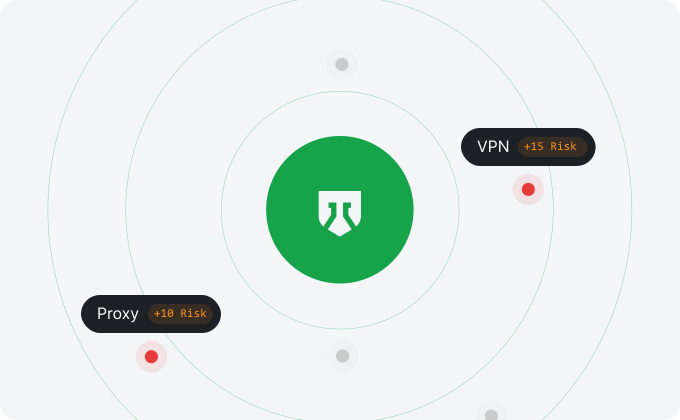
Risk Signals
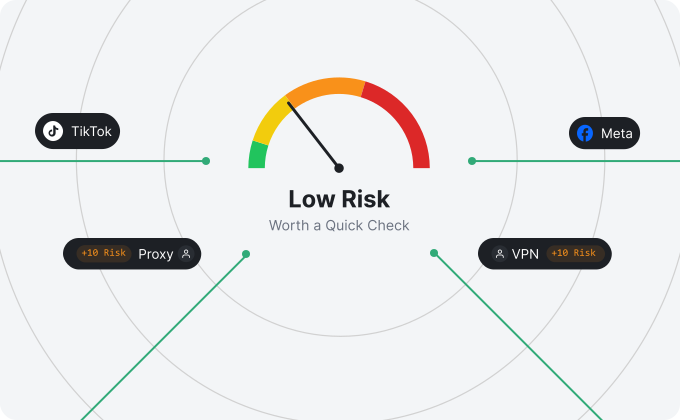
Detection of VPN, proxy, Tor, anti-detect browser, IP reputation and other risk signals on every visit, with 99.9% risk signal detection accuracy
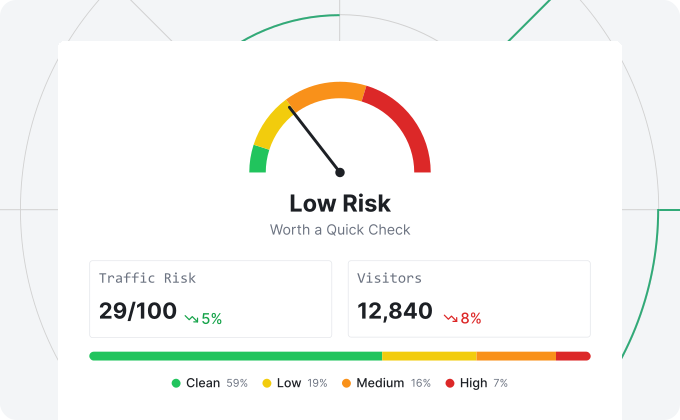
Risk Score
A ready-to-use score reflecting the risk of each visit, with the weight of every signal behind it
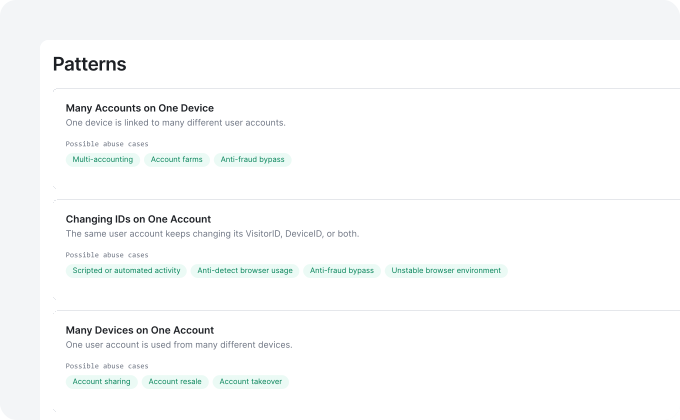
High-Risk Events
Direct detection of multi-accounting, account sharing, impossible travel, and account takeover, each with Medium or High confidence
Real-Time Analytics
See how much of your traffic is masked, with an overall quality score and a breakdown of the sources sending your visits
Stop bonus abuse on your iGaming platform in 5 minutes
Easily integrate into any signup, login, deposit, or withdrawal flow
- 1
Create your account
Sign up and get 5,000 free identifications.
- 2
Add the snippet
It identifies every visitor and returns their risk signals and a risk score
- 3
Check your traffic quality
See how much of your traffic is masked, with an overall traffic score
- 4
Use API & Webhooks
Act on the risk score, risk signals, and High-Risk Events in your backend to stop fraud and abuse
{
  "request_id": "0c284695-cf0b-4755-8beb-0a2e9536595e",
  "visitor_id": "aa8c616a-8a25-4a5e-bee2-a9a08e5128a4",
  "device_id": "6a45967d-1371-9652-ba99-b01ea3992208",
  "user_hid": "u_9f2a41c7",
  "public_ip": { "ip": "62.197.149.124", "country": "United States" },
  "local_ip": { "ip": "45.83.91.7", "country": "United States" },
  "connection_type": "vpn",
  "os": "Windows",
  "browser": "Chrome",
  "device_type": "desktop",
  "risk_score": 85,
  "signals": [
    { "name": "antidetect_browser", "weight": 60 },
    { "name": "vpn", "weight": 15 },
    { "name": "timezone_mismatch", "weight": 10 }
  ]
}
Protect your iGaming platform from abuse today
Free 5,000 one-time identifications, with transparent pricing that scales with your needs
Frequently asked questions
Most iGaming fraud comes down to one person operating many accounts, claiming promotions and evading enforcement under identities that look unrelated. The main types are: Bonus abuse: farming welcome offers, free bets, and reload bonuses across multiple accounts; Multi-accounting: running parallel accounts to claim the same promotion repeatedly, or to collude at one table, a tactic known in poker as gnoming; Ban and self-exclusion evasion: a removed or excluded player returning under a new account; Affiliate fraud: an affiliate inflating CPA commissions with farmed or incentivized signups. ShieldLabs detects Multi-accounting, one person behind many accounts, using persistent visitor and user identification that holds across sessions regardless of email, IP, or cleared cookies.
Online gambling fraud is not one problem, so prevention works in layers, with each layer covering a part the others miss. The three layers are: Identity verification (KYC): confirms a player is a real, eligible person; Payment-fraud and AML tools: watch deposits, withdrawals, and chargebacks; Device and identity intelligence: links accounts to the person behind them, the layer that surfaces bonus abuse, multi-accounting, gnoming, and ban evasion. ShieldLabs is that last layer: one JavaScript snippet returns a 0-100 risk score, risk signals, and High-Risk Events, so an operator can hold or challenge a high-risk account before a bonus is paid.
Bonus abuse is when a player extracts value from a promotion in a way the terms were not designed to allow, usually by claiming the same offer many times. It typically takes two forms: Opening multiple accounts to collect a welcome bonus or free bet repeatedly; Depositing just enough to trigger a bonus, clearing it, and withdrawing. It is a terms-of-service violation rather than criminal fraud, but it drains the promotional budget and distorts campaign metrics. ShieldLabs detects when the same person is behind several bonus claims, so an operator can enforce its promotion terms.
In most cases bonus abuse is not a crime, it is a breach of the operator's terms and conditions, not a criminal act. The line works like this: As a ToS breach: claiming the same promotion through several accounts, or wagering only to clear a bonus and withdraw, violates the terms a player agreed to, so an operator can void the bonus, close the accounts, and withhold the related winnings; As criminal fraud: it crosses that line when it involves stolen payment cards, stolen or synthetic identities, or money laundering. ShieldLabs does not make that legal determination. It detects when one person is behind several accounts, so the operator can enforce its terms.
Online casinos look past the name and email on an account, at the device and connection behind it, when several accounts trace back to one device or one identity, that is multi-accounting. The signals that give it away are: A shared device or device fingerprint behind accounts that look unrelated; An anonymized connection like a VPN, proxy, Tor, or anti-detect browser; A returning visitor identity that holds even after cookies are cleared or the IP changes. ShieldLabs runs these checks from a single JavaScript snippet and surfaces the link as a risk score and a Multi-accounting event, so an operator can act before a bonus is paid.
ShieldLabs runs through a single JavaScript snippet on the signup, login, deposit, or withdrawal page and returns the signals an operator needs to link related accounts to one person. On each visit it returns: A 0-100 risk score with a per-signal breakdown; Persistent visitor and user identification that holds across sessions; Risk signals like VPN, proxy, Tor, anti-detect browser, and IP reputation; High-Risk Events with Medium or High confidence, including Multi-accounting and Account takeover. ShieldLabs delivers the score, signals, and events in the analytics dashboard and via API and Webhooks, and when a new account matches an identity already linked to a prior one it detects Multi-accounting directly, so an operator can hold, challenge, or limit the account before a bonus is paid.
No. ShieldLabs works at the device and identity layer, not on documents or transactions, and adds the multi-accounting layer the others miss. The split is: KYC confirms a document is valid, but not that one player has passed it under several identities; Payment-fraud and AML tools watch the transaction, not the device behind the account; ShieldLabs links accounts to the same person behind them, regardless of email, IP, or cleared cookies. ShieldLabs is built to pair with a KYC provider and a payment-fraud platform, each covering its own part of the stack.
Yes, on the traffic-quality side: affiliate fraud usually means an affiliate inflating CPA commissions with farmed, incentivized, or low-intent signups that never become real players. ShieldLabs gives an operator the data to tell a clean affiliate from one delivering farmed accounts by: Attaching traffic source attribution to every signup; Returning a risk score and risk signals per account; Detecting High-Risk Events such as Multi-accounting on farmed accounts. ShieldLabs does not audit affiliate contracts or commercial terms, it gives the per-signup evidence an operator uses to challenge a payout or cut an affiliate.
Account takeover is one of the most common fraud types iGaming operators face: a fraudster gets into a real player's casino or sportsbook account to drain the balance, cash out the player's funds, or use a saved payment method. It is different from multi-accounting, where one person runs many accounts of their own. ShieldLabs helps on the device side: it detects Account takeover as a High-Risk Event with Medium or High confidence when a login or withdrawal comes from a device and visitor never seen on that account, and raises the risk score when the connection is anonymized, like a VPN, proxy, Tor, or anti-detect browser. ShieldLabs stops account takeover early: it flags the unrecognized device so an operator can step up verification before a withdrawal clears, and works best paired with multi-factor authentication.
ShieldLabs helps with enforcement, not with the responsible-gambling program itself. The split is: What ShieldLabs does: when a banned or self-excluded player tries to return under a new account, persistent identification links the new signup back to the prior identity even when the email, IP, and cookies are all new; What the operator does: decides how to act on that link within its own policy and obligations. ShieldLabs returns the link as a signal, a detection layer that makes an exclusion harder to bypass, alongside your compliance program.
Integration takes about 5 minutes, add one JavaScript snippet, and the first score returns on the player's first visit. The steps are: Add the JavaScript snippet to the signup, login, deposit, or withdrawal page; Pass an optional UserHID (a hashed identifier for the player's account) once the account is created; Read the risk score, risk signals, and High-Risk Events in the analytics dashboard and via API and Webhooks for server-side flows. ShieldLabs includes 5,000 one-time identifications free with no credit card, so an operator can test on real traffic before rolling out to production.
ShieldLabs detects risky players out of the box and helps block fraudulent and abusive traffic. Every signup, deposit, and withdrawal gets a 0-100 risk score in one of three bands, plus any High-Risk Events, and the operator chooses the action for each case: Dangerous (60-100): route for manual review before a withdrawal clears; Suspicious (30-59): trigger extra verification or hold a bonus; Trusted (0-29): let the player through with no extra friction. ShieldLabs includes 5,000 identifications free, so an operator can see results on real traffic before rolling out to production.