

Maximize subscription revenue
Identify shared accounts and convert sharers into paying seats
Prevent credential sharing, plan limit bypass, and unauthorized access without adding friction for paying customers, through persistent identification and real-time risk scoring
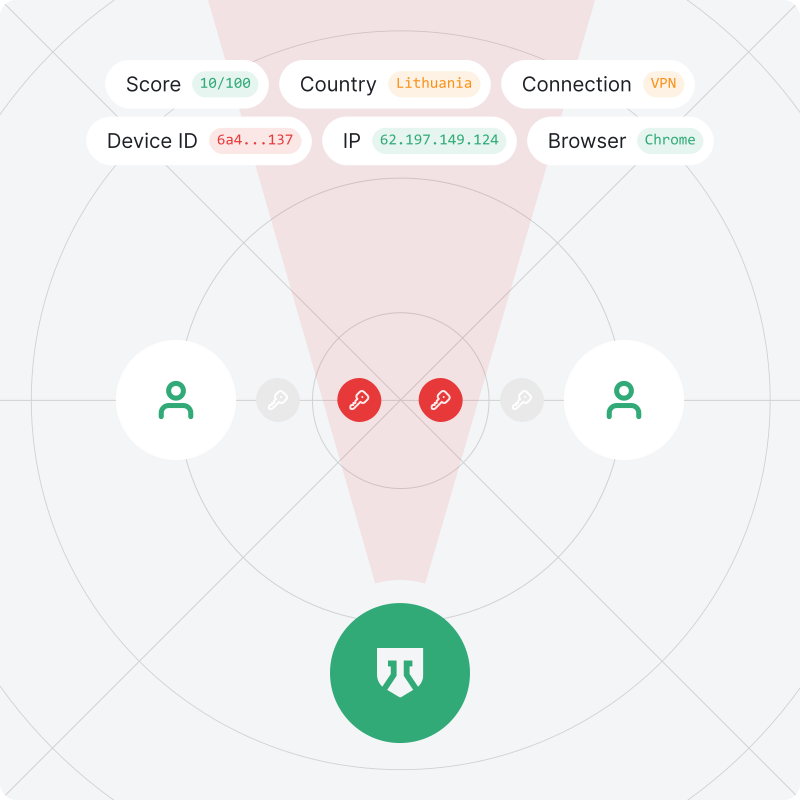
Identify shared accounts and convert sharers into paying seats
Flag one account used from multiple sessions or locations simultaneously
Catch one account serving multiple users that should be on a higher plan
Minimize false positives and let trusted single users move freely
ShieldLabs recognizes the real visitor behind every anonymous session, so your team can catch account sharing and unauthorized multi-user access in real time
Identify returning visitors and users across sessions, cleared cookies, rotated IP and incognito mode
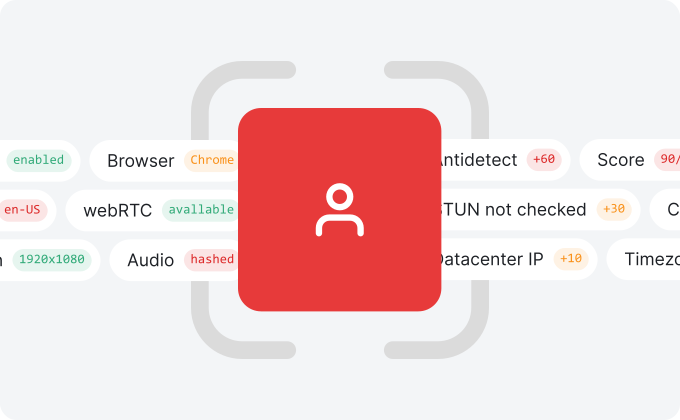
Detection of VPN, proxy, Tor, anti-detect browser, geolocation spoofing, IP reputation and other risk signals on every visit, with 99.9% risk signal detection accuracy
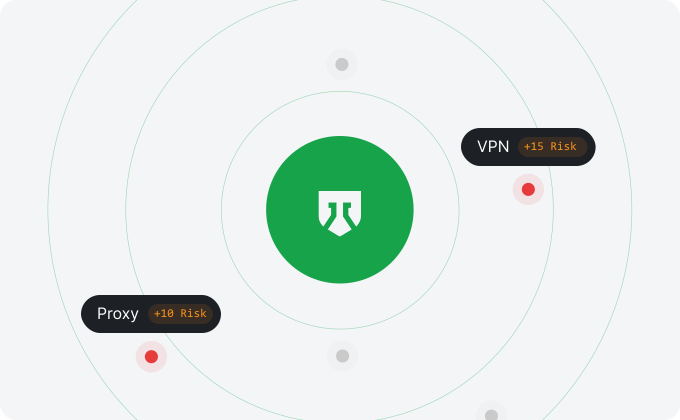
A ready-to-use score reflecting the risk of each visit, with the weight of every signal behind it
High-Risk Events detected out of the box: multi-accounting, account sharing, impossible travel and account takeover, each with Medium or High confidence
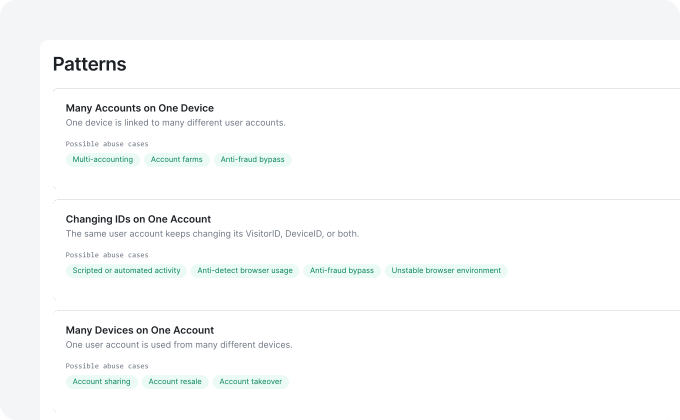
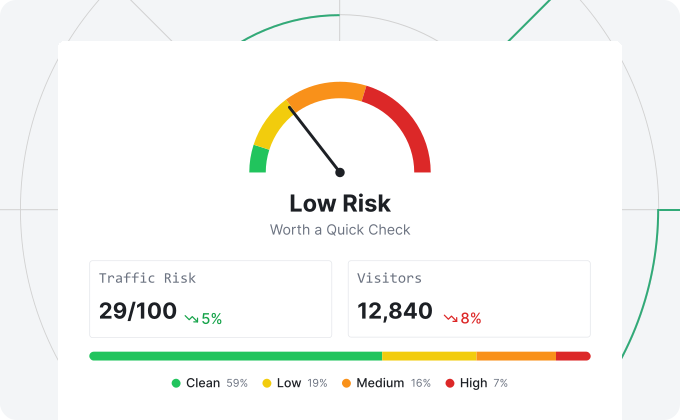
See how much of your traffic is masked, with an overall quality score and a breakdown of the sources sending your visits
Stop revenue leakage from credential sharing before it distorts metrics, undermines pricing, or exposes user data
Accurate Identification helps flag one account accessed from multiple devices
Impossible travel is detected out of the box as a High-Risk Event when one account logs in from impossibly distant locations
Risk signals reveal shared accounts hiding behind VPN, proxy, or anti-detect browsers
Ready risk score helps apply friction only to sessions that deviate from single-user patterns
Easily integrate into any login or session flow
Get 5,000 free identifications
It identifies every visitor and returns their risk signals and a risk score
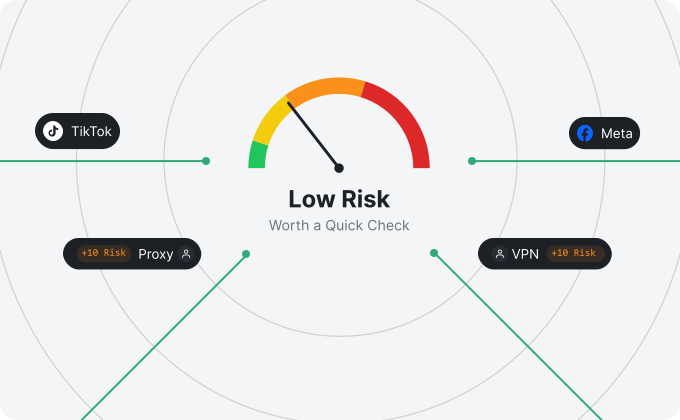
See how much of your traffic is masked, with an overall traffic score
Get the risk score, risk signals and High-Risk Events in your backend to stop fraud and abuse
{
  "request_id": "0c284695-cf0b-4755-8beb-0a2e9536595e",
  "visitor_id": "aa8c616a-8a25-4a5e-bee2-a9a08e5128a4",
  "device_id": "6a45967d-1371-9652-ba99-b01ea3992208",
  "user_hid": "u_9f2a41c7",
  "public_ip": { "ip": "62.197.149.124", "country": "United States" },
  "local_ip": { "ip": "45.83.91.7", "country": "United States" },
  "connection_type": "vpn",
  "os": "Windows",
  "browser": "Chrome",
  "device_type": "desktop",
  "risk_score": 85,
  "signals": [
    { "name": "antidetect_browser", "weight": 60 },
    { "name": "vpn", "weight": 15 },
    { "name": "timezone_mismatch", "weight": 10 }
  ]
}Free 5,000 one-time identifications, with transparent pricing that scales with your needs
Account sharing, also referred to as sharing accounts, occurs when one user's login credentials are used by more than one person, ranging from casual household sharing to organized credential resale.
For SaaS and subscription businesses, this quietly reduces revenue and distorts usage metrics. ShieldLabs detects account sharing directly as a High-Risk Event by linking every session to a persistent identity, so you can see when one account is used by many distinct devices.
Account sharing detection is the process of identifying when a single account is being used by multiple people, simultaneously or across different devices and locations. It works by assigning a stable identity to each session rather than trusting the login alone:
The result is a view of how many distinct people sit behind one login, even when their sessions never overlap.
To detect account sharing, track which devices and connections access each account over time and watch for activity that no single user could produce. The key signals are:
ShieldLabs detects account sharing and impossible travel automatically through 300+ device, OS, browser, IP and network signals collected on every session, with a Risk Score and signal breakdown on the first visit.
Streaming platforms detect account sharing by tracking which devices and IP addresses access each account over time and flagging activity outside a single household. They typically combine:
Netflix, for example, pairs household-level IP checks with device fingerprinting to enforce its account sharing policy. ShieldLabs gives any platform the same building blocks as a ready-made service: 300+ device, OS, browser, IP and network signals per session, risk signals, and a Risk Score on the first visit, without building a streaming-scale engineering team.
Password sharing detection is a specific form of account sharing detection focused on identifying when one set of login credentials is being used by multiple people. It never inspects the password itself.
ShieldLabs surfaces password sharing by linking each session to a persistent device identity: when multiple distinct devices access one account, ShieldLabs detects account sharing as a High-Risk Event with Medium or High confidence.
ShieldLabs assigns an encrypted persistent user link on every session that connects each visit to the account in your system, then detects account sharing when one account behaves like many users.
ShieldLabs returns these High-Risk Events with a Risk Score and signal breakdown on the first visit, so your team can choose the action for each case.
Impossible travel detection flags when one account is accessed from two geographically distant locations within a timeframe that makes physical travel between them impossible.
ShieldLabs detects impossible travel automatically as a High-Risk Event with Medium or High confidence, so you can challenge or re-authenticate the session.
ShieldLabs detects account sharing and helps block abusive access. It returns the High-Risk Event with a Risk Score and signal breakdown, and you choose the action for each case. Common responses:
ShieldLabs includes 5,000 free identifications, so you can see the results on your own traffic first.
A concurrent session limit is a hard cap on simultaneous logins; it is a business rule, not a detection system, and it only sees sessions that overlap in time.
ShieldLabs identifies the number of distinct device identities accessing an account over time, so it surfaces even take-turns sharing, such as family members using one login at different times.
Password sharing occurs when one set of login credentials is used by multiple people who each have their own device and identity. It is the everyday form of account sharing on subscription platforms.
For platforms this means lost subscription revenue and distorted usage metrics. ShieldLabs detects password sharing as account sharing by identifying when multiple distinct device identities access the same account over time.