

Stop AI abuse before
it drains your inference compute
Keep GPU hours, token quotas, and free-tier credits on real users,
and stop one person from farming a hundred free accounts
How ShieldLabs helps
Stop abuse at signup
Catch fake signups and farmed accounts before they get in
Protect your inference compute
Keep GPU hours and token quotas spent on real users, not trial farms
Trust your growth metrics
Keep activation, retention, and conversion free of farmed accounts
Keep real users friction-free
Legitimate users sign up and start using your product without extra verification steps
How ShieldLabs protects AI products from abuse
ShieldLabs recognizes the real visitor behind every anonymous session, to stop a fake signup before it is granted free inference compute
Accurate Identification
Identify returning visitors and users across sessions, cleared cookies, incognito mode, rotated IP, and fresh accounts
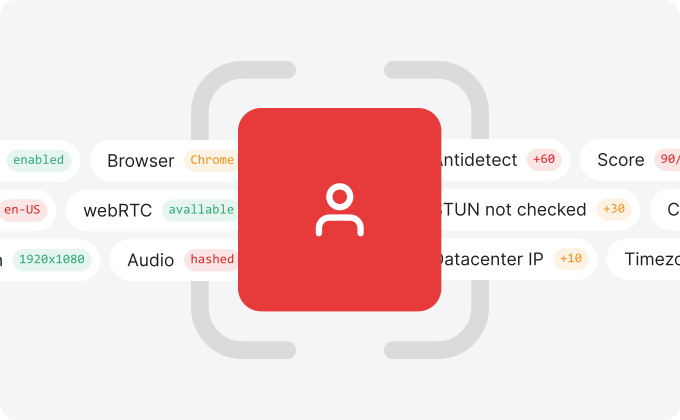
Risk Signals
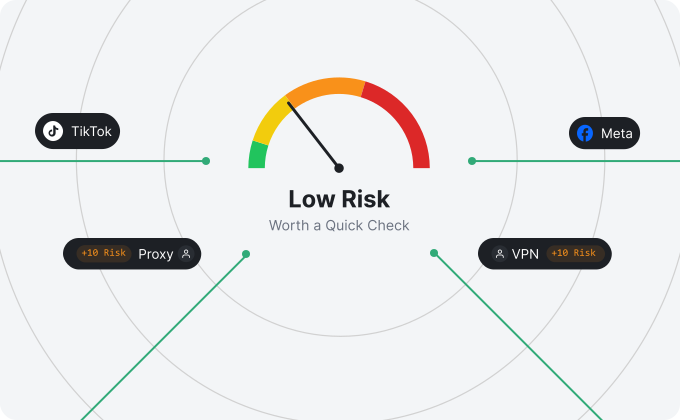
Detection of VPN, proxy, Tor, anti-detect browser, IP reputation and other risk signals on every visit, with 99.9% risk signal detection accuracy
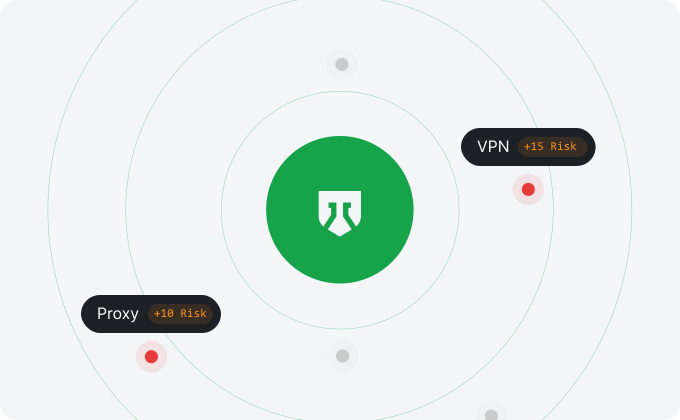
Risk Score
A ready-to-use score reflecting the risk of each visit, with the weight of every signal behind it
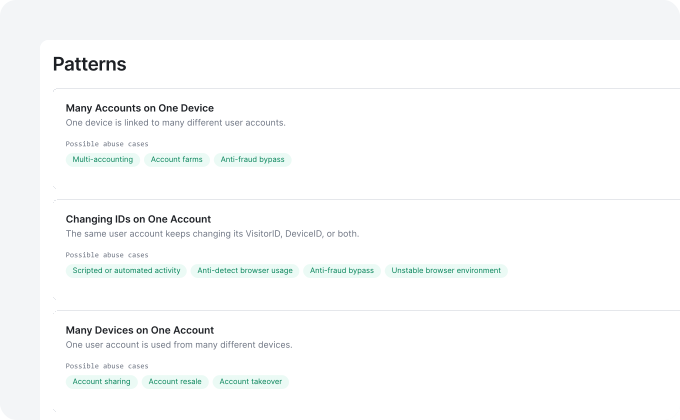
High-Risk Events
Direct detection of multi-accounting, account sharing, impossible travel, and account takeover, each with Medium or High confidence
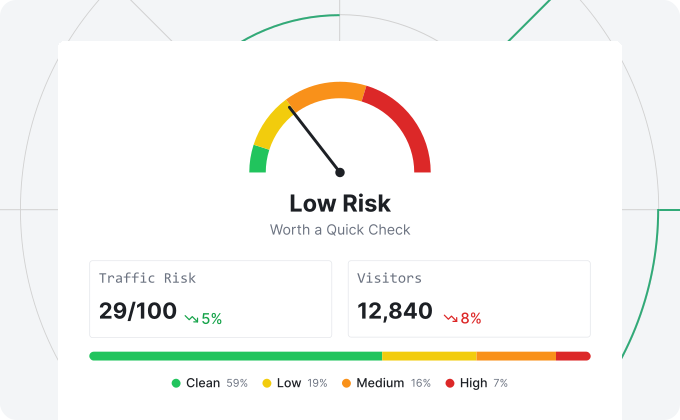
Real-Time Analytics
See how much of your traffic is masked, with an overall quality score and a breakdown of the sources sending your visits
Stop abuse on your AI product in 5 minutes
Easily integrate into any signup, login, or free trial activation flow
- 1
Create your account
Get 5,000 free identifications.
- 2
Add the snippet
It identifies every visitor and returns their risk signals and a risk score.
- 3
Check your traffic quality
See how much of your traffic is masked, with an overall traffic score.
- 4
Use the API and Webhooks
Act on the risk score, risk signals, and High-Risk Events in your backend to stop fraud and abuse.
{
  "request_id": "0c284695-cf0b-4755-8beb-0a2e9536595e",
  "visitor_id": "aa8c616a-8a25-4a5e-bee2-a9a08e5128a4",
  "device_id": "6a45967d-1371-9652-ba99-b01ea3992208",
  "user_hid": "u_9f2a41c7",
  "public_ip": { "ip": "62.197.149.124", "country": "United States" },
  "local_ip": { "ip": "45.83.91.7", "country": "United States" },
  "connection_type": "vpn",
  "os": "Windows",
  "browser": "Chrome",
  "device_type": "desktop",
  "risk_score": 85,
  "signals": [
    { "name": "antidetect_browser", "weight": 60 },
    { "name": "vpn", "weight": 15 },
    { "name": "timezone_mismatch", "weight": 10 }
  ]
}
Protect your AI product from abuse today
Free 5,000 one-time identifications, with transparent pricing that scales with your needs
Frequently asked questions
AI companies face the same abuse shapes as other SaaS, but the cost lands harder because every free account spends real inference compute. The most common forms are: Free trial abuse and trial cycling: one person recreates a trial after the last one expires; Multi-accounting: one person runs many free accounts in parallel; Signup farming: accounts are created in bulk to harvest free credits; Ban evasion: a removed account returns under a fresh identity. Each fake account is handed GPU hours, token quotas, or free-tier credits that cost the company money. ShieldLabs detects Multi-accounting, one person operating many accounts, using persistent visitor and user identification that works across sessions regardless of email, IP, or cleared cookies.
On an AI product, an abused free account costs inference, not just storage and bandwidth, so abuse hits unit economics directly. Every abused account can spend: GPU seconds on model inference; Model tokens on each prompt and completion; Image, video, or audio generations, each with a real per-call cost. A trial farm running a thousand free accounts is a thousand parallel compute allocations billed to the company, which is why AI companies feel abuse faster than ordinary SaaS. ShieldLabs scores the visitor and user before any compute is allocated, so a fake account can be held or downgraded before it spends a single GPU second.
ShieldLabs runs through one JavaScript snippet on your signup or trial activation page and returns a risk score with the signals behind it on the first visit. On every signup it returns: A 0-100 risk score with a full signal breakdown; Persistent visitor and user identification that holds across sessions, cleared cookies, and rotated IPs; Risk signals such as VPN, proxy, Tor, anti-detect browser, IP reputation, and OS mismatch; High-Risk Events (Multi-accounting, Account sharing, Impossible travel, Account takeover) with Medium or High confidence, detected directly when a new signup matches an identity already linked to a prior account. The risk score, signals, and events are delivered in the analytics dashboard and via API and Webhooks, so you can hold, challenge, or downgrade the account before any inference compute is provisioned. ShieldLabs detection is ready out of the box: it flags risky signups and helps block fraudulent and abusive traffic, and you choose the action for each case.
ShieldLabs works at the signup and login layer, not on API traffic, so it flags the fake account before it is ever issued an API key. The split of responsibilities looks like this: ShieldLabs scores the visitor and user, so a farmed free account that exists only to harvest free API credits is surfaced before a key is created; Your API gateway handles API-call-level controls: rate limits, spend caps, and scoped keys. Most API key abuse on AI products starts with a farmed free account, so removing the upstream cause prevents most of the downstream abuse. ShieldLabs removes the upstream cause at signup; pair it with your gateway to enforce the downstream limits.
Rate limiting and CAPTCHA control how an account behaves; ShieldLabs identifies whether the account is a new person at all. The difference by layer: Rate limiting caps how fast one account can spend compute, but does nothing about one person opening a hundred accounts, each within its limit; CAPTCHA slows scripted signups but does not link a new account to a prior one, and it is increasingly solved or bypassed; ShieldLabs adds persistent identification that links the new signup to any prior account, even when the email, IP, and cookies are all new. Rate limiting and CAPTCHA stay useful as complementary layers. ShieldLabs is the layer that tells you the new account is not a new person.
Integration takes about 5 minutes: add one JavaScript snippet to your signup, login, or trial activation page. The steps are: Install the snippet on the signup or trial activation flow; Pass an optional UserHID (a hashed identifier for the user's account) after the account is created, so signups link back to the user; Read the results: risk score, risk signals, and High-Risk Events, in the analytics dashboard and via API and Webhooks for server-side flows. The free tier includes 5,000 one-time identifications with no credit card required, so you can test on real traffic before rolling out to production. ShieldLabs returns the first risk score on the first visit, so you see signal on live traffic from day one.
Yes. The mechanism is the same across AI sub-verticals because the abuse is the same: one person creates accounts to harvest free compute. How it shows up by sub-vertical: LLM chat apps and AI developer tools: trial cycling and multi-accounting to keep using the free tier or free token allowance; Image, video, and voice generation: signup farming, made especially expensive by the high per-generation cost; AI agent platforms and API products: farmed free accounts that exist only to harvest free API credits. ShieldLabs identifies the person behind the accounts at signup in every one of these cases, using the same persistent identifier across emails, IPs, and browsers.
ShieldLabs detects risky signups out of the box and helps block fraudulent and abusive traffic. Every signup gets a 0-100 risk score in one of three bands, plus any High-Risk Events, and you choose the action for each case: Dangerous (60-100): hold the signup for review or route it to a stricter trial path; Suspicious (30-59): trigger additional verification or grant a smaller free allocation; Trusted (0-29): let the user through with no extra friction. The free tier includes 5,000 identifications, so you can see results on real traffic before rolling out to production. ShieldLabs stops trial abuse before it spends your inference compute.