

Skip login friction
Authenticate returning visitors and users silently in the background, with no extra prompts
Drop re-authentication, link sessions across visits, and personalize content for returning users without collecting personal data
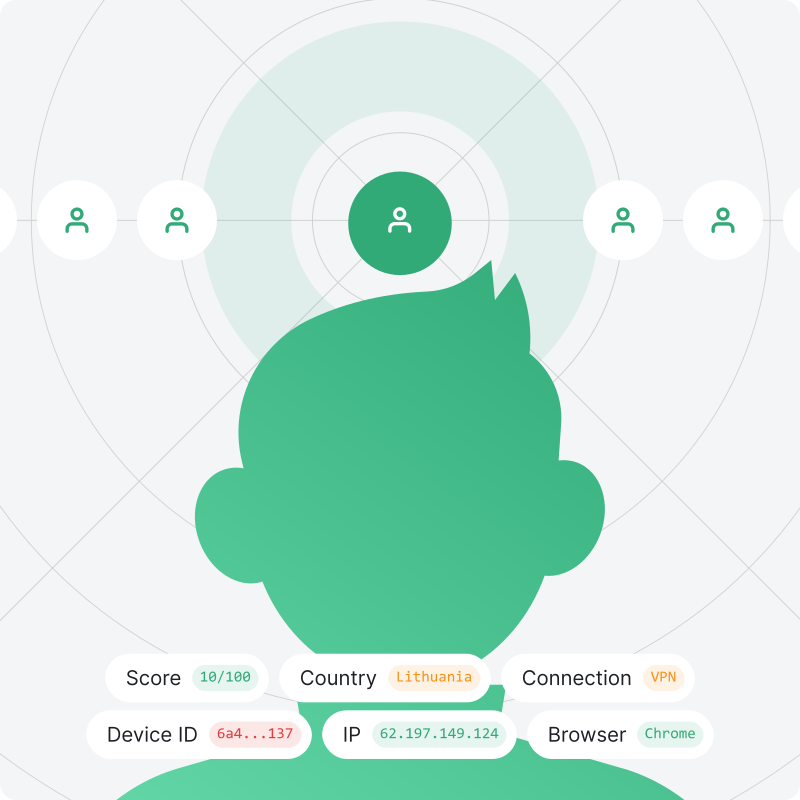
Authenticate returning visitors and users silently in the background, with no extra prompts
Serve targeted content to returning visitors before they sign in, even when cookies are cleared and the session looks anonymous
Run fraud prevention and frictionless return on the same identification layer
Skip 2FA and verification step-ups for returning users you already recognize
ShieldLabs recognizes the real visitor behind every anonymous session, returning or new, in real time, without PII
Identify returning visitors and users across sessions, cleared cookies, incognito mode, and rotated IP
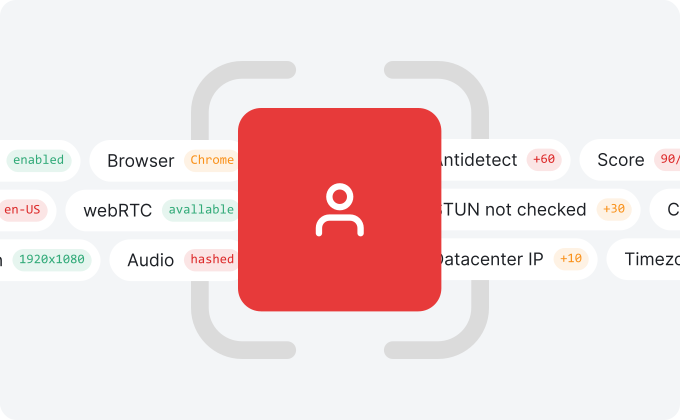
Detection of VPN, proxy, Tor, anti-detect browser, IP reputation and other risk signals on every visit, with 99.9% risk signal detection accuracy
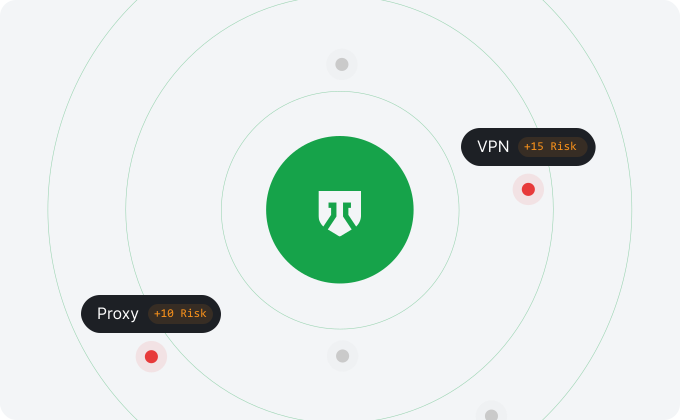
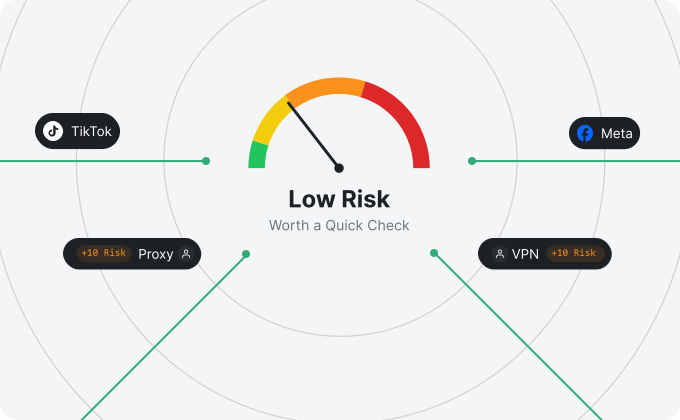
A ready-to-use score reflecting the risk of each visit, with the weight of every signal behind it
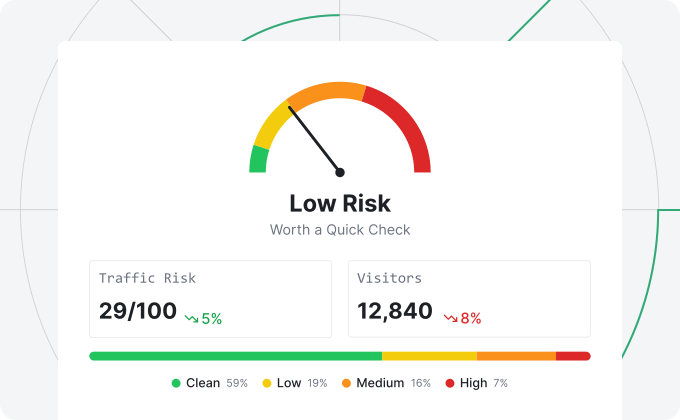
High-Risk Events detected out of the box: multi-accounting, account sharing, impossible travel and account takeover, each with Medium or High confidence
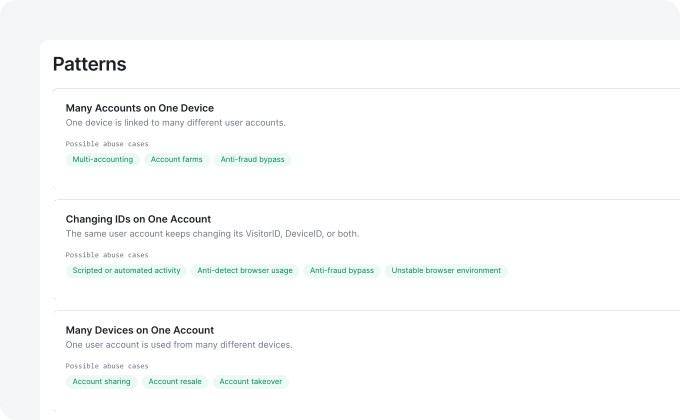
See how much of your traffic is masked, with an overall quality score and a breakdown of the sources sending your visits
One identifier across sessions, cookies, and devices, so returning visitors never reset to a blank slate
See every return visit as the same person, so the full journey appears as one continuous record
Recognize even anonymous returning visitors without cookies, so personalization fires before any sign-in
Skip 2FA on trusted returns and challenge risky sessions, using a 0–100 risk score
Carry UTM source and channel across return visits, so cohort, attribution, and funnel data show the real picture
Easily integrate into any signup, checkout, personalization, or onboarding flow
Get 5,000 free identifications
It identifies every visitor and returns their risk signals and a risk score
See how much of your traffic is masked, with an overall traffic score
Get the risk score, risk signals and High-Risk Events in your backend to stop fraud and abuse
{
  "request_id": "0c284695-cf0b-4755-8beb-0a2e9536595e",
  "visitor_id": "aa8c616a-8a25-4a5e-bee2-a9a08e5128a4",
  "device_id": "6a45967d-1371-9652-ba99-b01ea3992208",
  "user_hid": "u_9f2a41c7",
  "public_ip": { "ip": "62.197.149.124", "country": "United States" },
  "local_ip": { "ip": "45.83.91.7", "country": "United States" },
  "connection_type": "vpn",
  "os": "Windows",
  "browser": "Chrome",
  "device_type": "desktop",
  "risk_score": 85,
  "signals": [
    { "name": "antidetect_browser", "weight": 60 },
    { "name": "vpn", "weight": 15 },
    { "name": "timezone_mismatch", "weight": 10 }
  ]
}Free 5,000 one-time identifications, with transparent pricing that scales with your needs
Returning visitor identification is the process of recognizing the same person across sessions and privacy resets without requiring login. Standard tools rely on cookies, IP addresses, or logged-in user IDs. All three break when cookies are cleared, IPs rotate, or the visit happens before any sign-in. Persistent visitor identification fills the gap by linking the same returning visitor and user across sessions, regardless of email, IP, or cleared cookies, so personalization and frictionless return flows fire on the right person every time.
Cookies break under four common conditions: browser clearing, incognito mode, Safari Intelligent Tracking Prevention, and the ongoing third-party cookie deprecation in Chrome. When cookies break, returning visitors look new: personalization misfires, return-customer flows misfire, and the same user is counted twice in analytics. ShieldLabs persistent identification survives all four conditions because it relies on a stable identifier derived from 300+ device, OS, browser, IP, and network signals, not the cookie alone.
B2B visitor identification tools reverse-look-up an IP address to a company name so sales teams can prospect anonymous traffic. They answer which company visited the site. Useful for outbound sales. ShieldLabs answers a different question: is this the same person who visited before, regardless of company or login. The use case is recognition for UX outcomes (personalization, frictionless return, session continuity), not sales lead generation. The two solution categories complement rather than compete.
Anonymous visitor personalization is delivering personalized experiences to visitors before they sign in, based on what is recognized about them across prior sessions. Examples include surfacing the last category browsed, restoring an abandoned cart, showing a returning-customer banner, or skipping the new-user onboarding flow. Done well, it lifts conversion without requiring users to log in or hand over an email. ShieldLabs provides the persistent visitor and user identification layer that makes anonymous personalization reliable across sessions, devices, and cleared cookies.
No. ShieldLabs identifies returning visitors and users before any login, signup, or account action. The same persistent visitor and user identification works pre-login (anonymous browsing recognition) and post-login (account-tied recognition). If the user later signs in, the existing visitor ID can be linked to the account via the UserHID field (a hashed user identifier passed in by your code), so the pre-login and post-login experience stays continuous.
ShieldLabs returns a persistent Device ID for each device, and the same visitor ID fires on every return visit from that device, even after cleared cookies, incognito mode, or rotated IPs. Cross-device user linking (recognizing the same person on mobile and desktop) requires an explicit user account: when a user signs in on any device, that device's visitor ID stitches to the UserHID, so the account-level view spans devices while each device keeps its own visitor ID. Anonymous cross-device matching without sign-in sits in a different category than device intelligence.
Privacy-focused analytics tools (such as the ones that use anonymous user IDs or UUIDs for behavioral analytics) provide event tracking: they count sessions, page views, and conversions without tying them back to a real person. They do not stitch the same user across sessions or cleared cookies. ShieldLabs persistent visitor and user identification adds that recognition layer, so events can be attributed to the same returning person and personalization can react to it. The two categories sit side by side in the stack.
ShieldLabs does not sell or share visitor data. Data collected is technical (device, OS, browser, IP, network signals) and customer-owned, accessible only to the team integrating the JS snippet via the API and Webhooks for that account. No personal information (name, email, payment data) is collected by ShieldLabs. The free tier includes 5,000 identifications to test the integration on real traffic before turning on personalization in production.
Install a visitor identification snippet on every page that recognizes visitors via 300+ device, OS, browser, IP, and network signals, independent of cookies. The snippet returns a persistent visitor ID on every request, so the same returning visitor stitches across sessions, cleared cookies, incognito mode, and rotated IPs. ShieldLabs delivers the first visitor ID on initial page load, no login or signup required.