

Detect anonymous connections in real time
VPN & Proxy Detection
Accurate VPN, Proxy, Relay and Tor Detection
Turn any anonymous IP into a complete identification with a detailed risk score, distinguishing privacy-conscious users from masked traffic linked to fraudulent activity
- Accurate visitor identification across sessions
- Detailed risk score on every visitor
- API and Webhooks for real-time integration
- Cross-layer analysis beyond IP blocklists
Why Anonymized Connections Are a Risk
Anonymized traffic creates blind spots across security, analytics, and revenue
Distorted metrics
CAC, LTV, and conversion rates calculated on data polluted by anonymous visitors
Abuse at scale
Free trials, bonuses, and referral programs exploited by repeat visitors rotating IPs
Invisible account takeover
Anonymized connections bypass IP-based security and access controls
Wasted acquisition spend
Marketing budget goes to visitors who cannot be identified or attributed
IP blocklists can't keep up
Anonymization infrastructure changes faster than static databases can be updated
What ShieldLabs Detects
Real-time detection of anonymizing and private connections, even under deep masking
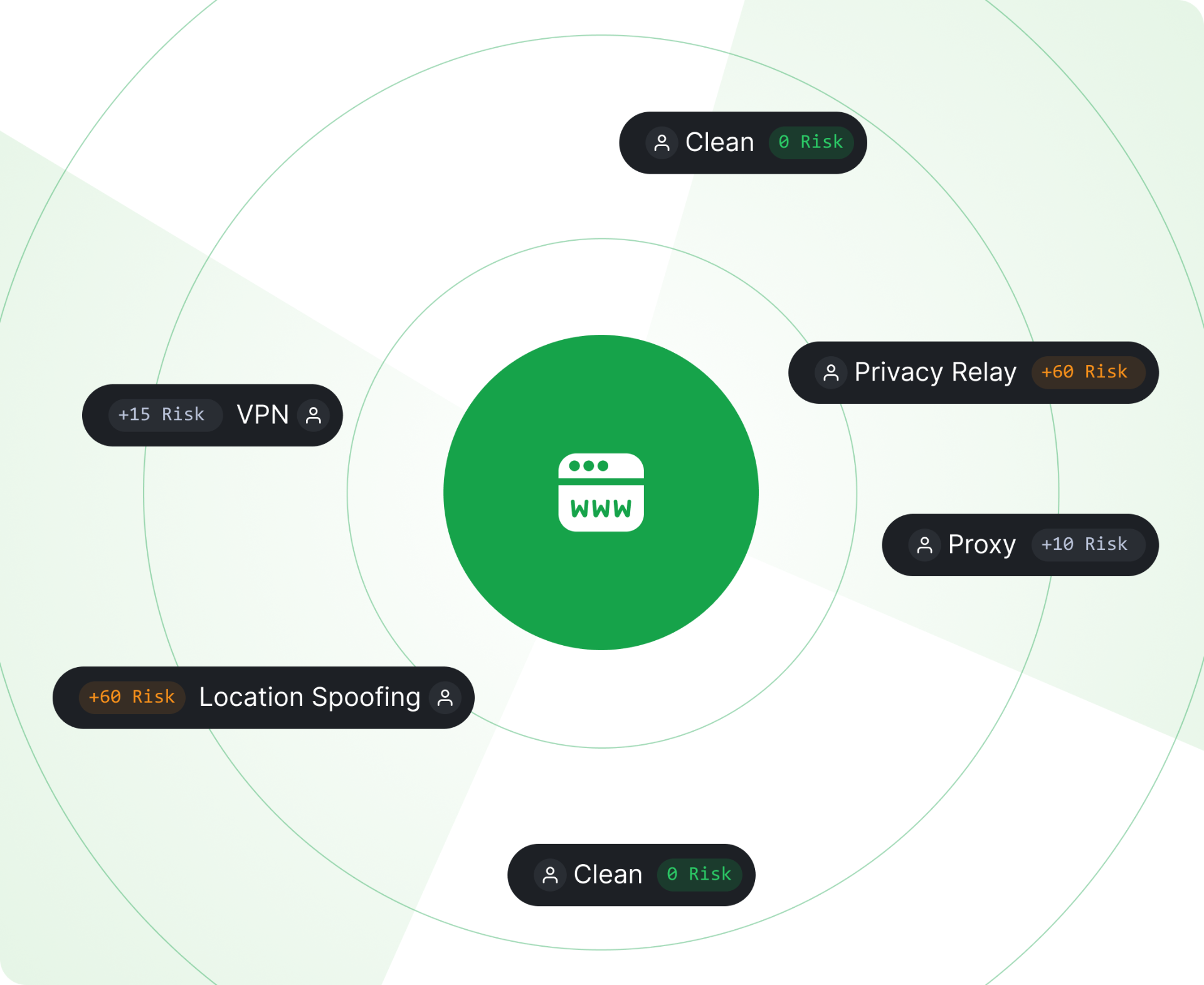
Accurate Anonymity Detection
Fraudsters are getting smarter
Fraudsters are becoming more sophisticated, constantly finding new ways to present a false IP address through a Virtual Private Network or using other tactics such as combining residential proxies with anti-detect browsers.
Beyond IP Blocklists
VPN providers rotate IPs daily. Residential proxies use consumer ISP addresses that never appear in blocklists. New anonymization services launch faster than any database can be updated.
ShieldLabs VPN and Proxy Detection That Goes Deeper
ShieldLabs combines anonymized connection detection with highly accurate visitor identification and spoofing detection at the device, browser, operating system, and network levels, and detects High-Risk Events such as Multi-accounting and Account takeover. Every signal rolls up into an explainable 0-100 risk score, ready out of the box, with suspicious activity visualized in the advanced analytics dashboard.
How Teams Use VPN and Proxy Detection
Risk signals power decisions across fraud prevention, traffic analysis, and compliance.
Account Takeover & Payment Fraud
Flag anonymized connections at login, registration, and checkout to detect account takeover and payment fraud from masked IPs
Multi-Accounting & Fake Accounts
Identify visitors creating multiple accounts behind VPN and proxy rotation by linking sessions with persistent visitor IDs
Free Trial & Promo Abuse
Recognize returning visitors using anonymization to repeatedly exploit free trials, bonuses, and promotional campaigns
Traffic Quality & Analytics
Filter anonymous traffic from your data to get accurate conversion, CAC, and LTV metrics
Geo-Blocking & Compliance
Enforce geographic restrictions and licensing agreements by detecting VPN and proxy bypass
Coupon & Discount Abuse
Detect visitors reusing discount codes and first-time offers under multiple identities
Get Started in Less Than 5 Minutes
From signup to real-time detection in four steps.
01
Sign up
Sign up for a free account with 5,000 identifications included
02
Set up your domain
Set up your domain in the dashboard
03
Install the snippet
Install the code snippet on your site
04
Collect data
Begin collecting visitor IDs, risk signals, risk scores, High-Risk Events, and detection data via the analytics dashboard, API, or Webhooks
Unmask anonymized visitors before they become a problem
Integration takes 5 minutes. Free tier included.
Frequently Asked Questions
Common questions about VPN and proxy detection.
Websites detect VPN and proxy connections by matching the IP against databases of known anonymizers and analyzing the connection across multiple signal layers. IP blocklist matching compares the incoming IP against lists of known VPN and proxy servers, which is fast but limited because providers rotate IPs daily and residential proxies use consumer ISP addresses that never appear in blocklists. Connection analysis inspects the connection across layers including OS, browser timezone versus IP geolocation, connection-type indicators, and device and browser attributes against network parameters. ShieldLabs uses the multi-layer connection-analysis approach, so it flags anonymized traffic even when the IP is clean and the masking is fresh.
Yes. Residential proxies route traffic through real consumer ISP connections that pass standard blocklist checks, so ShieldLabs identifies them at the network level instead of by IP reputation. ShieldLabs checks device, OS, and network consistency; looks for connection anomalies inconsistent with normal consumer traffic; and checks for cross-layer mismatches between claimed and observed parameters. ShieldLabs returns proxy use as a distinct signal in the API response, so you can score it separately from a clean connection.
A VPN routes traffic through an encrypted tunnel that assigns a new IP address; a proxy forwards requests through an intermediary server without necessarily encrypting the full connection. A VPN uses an encrypted tunnel with a new egress IP, usually commercial infrastructure. A proxy is an intermediary relay (anonymous or web) that forwards requests, often without encryption. ShieldLabs detects both as separate signals, so you can choose a different action for each instead of treating all anonymized traffic the same.
Yes, and it treats Private Relay differently from a commercial VPN, because Relay preserves approximate location while masking only the exact IP. It is identified as its own signal type, not lumped with VPN or proxy, which lets you tell privacy-conscious Apple users apart from genuinely high-risk anonymized traffic. ShieldLabs flags Privacy Relay separately, so you don't penalize legitimate users for a built-in privacy feature.
ShieldLabs detects anonymized connections with 99.9% risk signal detection accuracy by analyzing the connection in real time rather than relying on static IP databases. It evaluates cross-layer mismatches and connection characteristics live, on every visit. Contextual scoring adapts to each platform's traffic profile to keep false positives low. Because detection is signal-based, accuracy holds even as anonymization providers rotate IPs and launch new infrastructure.
Integration takes about 5 minutes: add one JavaScript snippet and analysis starts immediately. Start Free, add your domain in the analytics dashboard, install the snippet on your site, and read results in the analytics dashboard, API, or Webhooks. ShieldLabs returns the first risk score on the very first visit, with no model training or warm-up period.