

Stop geo-fraud at every touchpoint
Catch fake locations at signup, login, checkout, and content access
Prevent account takeover, geo-restricted abuse, and promo fraud across every visitor and user, in real time
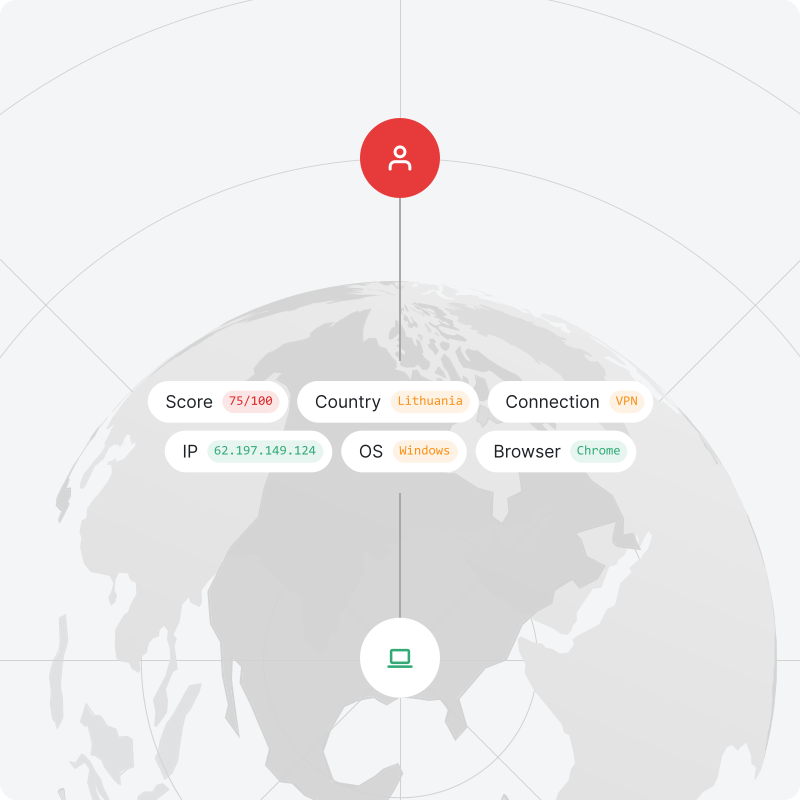
Catch fake locations at signup, login, checkout, and content access
Let legitimate roaming users through without extra verification steps
Stop promo abuse, ad fraud, and chargebacks from fake locations
Add geolocation-spoofing signals to the licensing and geo-restriction checks your team already runs
ShieldLabs recognizes the real visitor behind every anonymous session, to expose geo-spoofing in real time
Identify returning visitors and users across sessions, cleared cookies, incognito mode, rotated IP even when they appear from a new country
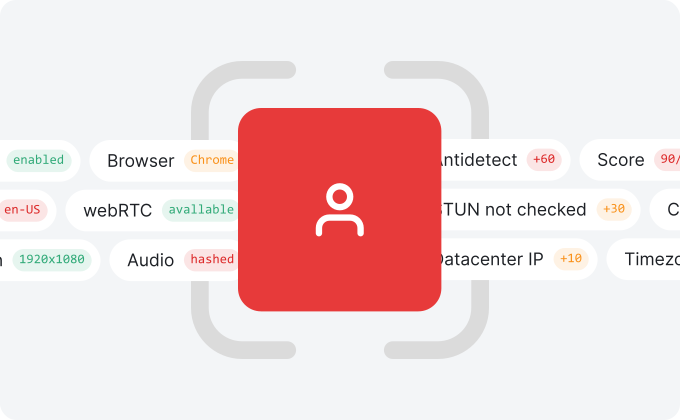
Geolocation mismatch, VPN, proxy, Tor, Privacy Relay, anti-detect browser detection, and other risk signals
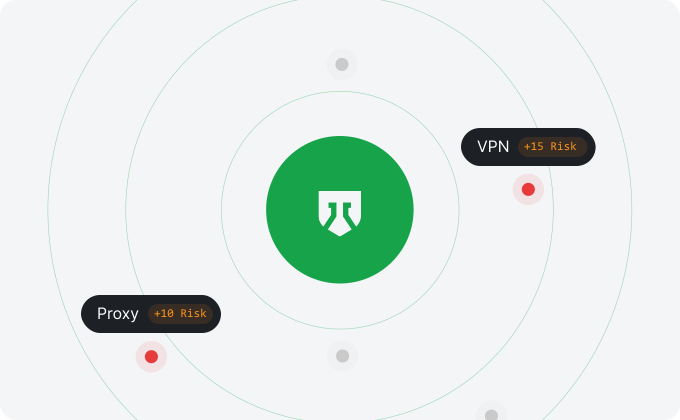
A ready-to-use score reflecting the risk of each visit, with the weight of every signal behind it
High-Risk Events detected out of the box: multi-accounting, account sharing, impossible travel and account takeover, each with Medium or High confidence
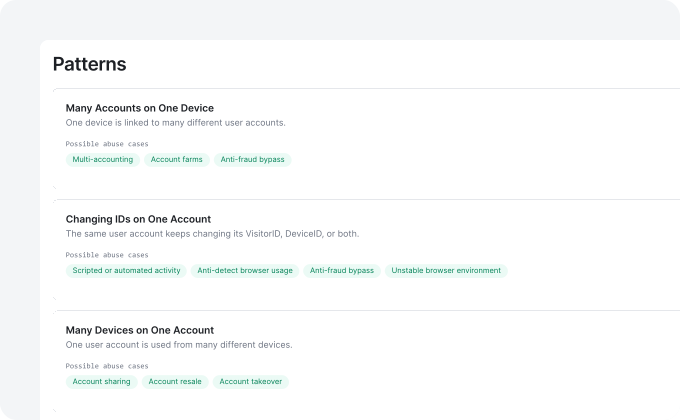
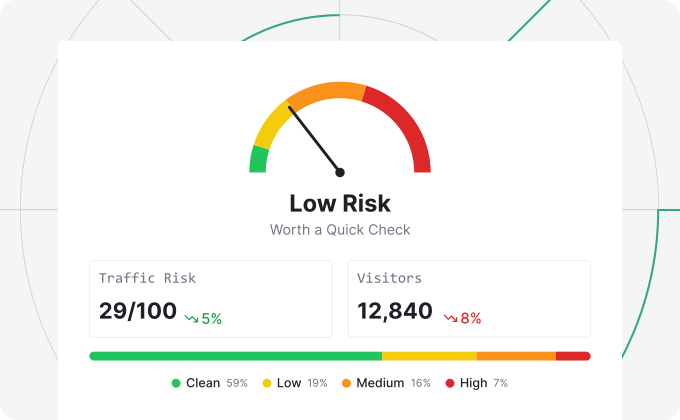
See how much of your traffic is masked, with an overall quality score and a breakdown of the sources sending your visits
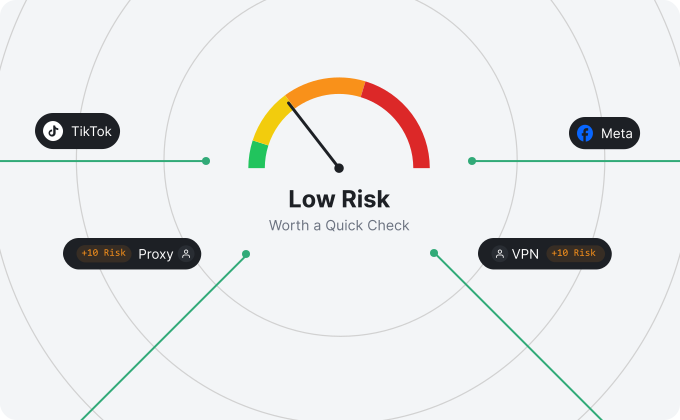
Easily integrate into any signup, login, checkout, ad-redirect, or geo-gated content flow
Get 5,000 free identifications
It identifies every visitor and returns their risk signals and a risk score
See how much of your traffic is masked, with an overall traffic score
Get the risk score, risk signals and High-Risk Events in your backend to stop fraud and abuse
{
  "request_id": "0c284695-cf0b-4755-8beb-0a2e9536595e",
  "visitor_id": "aa8c616a-8a25-4a5e-bee2-a9a08e5128a4",
  "device_id": "6a45967d-1371-9652-ba99-b01ea3992208",
  "user_hid": "u_9f2a41c7",
  "public_ip": { "ip": "62.197.149.124", "country": "United States" },
  "local_ip": { "ip": "45.83.91.7", "country": "United States" },
  "connection_type": "vpn",
  "os": "Windows",
  "browser": "Chrome",
  "device_type": "desktop",
  "risk_score": 85,
  "signals": [
    { "name": "antidetect_browser", "weight": 60 },
    { "name": "vpn", "weight": 15 },
    { "name": "timezone_mismatch", "weight": 10 }
  ]
}Free 5,000 one-time identifications, with transparent pricing that scales with your needs
Location spoofing is when a visitor presents a geographic location different from their real physical location to slip past a location-based rule. The most common reasons are:
Geolocation spoofing techniques include commercial VPNs, residential proxies, Tor, and anti-detect browsers that rewrite the network-layer location.
ShieldLabs surfaces location spoofing through several signals at once and returns a risk score with the signals behind it.
Spoofing geolocation is used to make a visitor appear from a country different from their real location, so they can bypass a region-based rule. The main use cases are:
At a practical level, a location spoofer often chains a VPN with a fresh browser profile to claim a country-locked welcome bonus, while a location faker working at scale inflates click attribution from premium-CPM regions for affiliate fraud rings.
ShieldLabs flags these attempts by correlating the egress IP, timezone, and connection signals against a persistent identifier that survives cleared cookies and rotated IPs.
The tools used for geolocation spoofing are commercial VPNs, residential proxy chains, Tor, browser extensions, and anti-detect browsers that rewrite location signals across several layers. They typically work like this:
ShieldLabs is built around the gap these tools leave behind: faking geolocation at one layer rarely keeps every other signal consistent, and that cross-layer mismatch is what ShieldLabs scores.
A geolocation mismatch is when two or more location-related signals on the same session disagree with each other and expose a spoofed location. Common mismatches include:
ShieldLabs treats the mismatch itself as the signal: instead of trusting any single location source, it scores how consistently every layer describes the same visitor.
ShieldLabs detects location spoofing by analyzing 300+ device, browser, operating system, IP, and network-layer signals and surfacing the inconsistencies between them. It works across layers:
Whether a visitor is spoofing location through a commercial VPN, faking location through a residential proxy chain, or running an anti-detect browser, the inconsistencies surface at every layer.
ShieldLabs returns a 0-100 risk score and a full signal breakdown on the first visit through one JavaScript snippet, without collecting personal data, delivered via the analytics dashboard, API, and Webhooks.
Impossible travel detection identifies a returning visitor or account that appears in two geographically distant countries faster than physical travel allows, for example a login from New York and a second login from Tokyo within thirty minutes. The mechanics:
ShieldLabs detects impossible travel directly as a High-Risk Event, with Medium or High confidence, using persistent visitor identification to track suspicious cross-country account activity.
Browser timezone versus IP timezone matching is a high-precision signal because the two values are derived independently, so a disagreement is hard to fake. How it works:
False positives stay low because legitimate travelers usually carry their device clock with them, and the signal never fires alone.
ShieldLabs reads this signal together with the rest of the risk signals, so the timezone mismatch only raises the risk score when other layers agree something is off.
Yes. ShieldLabs returns the signals you need to enforce your own geo restrictions, on top of the basic declared-country and IP-country checks most teams start with. The extra layers are:
ShieldLabs does not maintain sanctions or OFAC lists and makes no compliance certification claims; it returns signals that feed cleanly into the decision layer your team already runs.
Location spoofing detection asks whether every signal describes the same real visitor, not just whether one IP is a VPN, so it catches cases that standalone IP checks miss. The difference shows up at the edges:
ShieldLabs combines all of these into a single risk score, so a clean IP no longer hides a spoofed location and a privacy-conscious real user is not punished for one VPN hop.
ShieldLabs detects location spoofing and helps block fraudulent and abusive traffic. It returns a risk score, a full signal breakdown and High-Risk Events, and you choose the action for each case. A common setup looks like this:
ShieldLabs ships the full signal set behind location spoofing detection on the Starter plan, with High-Risk Events and a 0-100 risk score on every session, and public plans from 79 USD a month for 25,000 identifications.