

Stop account farms
Surface coordinated rings running multiple identities to drain promotional budgets at scale
Keep welcome bonuses, deposit matches, and referral payouts on real customers, and marketing spend on real growth
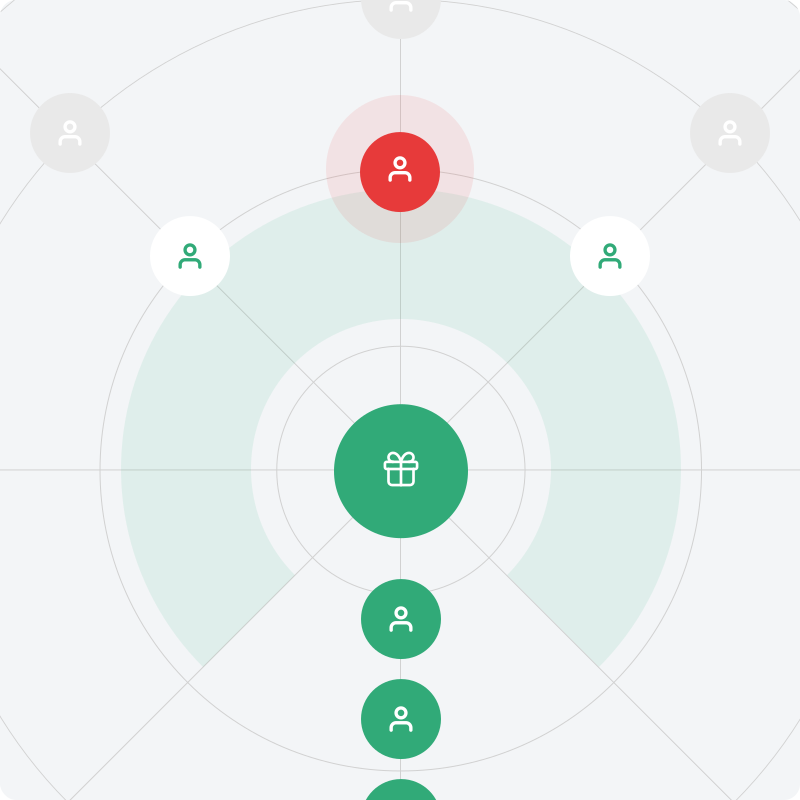
Surface coordinated rings running multiple identities to drain promotional budgets at scale
Spot the same person across emails, wallets, and devices claiming the same offer twice
Keep welcome bonuses, signup credits, and deposit matches going to real customers
Legitimate users claim bonuses and complete signup without extra verification or holds
ShieldLabs recognizes the real visitor behind every anonymous session, so your team can stop fraudulent bonus claims in real time
Identify returning visitors and users across sessions, cleared cookies, incognito mode, and rotated IP
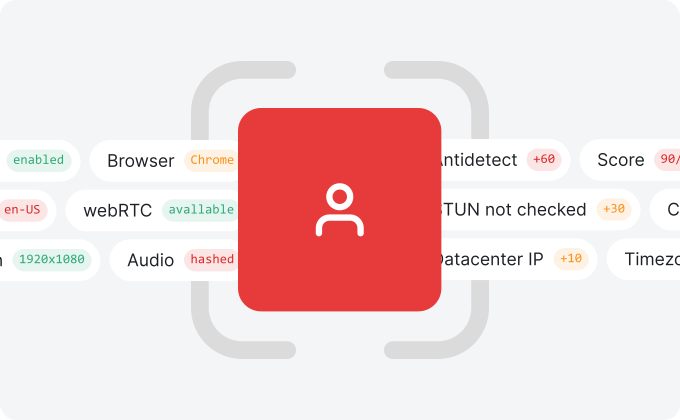
Detection of VPN, proxy, Tor, anti-detect browser, IP reputation and other risk signals on every visit, with 99.9% risk signal detection accuracy
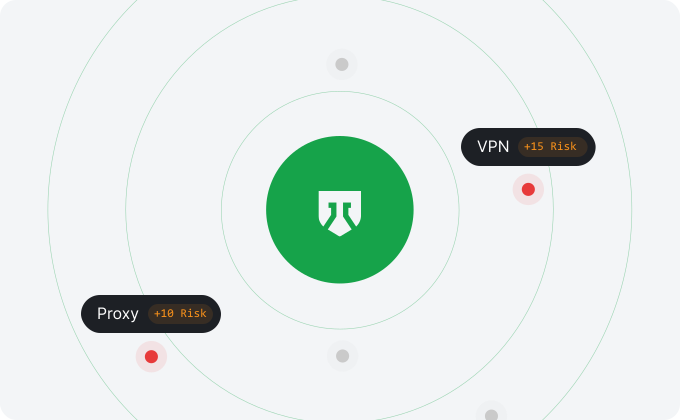
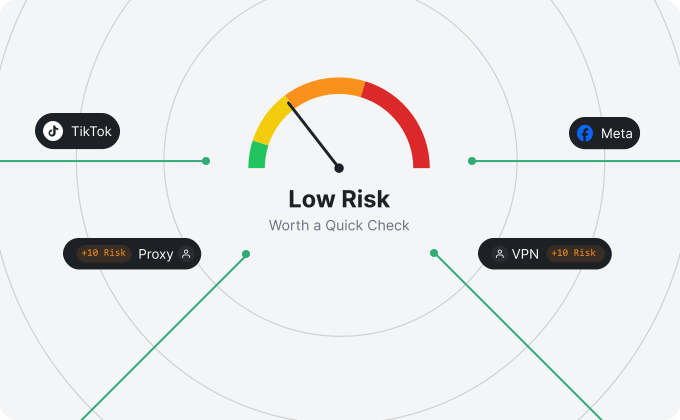
A ready-to-use score reflecting the risk of each visit, with the weight of every signal behind it
High-Risk Events detected out of the box: multi-accounting, account sharing, impossible travel and account takeover, each with Medium or High confidence
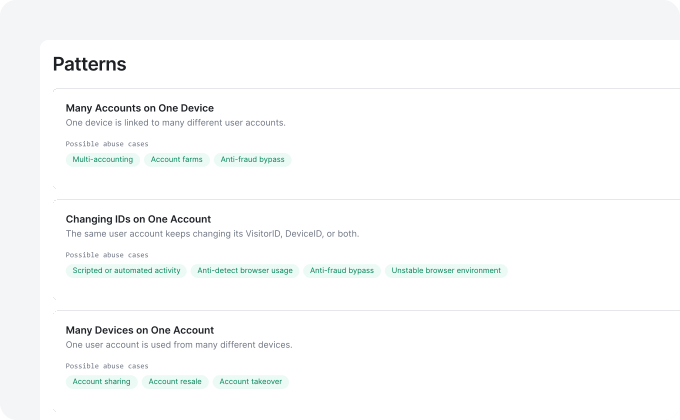
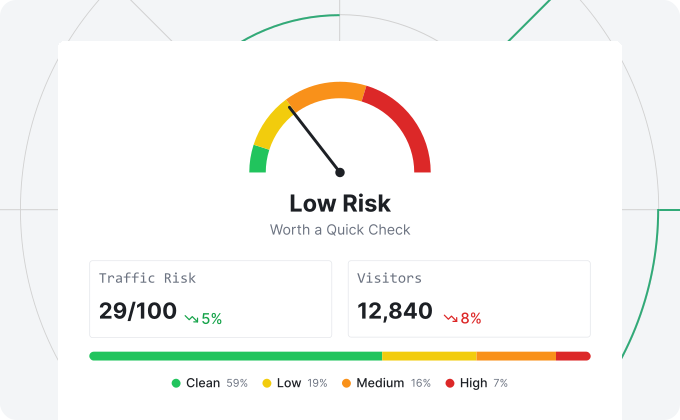
See how much of your traffic is masked, with an overall quality score and a breakdown of the sources sending your visits
Easily integrate into any signup, deposit, or bonus redemption flow
Get 5,000 free identifications
It identifies every visitor and returns their risk signals and a risk score
See how much of your traffic is masked, with an overall traffic score
Get the risk score, risk signals and High-Risk Events in your backend to stop fraud and abuse
{
  "request_id": "0c284695-cf0b-4755-8beb-0a2e9536595e",
  "visitor_id": "aa8c616a-8a25-4a5e-bee2-a9a08e5128a4",
  "device_id": "6a45967d-1371-9652-ba99-b01ea3992208",
  "user_hid": "u_9f2a41c7",
  "public_ip": { "ip": "62.197.149.124", "country": "United States" },
  "local_ip": { "ip": "45.83.91.7", "country": "United States" },
  "connection_type": "vpn",
  "os": "Windows",
  "browser": "Chrome",
  "device_type": "desktop",
  "risk_score": 85,
  "signals": [
    { "name": "antidetect_browser", "weight": 60 },
    { "name": "vpn", "weight": 15 },
    { "name": "timezone_mismatch", "weight": 10 }
  ]
}Free 5,000 one-time identifications, with transparent pricing that scales with your needs
Bonus abuse fraud is the exploitation of promotional offers by a bonus abuser who uses multiple identities to claim the same offer repeatedly. Casino bonus abuse is the most common form, and operators report it accounts for around 60–64% of total iGaming fraud activity.
ShieldLabs lets your team identify bonus abuse through persistent visitor and user identification across sessions, regardless of email, IP, or cleared cookies.
Bonus hunting (or a bonus hunt) is the practice of opening accounts specifically to claim promotional offers like welcome bonuses, free spins, and deposit matches, without intent to become a regular customer. The line between hunting and abuse is the number of identities involved.
ShieldLabs identifies the abuse case by linking accounts back to the same visitor and user across sessions, even when each account uses a different email, IP, or browser.
Account farming is the practice of creating and operating multiple user accounts on a single platform, usually under fake or synthetic identities, to claim bonuses, referral payouts, or promotional offers at scale. The goal is to disguise one operator behind many identities.
ShieldLabs links farmed accounts back to the same visitor and user through device fingerprinting, risk signals, and multi-accounting detected as a High-Risk Event.
Online casinos and operators detect multiple accounts by combining identity and risk signals into one persistent view of each player, then correlating the accounts that resolve to the same person. No single signal is enough, so they layer several together:
Layered together, these signals link farmed accounts back to one player even when each account uses a different email, IP, or browser.
Bonus abuse usually breaches an operator's terms of service rather than criminal law. Criminal prosecution is rare unless stolen identities or stolen payment methods are involved.
ShieldLabs gives operators the evidence to enforce their terms, with persistent visitor and user identification, risk signals, and High-Risk Events such as multi-accounting.
ShieldLabs returns persistent visitor and user identification with a 0–100 Risk Score on every signup, deposit, and bonus claim, and detects bonus abuse before any payout goes out.
ShieldLabs stops bonus abuse for operators across iGaming, fintech, crypto, and SaaS, who choose the action for each case: verification, payout hold, or block.
ShieldLabs flags risky bonus claims and helps block fraudulent and abusive traffic. It returns a Risk Score, a full Details breakdown and High-Risk Events, and you choose the action for each claim.
ShieldLabs includes 5,000 free identifications, so you can see the results on your own traffic first.