

Prevent incentive fraud
Block bonus, promo, and referral farming across multiple fake accounts
Prevent promo abuse, fake signups, and multi-accounting without adding friction for real users, through persistent identification and real-time risk scoring
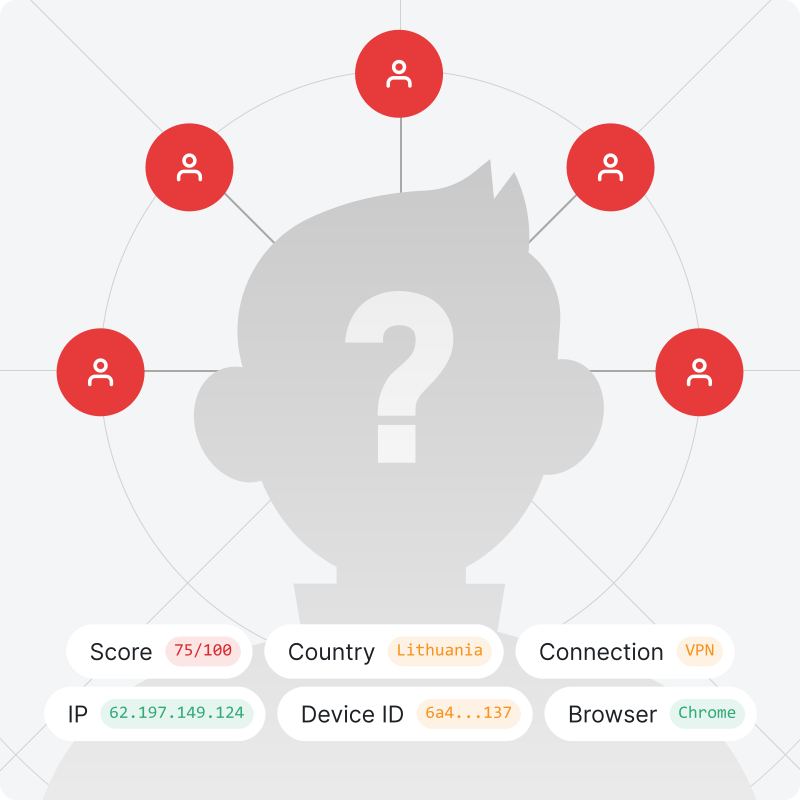
Block bonus, promo, and referral farming across multiple fake accounts
Stop free trial abuse and block repeat attempts before another cycle begins
Keep banned users from bypassing restrictions and returning under a new identity
Legitimate signups go through without extra friction or added verification steps
ShieldLabs recognizes the real visitor behind every anonymous session, so your team can stop fraudulent account creation in real time
Identify returning visitors and users across sessions, cleared cookies, rotated IP and incognito mode
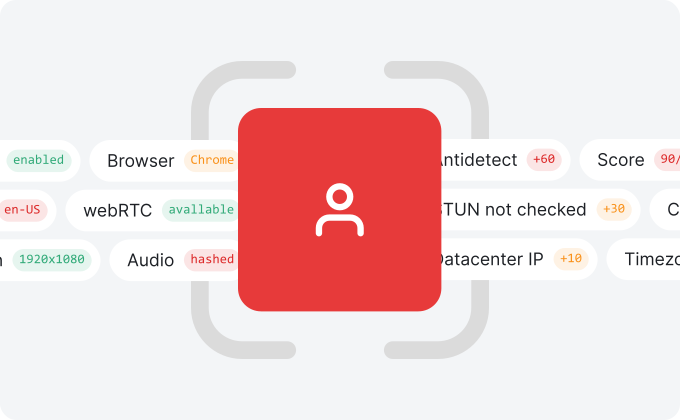
Detection of VPN, proxy, Tor, anti-detect browser, geolocation spoofing, IP reputation and other risk signals on every visit, with 99.9% risk signal detection accuracy
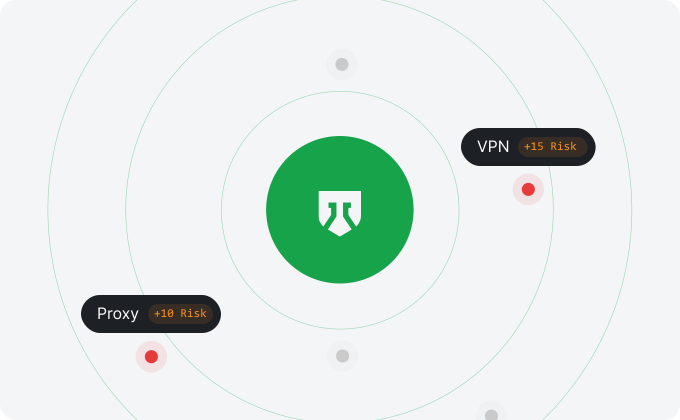
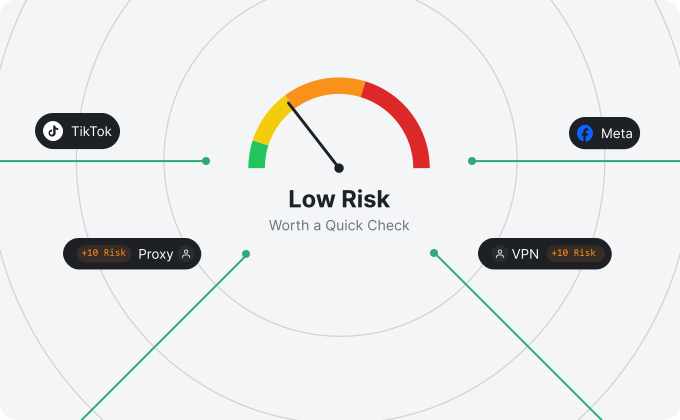
A ready-to-use score reflecting the risk of each visit, with the weight of every signal behind it
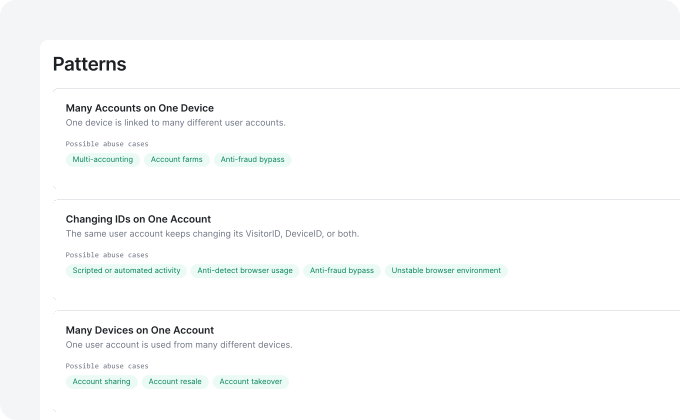
High-Risk Events detected out of the box: multi-accounting, account sharing, impossible travel and account takeover, each with Medium or High confidence
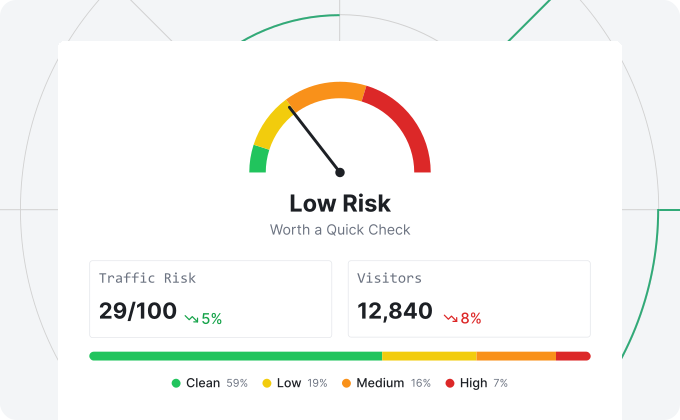
See how much of your traffic is masked, with an overall quality score and a breakdown of the sources sending your visits
New account fraud prevention for every platform
Stop free trial cycling and plan limit abuse from the same person opening account after account
Catch referral farming, welcome bonus abuse, and promo fraud before payouts hit your books
Spot bonus abuse, affiliate fraud, multi-accounting, and banned players returning under a new identity
Defend crypto airdrops and reward campaigns from sybil abuse and farming activity
Easily integrate into any signup or onboarding flow
Get 5,000 free identifications
It identifies every visitor and returns their risk signals and a risk score
See how much of your traffic is masked, with an overall traffic score
Get the risk score, risk signals and High-Risk Events in your backend to stop fraud and abuse
{
  "request_id": "0c284695-cf0b-4755-8beb-0a2e9536595e",
  "visitor_id": "aa8c616a-8a25-4a5e-bee2-a9a08e5128a4",
  "device_id": "6a45967d-1371-9652-ba99-b01ea3992208",
  "user_hid": "u_9f2a41c7",
  "public_ip": { "ip": "62.197.149.124", "country": "United States" },
  "local_ip": { "ip": "45.83.91.7", "country": "United States" },
  "connection_type": "vpn",
  "os": "Windows",
  "browser": "Chrome",
  "device_type": "desktop",
  "risk_score": 85,
  "signals": [
    { "name": "antidetect_browser", "weight": 60 },
    { "name": "vpn", "weight": 15 },
    { "name": "timezone_mismatch", "weight": 10 }
  ]
}Free 5,000 one-time identifications, with transparent pricing that scales with your needs
New account fraud is when one person creates multiple accounts to claim benefits they have already used or to bypass a restriction. It looks legitimate to standard signup checks because every account uses a different email and IP.
ShieldLabs assigns a persistent identifier on every visit that lets you spot the same person creating new accounts, regardless of email, IP, or cleared cookies.
The two types of new account fraud are abuse-motivated and evasion-motivated. Both produce the same underlying signal: one persistent visitor behind multiple accounts.
ShieldLabs links related accounts back to one persistent identity and detects both behaviors as multi-accounting, a High-Risk Event, so your team can act on the signal that fits each case.
ShieldLabs detects fake accounts at signup by assigning a persistent identifier on the first visit and recognizing the same person when they return under a new email, IP, or browser. The first risk score is available on that first visit.
ShieldLabs returns a 0-100 risk score with a full signal breakdown on every visitor or user, delivered via the analytics dashboard, API, and Webhooks, so your team can act before the account is created.
Fake account prevention works by identifying the person behind each signup before any verification email is sent, then flagging the risky ones so your team can act. It starts at the signup form, not after the account already exists.
ShieldLabs flags fake signups and helps block fraudulent and abusive traffic before the account exists.
ShieldLabs stops fake signups by flagging them and helping block fraudulent and abusive traffic. You choose the action for each case.
ShieldLabs shows the signals behind every score, so each decision is explainable.
Email validation and CAPTCHA check whether a single signup looks human and reachable, but they have no memory of who signed up before. ShieldLabs adds persistent identity, so a returning person is recognized across signups.
ShieldLabs links a person's third account back to their first as the same visitor, regardless of email address, IP, or cleared cookies, which one-time checks cannot do.
Multi-accounting is one person creating and operating multiple accounts on the same platform to gain benefits a single account would not get. Each account looks legitimate to standard verification because the email, IP, and browser differ.
ShieldLabs lets your team identify multi-accounting by linking related accounts to one persistent identity and detecting multi-accounting when many accounts sit behind a single visitor.
Fake account fraud is when someone registers accounts with fabricated or recycled identities to abuse platform benefits, bypass restrictions, or manipulate metrics. Because the identity details are disposable, the only reliable signal is the visitor's persistent identity and connection.
ShieldLabs assigns a persistent identifier on every visit and detects multi-accounting when the same person registers under a new identity.
Detect multi-account fraud at signup by linking each new registration to a persistent identity that holds across cleared cookies, rotated IP, and incognito mode. When the same person opens a second or third account, the connection becomes visible even though every account uses different details.
ShieldLabs runs this in real time on every visitor or user, so your team can act on the High-Risk Event before a duplicate account is approved.
Free trial abuse is when the same person repeatedly opens new accounts to claim a trial period they have already used. It is one of the most common forms of new account fraud on SaaS and subscription platforms.
ShieldLabs links every signup to a persistent identity and detects repeat trials as multi-accounting, so your team can require verification or block the account via API before the new trial starts.