

Stop ban evasion at signup
Recognize a banned user the moment they create a new account
Make every ban final, and stop one banned user from quietly returning under a new account
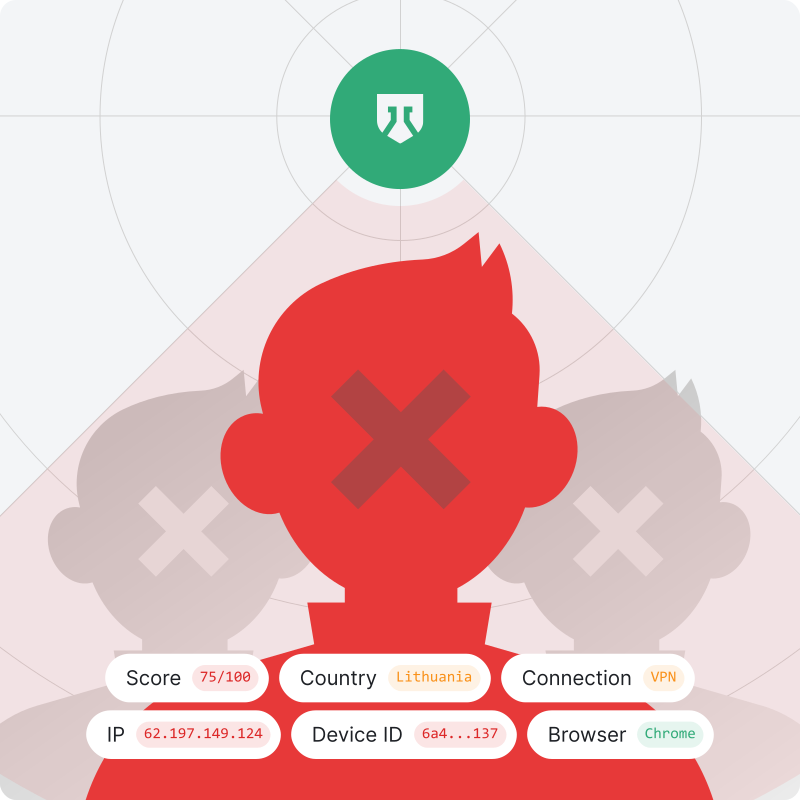
Recognize a banned user the moment they create a new account
Catch the evader at signup instead of finding and banning them again
Link a new signup to a banned account with a clear signal trail
Legitimate new signups join without extra verification or hold steps
ShieldLabs recognizes the real visitor behind every anonymous session, so your team can catch a banned user the moment they return under a new account and protect platform integrity
Identify returning visitors and users across sessions, cleared cookies, incognito mode, rotated IP, and fresh accounts
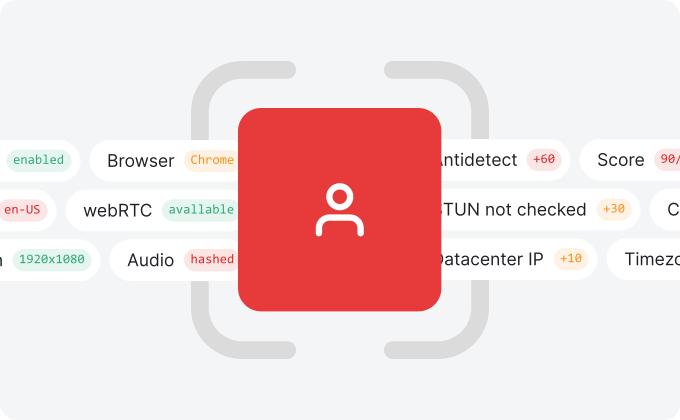
Detection of VPN, proxy, Tor, anti-detect browser, IP reputation and other risk signals on every visit, with 99.9% risk signal detection accuracy
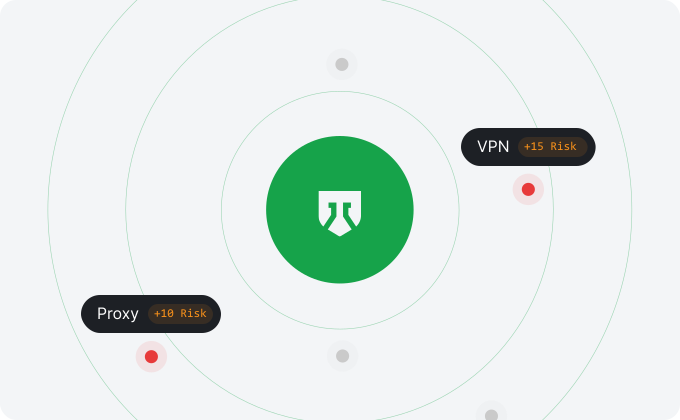
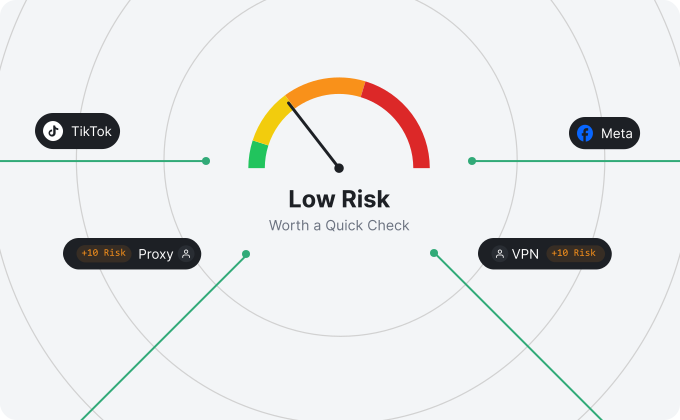
A ready-to-use score reflecting the risk of each visit, with the weight of every signal behind it
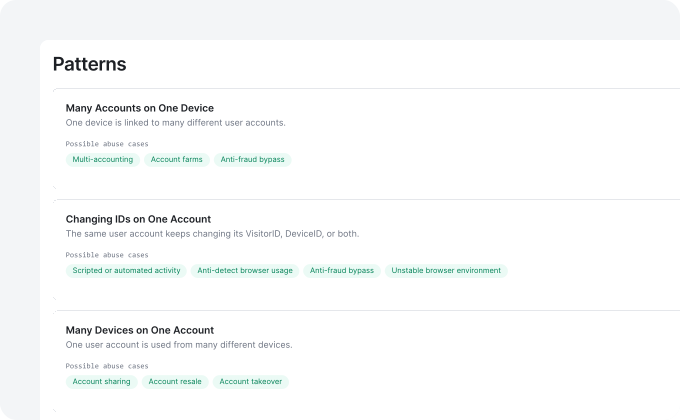
High-Risk Events detected out of the box: multi-accounting, account sharing, impossible travel and account takeover, each with Medium or High confidence
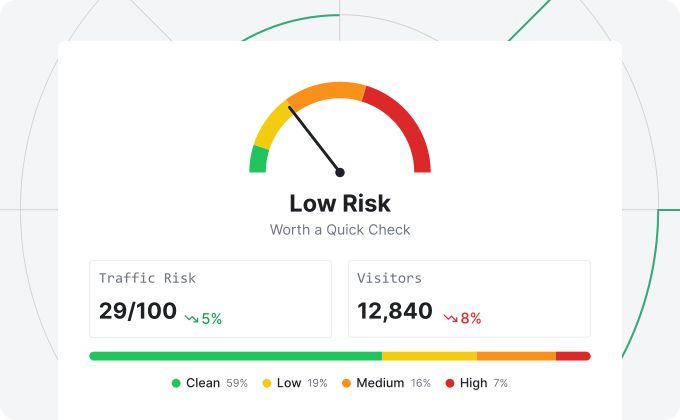
See how much of your traffic is masked, with an overall quality score and a breakdown of the sources sending your visits
Easily integrate into any signup, login, or account creation flow
Get 5,000 free identifications
It identifies every visitor and returns their risk signals and a risk score
See how much of your traffic is masked, with an overall traffic score
Get the risk score, risk signals and High-Risk Events in your backend to stop fraud and abuse
{
  "request_id": "0c284695-cf0b-4755-8beb-0a2e9536595e",
  "visitor_id": "aa8c616a-8a25-4a5e-bee2-a9a08e5128a4",
  "device_id": "6a45967d-1371-9652-ba99-b01ea3992208",
  "user_hid": "u_9f2a41c7",
  "public_ip": { "ip": "62.197.149.124", "country": "United States" },
  "local_ip": { "ip": "45.83.91.7", "country": "United States" },
  "connection_type": "vpn",
  "os": "Windows",
  "browser": "Chrome",
  "device_type": "desktop",
  "risk_score": 85,
  "signals": [
    { "name": "antidetect_browser", "weight": 60 },
    { "name": "vpn", "weight": 15 },
    { "name": "timezone_mismatch", "weight": 10 }
  ]
}Free 5,000 one-time identifications, with transparent pricing that scales with your needs
Ban evasion is when a user who has been banned or suspended from a platform creates a new account to get back in and circumvent the enforcement decision. To standard signup checks the new account looks brand-new, because it arrives with changed surface details:
The person behind the account is the same one who was banned, so platforms treat ban evasion as a return of the same policy violator and an erosion of platform integrity
ShieldLabs recognizes a returning banned user through persistent visitor and user identification that holds across sessions regardless of email, IP, or cleared cookies, so a repeat signup is recognizable on the first visit
Banned users combine several techniques to look like a new person at signup, mostly aimed at resetting the identifiers a platform checks. The most common are:
In gaming, evaders go further to escape hardware bans by spoofing hardware identifiers
ShieldLabs links the new signup back to one persistent visitor and user through device fingerprinting, anti-detect browser detection, IP intelligence, and other risk signals, so the same person is recognizable on every signup even when the cosmetic identity has changed
In most jurisdictions ban evasion itself is not a criminal offense, but it is a Terms of Service violation. The legal exposure depends on what surrounds it:
ShieldLabs surfaces the evidence trail behind a return, the linked accounts, the shared device and network signals, and the timing, so the enforcement decision is grounded in data rather than guesswork
ShieldLabs runs through a single JavaScript snippet on your signup or account creation page and returns, on the first visit, the signals that reveal whether a new account belongs to an already-banned person. Each signup comes back with:
When a new signup matches an identity already linked to a banned account, ShieldLabs detects it as multi-accounting
ShieldLabs delivers the risk score, signals and High-Risk Events via API and Webhook, so you can block, hold for review, or choose any other action on the same request
Preventing ban evasion comes down to identifying the person at signup rather than trusting the surface details of a new account, then holding that signup before it regains access. In practice it has three layers:
With a risk score and signal breakdown on each signup, a team can choose additional verification, a hold for review, or automatic approval before a new account is granted access
Ban evasion is the narrower case: the person has already been banned and creates a new account specifically to circumvent that enforcement decision, while multi-accounting is parallel volume abuse with no ban involved. The distinction:
ShieldLabs covers both with one snippet. Pick ban evasion prevention when the concern is repeat offenders returning after a ban, or multi-accounting detection when it is parallel accounts gaming your system. Many platforms run both
Yes. The mechanism is universal because it recognizes the person, not the platform, and two verticals have a sharper version of the problem:
ShieldLabs applies the same web-layer identification across marketplaces, social platforms, dating apps, and communities, so any platform that issues bans can recognize a banned user returning under a new account
ShieldLabs recognizes the returning user and helps block fraudulent and abusive signups. It returns a risk score, a full signal breakdown and High-Risk Events, and you choose the action for each case, for example:
ShieldLabs includes 5,000 free identifications, so you can see the results on your own traffic first