

Stop fake-account farms
Catch coordinated rings harvesting sign-up bonuses and referral credits at scale
Prevent fake-account farms, account takeover, and points farming across loyalty programs at signup, login, and redemption
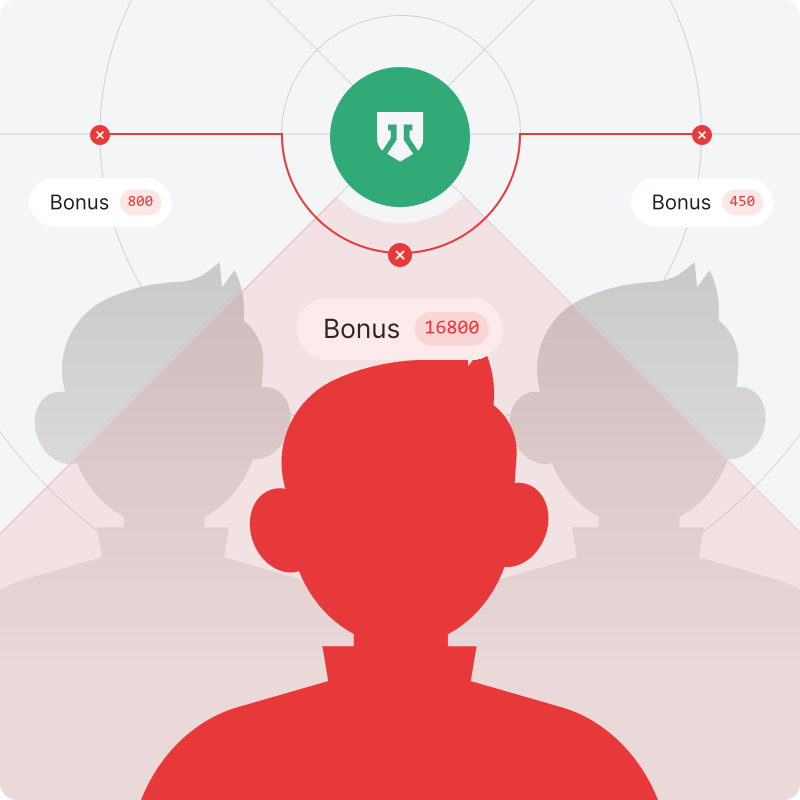
Catch coordinated rings harvesting sign-up bonuses and referral credits at scale
Spot stolen-credential logins that fuel loyalty points fraud and liquidate balances at claim time
Keep welcome bonuses, points balances, and reward redemptions going to real members
Legitimate members sign up, log in, and redeem rewards without extra verification or holds
ShieldLabs recognizes the real visitor behind every anonymous session, so your team can stop fraudulent loyalty redemptions in real time
Identify returning visitors and users across sessions, cleared cookies, incognito mode, and rotated IP, even when they sign up under fresh emails
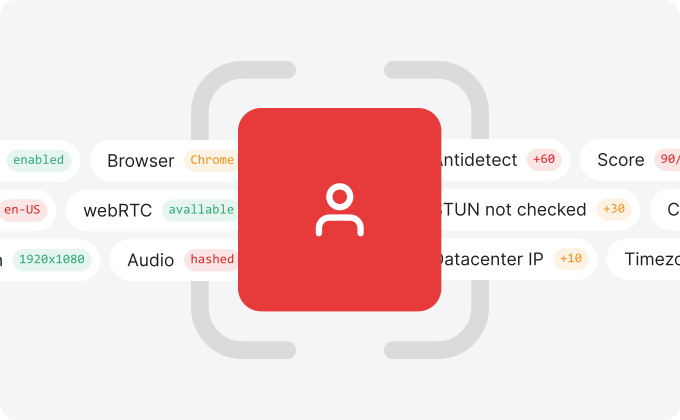
Detection of VPN, proxy, Tor, anti-detect browser, IP reputation, and other risk signals on every visit, with 99.9% risk signal detection accuracy
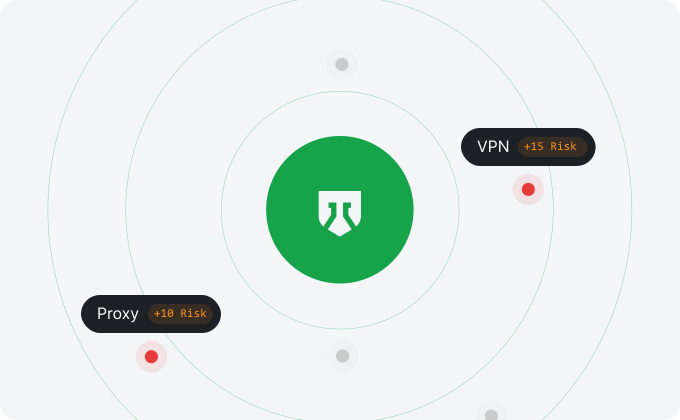
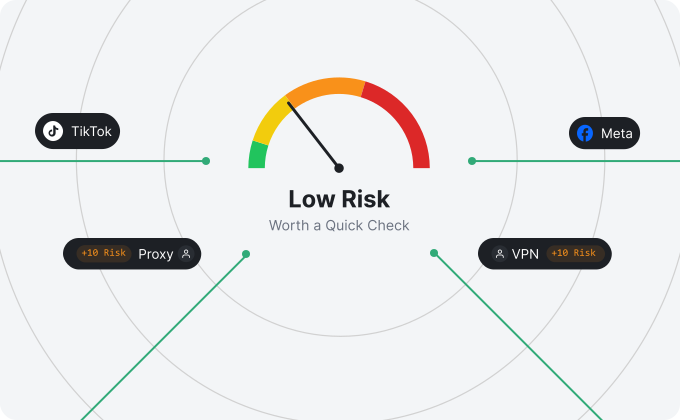
A ready-to-use score reflecting the risk of each visit, with the weight of every signal behind it
High-Risk Events detected out of the box: multi-accounting, account sharing, impossible travel and account takeover, each with Medium or High confidence
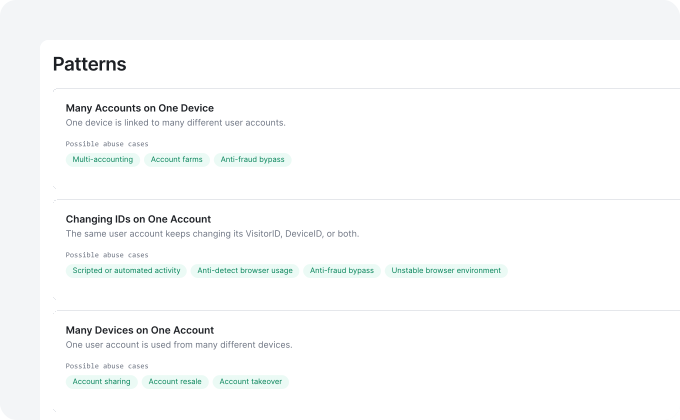
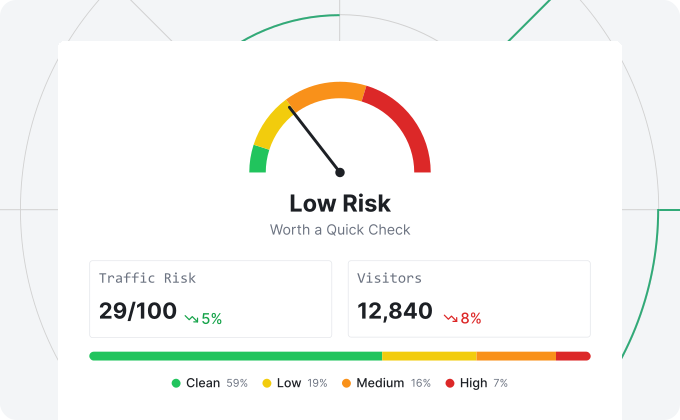
See how much of your traffic is masked, with an overall quality score and a breakdown of the sources sending your visits
Easily integrate into any signup, login, or redemption flow
Get 5,000 free identifications
It identifies every visitor and returns their risk signals and a risk score
See how much of your traffic is masked, with an overall traffic score
Get the risk score, risk signals and High-Risk Events in your backend to stop fraud and abuse
{
  "request_id": "0c284695-cf0b-4755-8beb-0a2e9536595e",
  "visitor_id": "aa8c616a-8a25-4a5e-bee2-a9a08e5128a4",
  "device_id": "6a45967d-1371-9652-ba99-b01ea3992208",
  "user_hid": "u_9f2a41c7",
  "public_ip": { "ip": "62.197.149.124", "country": "United States" },
  "local_ip": { "ip": "45.83.91.7", "country": "United States" },
  "connection_type": "vpn",
  "os": "Windows",
  "browser": "Chrome",
  "device_type": "desktop",
  "risk_score": 85,
  "signals": [
    { "name": "antidetect_browser", "weight": 60 },
    { "name": "vpn", "weight": 15 },
    { "name": "timezone_mismatch", "weight": 10 }
  ]
}Free 5,000 one-time identifications, with transparent pricing that scales with your needs
Loyalty fraud is the practice of exploiting or extracting value from a loyalty rewards program through fake accounts, stolen logins, or manipulated redemptions. Operators usually break it into layers, each handled by a different tool:
Each layer maps to its own tool: a KYC platform for identity verification on high-value redemptions, a bot-management tool for credential stuffing at network scale, a payment-fraud platform for gift-card and chargeback fraud, and an internal fraud-monitoring system for employee abuse.
ShieldLabs covers the web-side identity layer at signup, login, and redemption. It detects multi-accounting behind fresh signup farms and account takeover from unrecognized devices, using persistent visitor and user identification that holds across sessions regardless of email, IP, or cleared cookies.
Rewards fraud is the extraction of value from a rewards program through stolen credentials, fake accounts, or pooled synthetic identities. It is another name for loyalty fraud, with three common vectors:
Mastercard industry data puts annual rewards-fraud losses at $1B to 3B across travel, hospitality, retail, and credit-card programs.
ShieldLabs addresses the rewards fraud vector at signup, login, and redemption by detecting multi-accounting and account takeover as High-Risk Events. It is the identity layer that sits in front of KYC, payment-fraud, and bot-management tools.
Points fraud is the unauthorized conversion of accumulated loyalty points into liquid value such as gift cards, miles, award flights, or third-party marketplace cash. It usually surfaces at the redemption moment, once a member's account has been taken over or points have been harvested across fake accounts and the balance is liquidated before the real member notices. The dominant vectors are:
ShieldLabs addresses points fraud at the web-side identity layer by detecting account takeover from unrecognized devices and flagging anonymized connections and redemption-time anomalies.
Rebate fraud is claiming rebates the claimant is not entitled to, typically through fake receipts, duplicate accounts that claim the same rebate repeatedly, or refund-and-rebuy cycles that game per-purchase caps. In retail and grocery loyalty programs the dominant vectors are:
It shares its claim mechanics with promo abuse and cashback fraud, but runs on the same identity-layer mechanism underneath.
ShieldLabs addresses rebate fraud at signup, login, and claim time by detecting multi-accounting and identity reuse across membership IDs.
Several adjacent abuse types share loyalty fraud's account-identity layer, even though their payouts differ. The common ones are:
ShieldLabs detects the same person operating many accounts (multi-accounting) and stolen credentials reaching real ones (account takeover). That identity-layer signal is shared across all of these abuse types.
Preventing loyalty fraud takes several layers, because no single tool covers all of it. Operators usually combine:
Most loyalty programs run these layers in parallel, since fraud usually slips through wherever no tool is watching.
ShieldLabs covers the account layer. It returns persistent identification, a risk score, and High-Risk Events at signup, login, and redemption, so you can act before a synthetic member finishes onboarding or a stolen balance ships.
ShieldLabs runs from one JavaScript snippet on your signup, login, or redemption page and detects loyalty fraud in real time. On every visit it returns:
High-Risk Events are detected automatically. When many signups trace back to one device, browser, or identity, ShieldLabs detects multi-accounting; when a login or redemption comes from an unrecognized device or a country far from the member's usual one, it detects account takeover or impossible travel.
ShieldLabs delivers the score, signals, and High-Risk Events through the analytics dashboard, API, and Webhooks, so you can flag, hold, or step up before a fake member harvests a bonus or a stolen redemption ships.
Yes. The mechanism is the same wherever one person can profit by opening many accounts or getting into an account that is not theirs, so ShieldLabs applies across every loyalty-program category. It detects multi-accounting and account-takeover logins at signup, login, and redemption, and stops the downstream abuse each category cares about:
In every case ShieldLabs identifies the visitor and user behind the account at the web-side signup, login, and redemption layer, and you choose whether to allow, hold, or step up the request.
Yes. ShieldLabs is loyalty fraud prevention software focused on the web-side identity layer at signup, login, and redemption. Loyalty fraud prevention software is a tool an operator integrates to run loyalty fraud detection automatically instead of reviewing accounts and redemptions by hand. ShieldLabs provides that through:
It identifies the visitor and user, detects High-Risk Events, and flags risky accounts and redemptions, so you can allow, hold, or step up each one.
ShieldLabs is the software that covers the fake-account, multi-accounting, account-farm, and account-takeover layer underneath most identity-side loyalty fraud.
Integration takes about 5 minutes: add one JavaScript snippet to your member-facing pages and read the returned identification and risk data from the API. The steps are:
ShieldLabs returns the first risk score on the member's first visit, and the free tier includes 5,000 one-time identifications, so you can see the results on your own traffic first.
ShieldLabs flags risky members and helps block fraudulent and abusive traffic. It returns a risk score, a full signal breakdown and High-Risk Events, and you choose the action for each score band. Typical setups look like:
The free tier includes 5,000 identifications, so you can see the results on your own traffic first.