

Enterprise-level fintech fraud functionality,
without enterprise pricing
Safeguard banks, neobanks, wallets, lending, and payment
systems from fake accounts and account takeover
How ShieldLabs helps
Keep fake accounts out
Stop one person opening many accounts to farm signups and bypass limits
Protect signup incentives
Keep welcome bonuses, referral payouts, and promo budgets with real customers
Keep accounts in real hands
Catch account takeover logins from unrecognized devices and anonymized connections
Keep real users moving
Legitimate customers sign up and log in without extra verification steps
How ShieldLabs prevents fintech fraud and abuse
ShieldLabs recognizes the real visitor behind every anonymous session
Accurate Identification
Identify returning visitors and users across sessions, cleared cookies, incognito mode, and rotated IP, even when they sign up as new ones
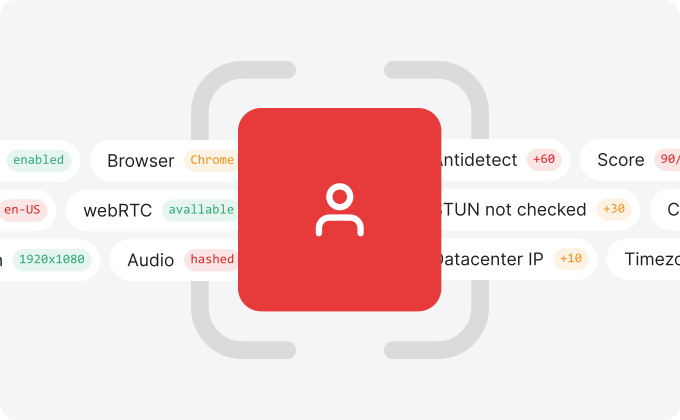
Risk Signals
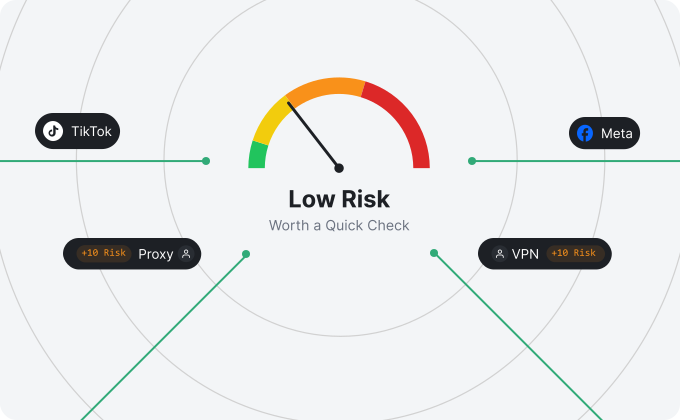
Detection of VPN, proxy, Tor, anti-detect browser, IP reputation and other risk signals on every visit, with 99.9% risk signal detection accuracy
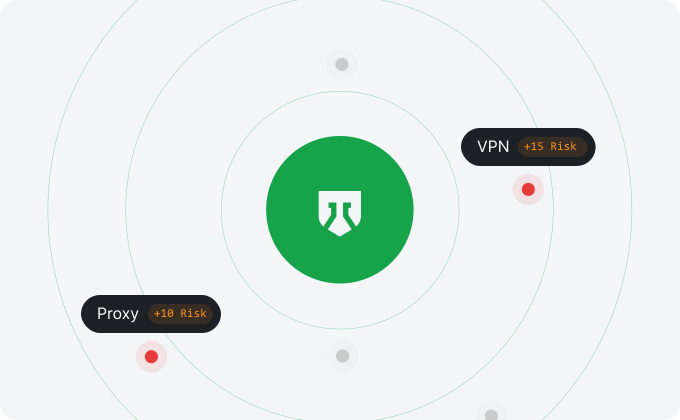
Risk Score
A ready-to-use score reflecting the risk of each visit, with the weight of every signal behind it
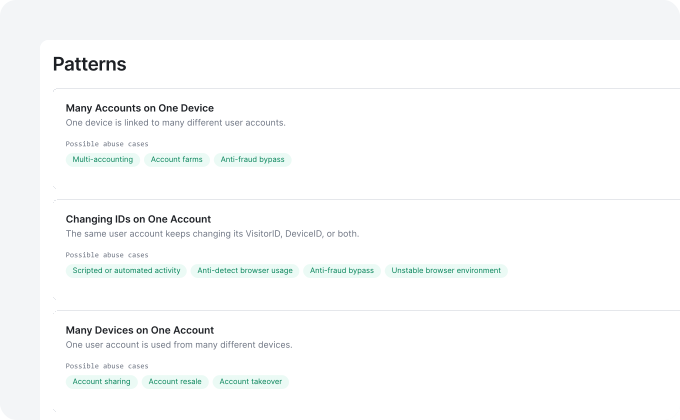
High-Risk Events
Direct detection of multi-accounting, account sharing, impossible travel, and account takeover, each with Medium or High confidence
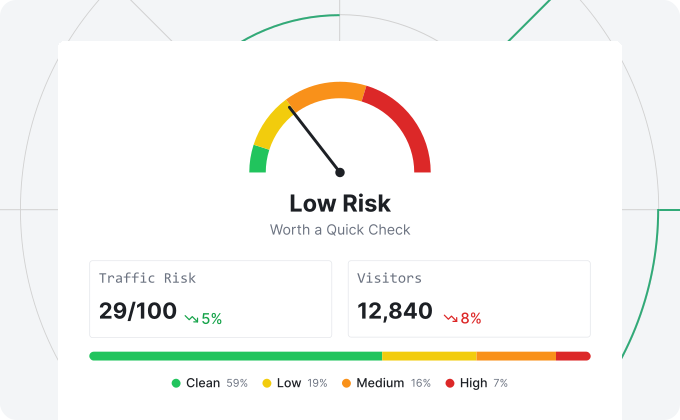
Real-Time Analytics
See how much of your traffic is masked, with an overall quality score and a breakdown of the sources sending your visits
Prevent fintech fraud in 5 minutes
Easily integrate into any signup, login, or onboarding flow
- 1
Create your account
Sign up and get 5,000 free identifications.
- 2
Add the snippet
It identifies every visitor and returns their risk signals and a risk score
- 3
Check your traffic quality
See how much of your traffic is masked, with an overall traffic score
- 4
Use API & Webhooks
Act on the risk score, risk signals, and High-Risk Events in your backend to stop fraud and abuse
{
  "request_id": "0c284695-cf0b-4755-8beb-0a2e9536595e",
  "visitor_id": "aa8c616a-8a25-4a5e-bee2-a9a08e5128a4",
  "device_id": "6a45967d-1371-9652-ba99-b01ea3992208",
  "user_hid": "u_9f2a41c7",
  "public_ip": { "ip": "62.197.149.124", "country": "United States" },
  "local_ip": { "ip": "45.83.91.7", "country": "United States" },
  "connection_type": "vpn",
  "os": "Windows",
  "browser": "Chrome",
  "device_type": "desktop",
  "risk_score": 85,
  "signals": [
    { "name": "antidetect_browser", "weight": 60 },
    { "name": "vpn", "weight": 15 },
    { "name": "timezone_mismatch", "weight": 10 }
  ]
}
Protect your fintech platform from fraud and abuse today
Free 5,000 one-time identifications, with transparent pricing that scales with your needs
Frequently asked questions
Most fintech fraud and abuse comes down to two shapes: one person operating many accounts, and outsiders getting into accounts that are not theirs. Both surface at the signup and login layer, before any money moves. Fake account creation and multi-accounting (signup): one person opening many accounts to farm welcome bonuses and referral payouts, bypass per-account limits, or get around regional rules. Account takeover (login): someone signing in from a device or connection the real customer has never used. Bonus and promo abuse (promotions): the same person collecting a signup incentive again and again under fresh identities. ShieldLabs detects High-Risk Events such as Multi-accounting (one person behind many accounts) and Account takeover (logins from unrecognized devices), using a persistent visitor and device identifier that holds across sessions regardless of email, phone, IP, or cleared cookies.
ShieldLabs links accounts to the one person behind them by running a single JavaScript snippet on your signup, login, or onboarding page and returning a risk score and signals on the first visit. When many signups trace back to one device, browser, or persistent identifier, ShieldLabs detects Multi-accounting directly. On every signup and login it returns: a 0-100 risk score; a persistent visitor and device identifier that survives cleared cookies, incognito, and rotated IP; risk signals such as VPN, proxy, Tor, anti-detect browser, and IP reputation; and High-Risk Events with Medium or High confidence, including Multi-accounting and Account takeover, in the analytics dashboard. ShieldLabs delivers the score, signals, and events via API and Webhooks, so you can flag, step up, or hold an account before a bonus is paid or a limit is bypassed.
No. ShieldLabs does not run KYC or identity verification, it identifies the device and connection behind a signup and links many accounts to the one person operating them, which is a different question from whether a person is who they claim to be. KYC and identity-verification providers confirm a real-world identity: they scan government IDs, match selfies, run liveness and biometric checks, and check SSNs, credit-bureau records, or synthetic-identity databases. ShieldLabs answers a different question: is one person quietly running many accounts, even when every account uses a fresh name, email, and phone number? ShieldLabs sits alongside a KYC stack, not in place of it, and most fintech platforms run both.
No. ShieldLabs works at the signup and login layer, not in the transaction stream, it does not analyze payments, transfers, deposits, withdrawals, or money movement, and it is not an anti-money-laundering or transaction-monitoring platform. Transaction-monitoring and AML platforms watch what an account does with money after it is open. ShieldLabs scores the visitor and the device at account creation and at login, before any transaction happens, so the fake account and the account-takeover login surface earlier in the flow. ShieldLabs and a transaction-monitoring layer are complementary, and many fintech platforms run both.
ShieldLabs identifies the device and connection behind every login and compares it to the ones the real customer has used before, detecting Account takeover as a High-Risk Event when a login does not match. Because the visitor and device identifier is persistent, the match holds even when the login attempt clears cookies or rotates IP. A login from a device the real customer has never used fires Account takeover, and a login from a location that is physically impossible to reach since the last one fires Impossible travel, each with Medium or High confidence; an anonymized connection, a fresh anti-detect browser, or a VPN, proxy, or Tor connection, shows in the risk signals; and you choose the action for each case: allow a familiar device through, step up to 2FA on a Suspicious score, or hold a Dangerous login for review. ShieldLabs returns the score, the signal breakdown, and the event on the login, so you can act on a hijacked-account attempt before it reaches the customer's money.
Yes. The mechanism is the same wherever one person can profit by opening many accounts, or by getting into an account that is not theirs, so the same signup-and-login layer fits each fintech vertical. Neobanks and digital banks: detects one person opening many accounts to farm welcome bonuses. Lending and credit platforms: shows when many applications trace back to a single device. Payment and money-transfer platforms: shows when a login comes from a device the real customer has never used. Trading and crypto-adjacent platforms: detects account farms and repeat referral signups as Multi-accounting. ShieldLabs identifies the visitor and device behind each account, links the accounts that belong to one person, detects Multi-accounting and Account takeover directly, and helps block fraudulent and abusive traffic.
Add one JavaScript snippet to your signup, login, or onboarding page and ShieldLabs returns a risk score on the first visit; integration takes about 5 minutes with no mobile SDK or backend rewrite. Install the snippet on the signup, login, or onboarding flow. Pass an optional UserHID (a hashed account or user identifier from your own system) once a user signs up or logs in. Read the risk score, risk signals, and High-Risk Events in the analytics dashboard and via API and Webhooks for server-side flows. ShieldLabs includes a free tier of 5,000 one-time identifications with no credit card required, so you can test on real traffic before rolling out to production.
ShieldLabs detects risky signups and logins out of the box and helps block fraudulent and abusive traffic, while real customers keep moving. Every signup and login gets a 0-100 risk score in one of three bands, plus any High-Risk Events, and you choose the action for each case: Dangerous (60-100): hold a signup or login for manual review; Suspicious (30-59): flag an account for review or step-up verification; Trusted (0-29): let the customer through with no extra friction. ShieldLabs includes 5,000 free identifications so you can see results on real traffic before rolling out to production.