

Multi-Accounting Detection
Detect multi-accounting and prevent revenue loss
Detect when one person operates multiple accounts, even through IP rotation, cleared cookies, and anti-detect browser usage
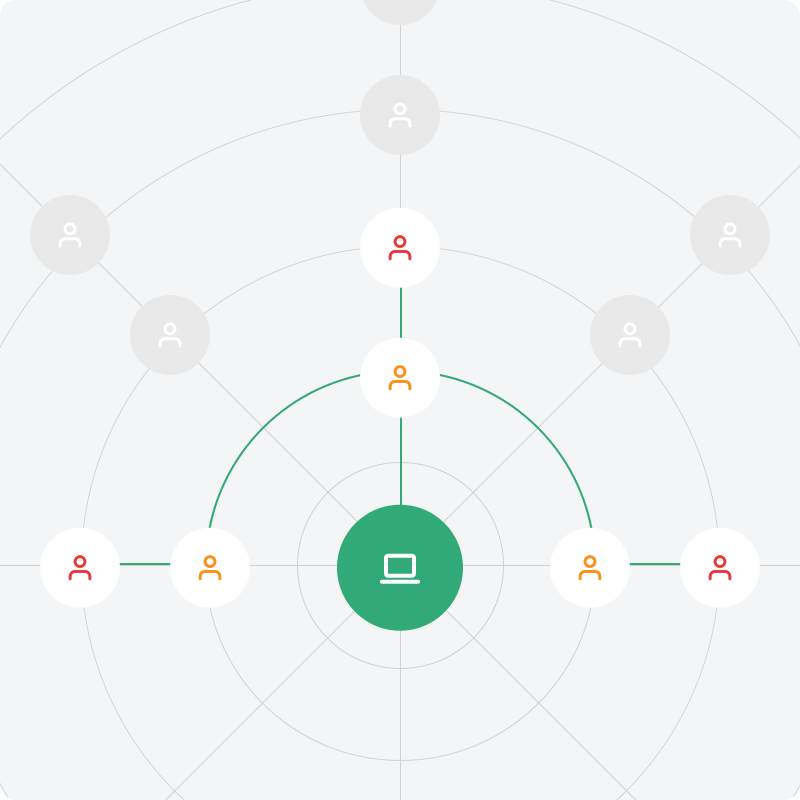
How ShieldLabs helps
Prevent bonus abuse and referral fraud
Catch account farms at scale
Block ban evasion across new identities
Stop free-trial and freemium abuse
Outcomes
Attract more loyal customers
Filter out fake accounts at the point of entry, not after the damage is done
Prevent revenue loss
Surface multi-account abuse before it turns into real losses
Stop wasting your marketing budget
Identify users abusing your promo system and block irrelevant traffic
Trust your analytics again
Remove fake traffic so CAC, LTV, and conversion reflect real users
See exactly what abuse is happening in your traffic
High-Risk Events expose multi-accounting, account sharing, and account takeover at scale
High-Risk Events · last 7 days · 4 events · 2,941 hits
Multi-accounting
One person running several accounts
Account takeover
Account accessed by someone other than its owner
Impossible travel
Locations too far apart for the time between them
Account sharing
One account used by several people
no events ·12,847medium confidence ·517high confidence ·2,424
Analytics
Leverage BI-grade abuse analytics in real time across all your traffic
Abuse Detection
Multi-accounting is detected directly as a High-Risk Event, ready out of the box
Confidence on every event
Each High-Risk Event comes with Medium or High confidence. The clearest cases surface first
Account Linking
Link multiple accounts to the same identity across device, IP, and location
Visitor Data
Each visit returns device data, risk score, location, connection details, and more
Detection that holds through every evasion technique
Detection layers that work in combination on every visit
01
Recognize the same user
Persistent visitor identification that survives across sessions, cleared cookies, and rotated IPs
02
Catch what spoofed profiles can't hide
Reads 300+ signals across device, OS, browser, IP, and network layers and flags inconsistencies between them
03
Detect every anonymization technique
Anti-detect browser detection alongside VPN, proxy, abuser-IP, and other risk signals
04
Get a Risk Score
A ready-to-use risk model that scores every visitor on a 0–100 scale with a full breakdown of contributing signals
Stop multi-accounting in any industry
SaaS
Stop free-trial abuse, freemium exploitation, and per-account plan-limit bypass
Fintech
Catch synthetic identity creation, KYC bypass through multi accounts, and signup-bonus abuse
iGaming
Block bonus abuse, ban evasion after self-exclusion, and promo multi-accounting
Cryptocurrency and Web3
Defend crypto airdrops and reward campaigns from sybil abuse and farming activity
E-commerce
Stop coupon and discount abuse, first-time-buyer offer cycling, and chargeback fraud
See multi-accounting on your own traffic in 5 minutes
Free 5,000 one-time identifications, with transparent pricing that scales with your needs
Frequently asked questions
Multi-accounting is one person operating multiple accounts on the same platform to gain an advantage they couldn't get with a single identity. It usually shows up as:
- Free-trial and freemium cycling: fresh accounts to reset usage limits or trial windows
- Referral and bonus abuse: self-referrals and signup bonuses claimed across many fake accounts
- Ban and self-exclusion evasion: new identities created to get back in after a ban
- Account farms: bulk accounts run at scale to harvest rewards or resell access
Standard detection misses it because the same person rotates IPs, clears cookies, and uses anti-detect browsers to look like a new visitor every time. ShieldLabs links those accounts back to one persistent identity, so repeat sign-ups are detected as one Multi-accounting High-Risk Event instead of separate strangers.
Most platforms still get multi-accounted because the controls they rely on each break in a predictable way. The common gaps:
- IP blocking: residential proxies rotate addresses constantly, and banning a shared egress IP hurts legitimate users on the same network
- Email filters: disposable email services cycle fresh addresses faster than any blocklist can catch them
- Basic fingerprinting: anti-detect browsers spin up isolated profiles built specifically to defeat it
- Session-by-session tools: most fraud tools treat each visit independently, so every fresh sign-up looks like a brand-new user
ShieldLabs closes that gap by building a persistent identifier that survives IP rotation, cleared cookies, and anti-detect browsers, then linking accounts that share it.
ShieldLabs detects multi-accounting by building a persistent identity for each visitor and linking the accounts that share it. It works in three layers:
- Identify: 300+ signals across the device, OS, browser, and network layers resolve to a stable VisitorID and DeviceID, even after IP rotation and cleared cookies
- Link: when a user is known, your client passes a UserHID that ties the technical fingerprint to an actual account in your system
- Detect: when several accounts resolve to the same identity, ShieldLabs detects a Multi-accounting High-Risk Event with Medium or High confidence
ShieldLabs returns the identification and the risk signals with a 0–100 Risk Score on the first visit, and flags multi-accounting across sessions, so your team no longer chases one session at a time.
Yes. ShieldLabs returns a Risk Score and identity match on the first visit, so a repeat sign-up is flagged at the moment of account creation rather than after the abuse lands. At signup it works like this:
- Add the JavaScript snippet to your signup flow
- Pass a UserHID, a hashed identifier that links the technical event to the new account
- If that identity already maps to other accounts, the Multi-accounting event appears immediately with its confidence
ShieldLabs flags the risky sign-up at the point of entry and helps block fraudulent and abusive accounts, so you can choose the action for each case: allow, challenge, or hold.
Integration takes about 5 minutes, and the first Risk Score lands on the very first visit. The setup:
- Add the JavaScript snippet at signup, login, or any sensitive action point
- Set up your domain in the analytics dashboard, no backend changes required to start
- Watch results populate live: High-Risk Events over time, per-visitor Risk Scores, and identity dimensions
ShieldLabs delivers the same data through the analytics dashboard, the API, and Webhooks, so you can start by watching High-Risk Events and later act on the results in your backend.
ShieldLabs stops multi-accounting by flagging risky users and helping block fraudulent and abusive accounts, and you choose the action for each case. How it works:
- ShieldLabs provides: a 0–100 Risk Score, the risk signals, and Multi-accounting High-Risk Events with Medium or High confidence
- Ready out of the box: detection works from the first visit, with no rule setup
- You choose the action: allow, challenge, or block each case in your backend, so legitimate users who share a device or network keep access
ShieldLabs gives your team clear evidence to act with confidence on every case.