

Stop trial abuse at signup
Catch repeat signups, multi-accounting, and trial farms before activation
Keep trial activations, free-plan compute, and API credits on real prospects, and stop one person from cycling the same trial forever
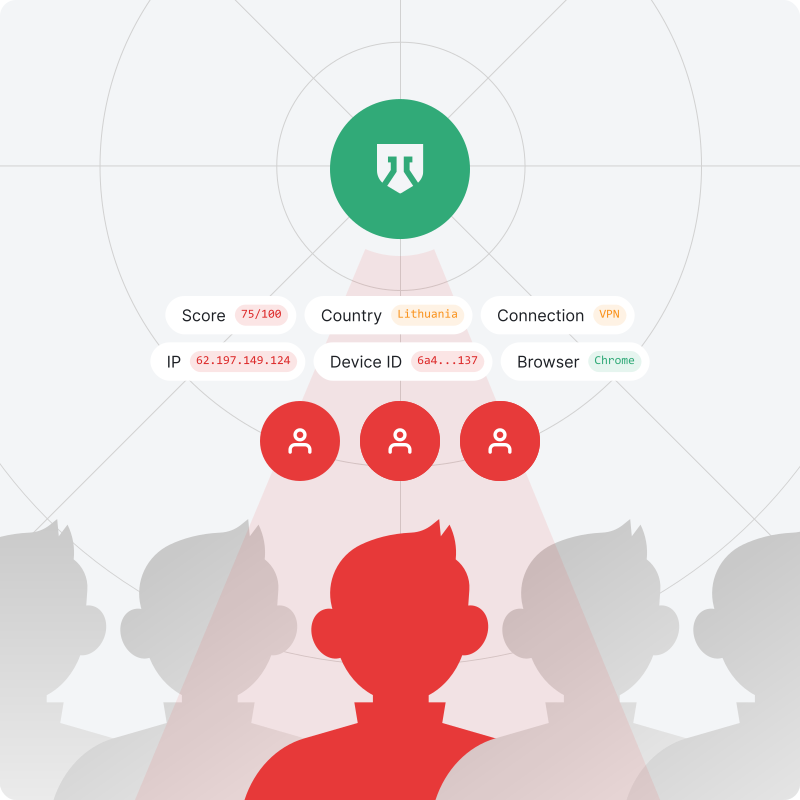
Catch repeat signups, multi-accounting, and trial farms before activation
Keep CAC, trial-to-paid, and activation metrics on real demand
Keep compute, API quota, and storage on real prospects
Legitimate signups start their trial without extra verification
ShieldLabs recognizes the real visitor behind every anonymous session, so your team can stop trial cycling before another free trial is provisioned
Identify returning visitors and users across sessions, cleared cookies, incognito mode, rotated IP, and fresh email addresses
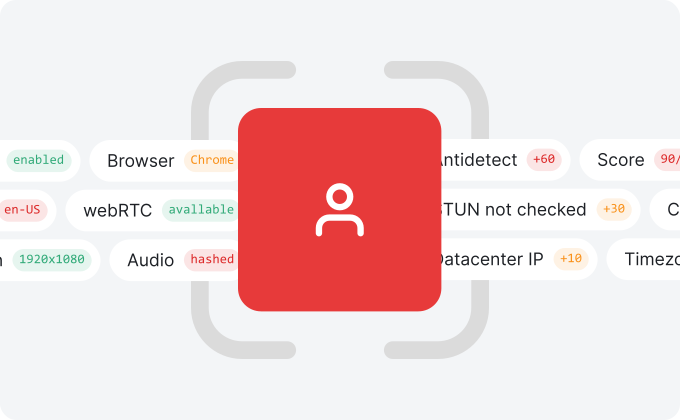
Detection of VPN, proxy, Tor, anti-detect browser, IP reputation and other risk signals on every visit, with 99.9% risk signal detection accuracy
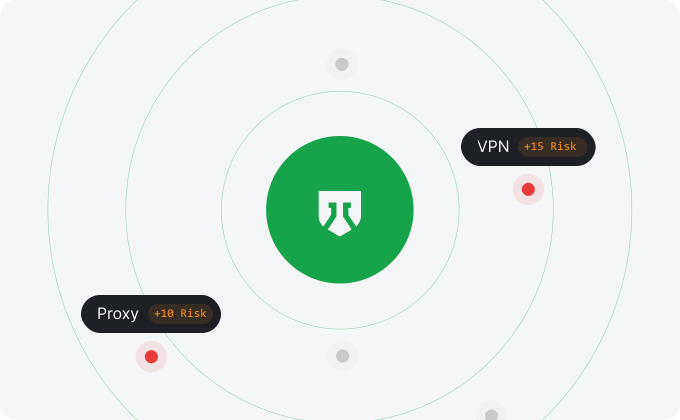
A ready-to-use score reflecting the risk of each visit, with the weight of every signal behind it
High-Risk Events detected out of the box: multi-accounting, account sharing, impossible travel and account takeover, each with Medium or High confidence
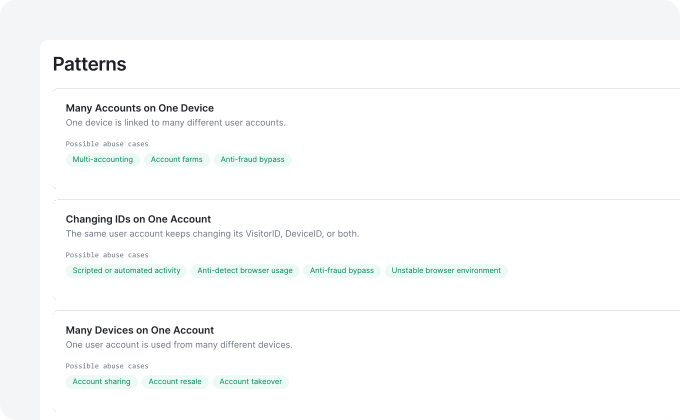
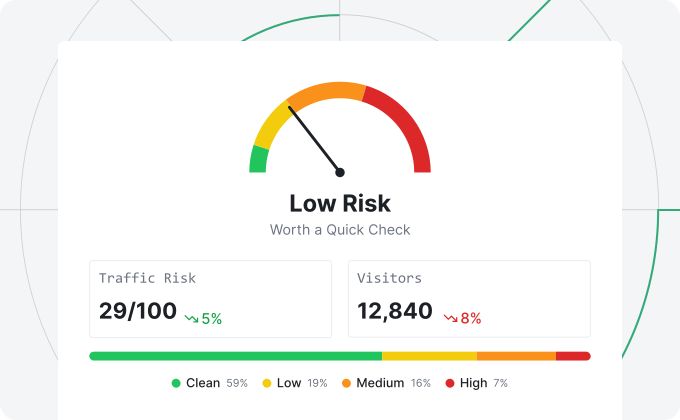
See how much of your traffic is masked, with an overall quality score and a breakdown of the sources sending your visits
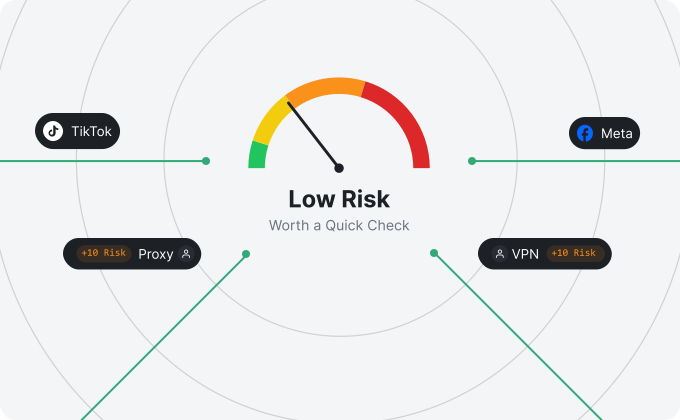
Easily integrate into any signup, free trial activation, or free plan upgrade flow
Get 5,000 free identifications
It identifies every visitor and returns their risk signals and a risk score
See how much of your traffic is masked, with an overall traffic score
Get the risk score, risk signals and High-Risk Events in your backend to stop fraud and abuse
{
  "request_id": "0c284695-cf0b-4755-8beb-0a2e9536595e",
  "visitor_id": "aa8c616a-8a25-4a5e-bee2-a9a08e5128a4",
  "device_id": "6a45967d-1371-9652-ba99-b01ea3992208",
  "user_hid": "u_9f2a41c7",
  "public_ip": { "ip": "62.197.149.124", "country": "United States" },
  "local_ip": { "ip": "45.83.91.7", "country": "United States" },
  "connection_type": "vpn",
  "os": "Windows",
  "browser": "Chrome",
  "device_type": "desktop",
  "risk_score": 85,
  "signals": [
    { "name": "antidetect_browser", "weight": 60 },
    { "name": "vpn", "weight": 15 },
    { "name": "timezone_mismatch", "weight": 10 }
  ]
}Free 5,000 one-time identifications, with transparent pricing that scales with your needs
Free trial abuse is when one person signs up for the same free trial more than once to bypass usage limits, paywalls, or trial expiry. It shows up in a few common variants:
For SaaS teams it reads as a quiet drag on free-tier margins, distorted conversion metrics, and inflated infrastructure cost-per-signup. ShieldLabs detects multi-accounting when one person operates multiple accounts, using persistent visitor and user identification that holds across sessions regardless of email, IP, or cleared cookies
Trial cycling is recreating a free trial after the previous one expires, using a new email, a cleared browser, a rotated IP, or an anti-detect browser to stay on the free tier indefinitely without ever paying. The mechanics break down into a few moving parts:
This is harder to catch than a single duplicate signup, because the time gap and surface-level identity changes pass email verification, IP blocking, and cookie tracking on their own. ShieldLabs ties each new trial back to the same persistent identifier, so the cosmetic changes do not reset the count
In most jurisdictions, making multiple accounts for free trials is not a criminal offense, but it is a Terms of Service violation. The enforcement picture usually looks like this:
ShieldLabs surfaces that evidence trail: the linked accounts, the shared device fingerprints, the time pattern, and the risk signals on every signup, so the enforcement decision is grounded in data
ShieldLabs runs from a single JavaScript snippet on your signup or free trial activation page and returns persistent identification, risk signals, and a risk score on the first visit. On each signup it surfaces:
When a new signup matches an identity already linked to a prior trial, ShieldLabs detects multi-accounting automatically. It delivers the risk score, signals and High-Risk Events via API and Webhook, so you can block, hold for review, or route the signup downstream
Trial abusers combine identity, network, and device tricks so each signup looks like a brand-new user. The most common techniques are:
Industrial trial farms automate all of this into pipelines that run dozens of trials per device per day, and many operate commercially, reselling the fresh trial accounts on secondary markets to people who want premium features without paying. ShieldLabs links these signups back to one persistent visitor and user through device fingerprinting, anti-detect browser detection, IP intelligence, and other risk signals on every signup
Preventing free trial abuse comes down to identifying the visitor at signup, correlating related accounts, and delaying free-tier provisioning until the risk is clear. In practice that means three layers:
With a risk score and signal breakdown on each signup, your team can choose extra verification, allocation caps, or automatic approval before any free-tier resource is provisioned
ShieldLabs works at the identity layer, linking the same person across many valid emails, while email-verification services only validate the email itself. The split is straightforward:
ShieldLabs drops in next to an email-verification check or a payment risk engine via API, ready in 5 minutes, with the full signal set behind free trial abuse detection on the Starter plan and self-serve up to Scale
ShieldLabs stops trial abuse by flagging risky signups and helping block fraudulent and abusive traffic. It returns a risk score, a full signal breakdown and High-Risk Events, and you choose the action for each case:
ShieldLabs includes 5,000 free identifications, so you can see the results on your own traffic first