

Stop marketplace fraud.
Keep trust and safety
Prevent fake buyer and seller accounts, multi-accounting, and review
fraud across P2P, B2C, and B2B marketplaces at signup and login
How ShieldLabs helps
Keep fake buyers and sellers off the platform
Stop one person from running many accounts to claim welcome bonuses, dodge bans, or post scam listings
Protect promo and referral budgets
Keep welcome offers, first-purchase discounts, and referral credits with real buyers
Keep ratings and reviews honest at the source
Surface the multi-accounting behind review rings before fake ratings reach real shoppers
Keep real users moving
Legitimate buyers and sellers sign up and log in without extra verification steps
How ShieldLabs prevents marketplace fraud and abuse
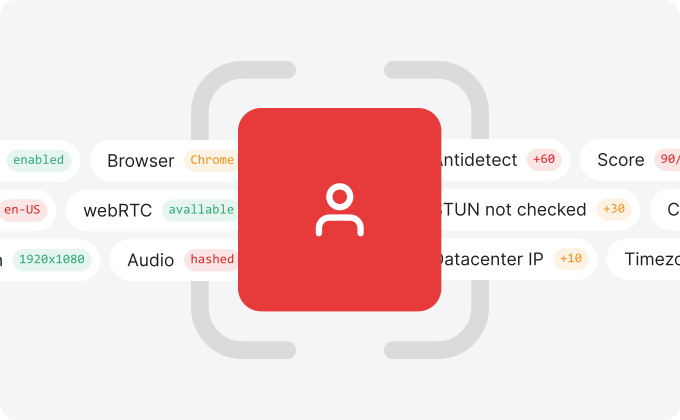
ShieldLabs recognizes the real visitor behind every anonymous session
Accurate Identification
Identify returning visitors and users across sessions, cleared cookies, incognito mode, and rotated IP, even when they sign up under fresh emails
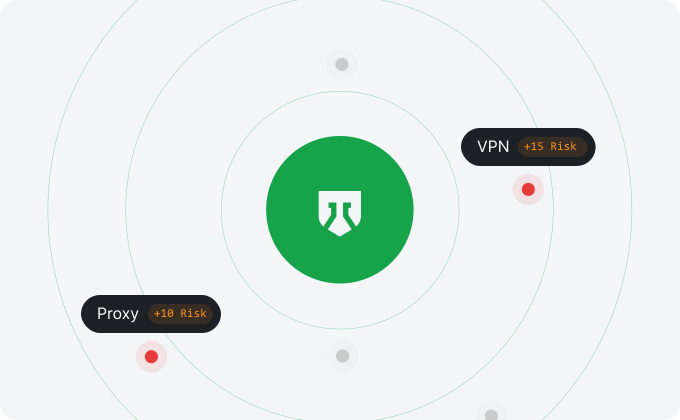
Risk Signals
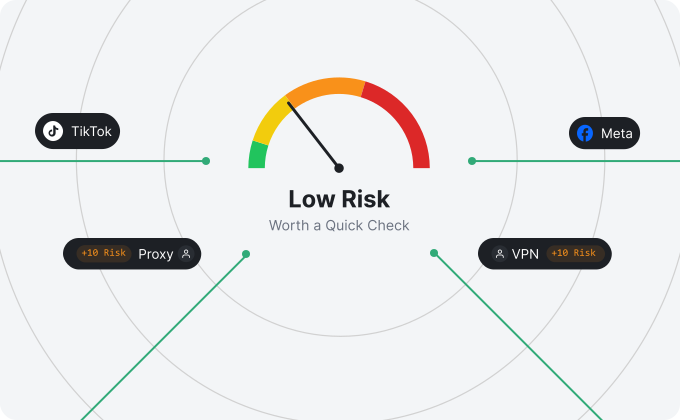
Detection of VPN, proxy, Tor, anti-detect browser, IP reputation and other risk signals on every visit, with 99.9% risk signal detection accuracy
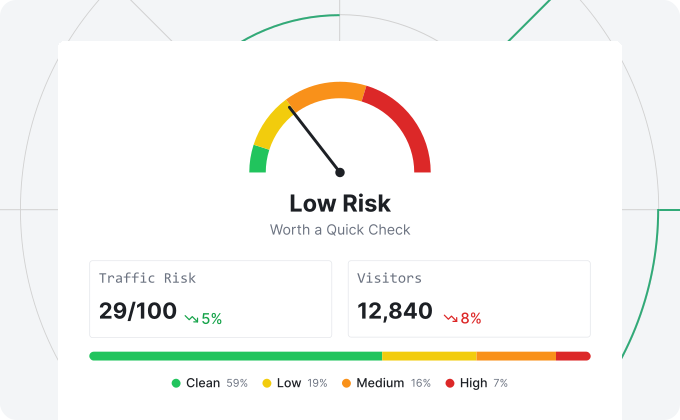
Risk Score
A ready-to-use score reflecting the risk of each visit, with the weight of every signal behind it
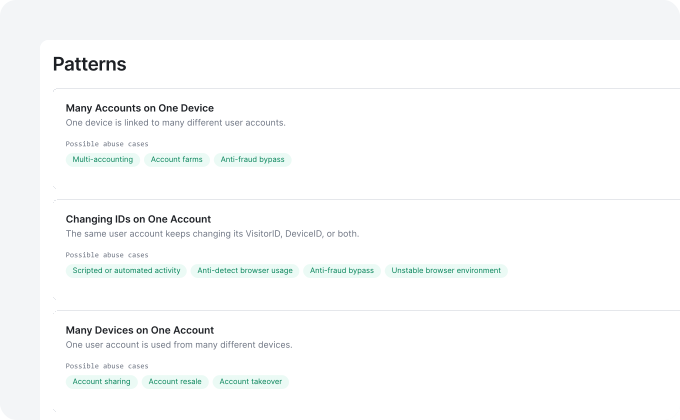
High-Risk Events
Direct detection of multi-accounting, account sharing, impossible travel, and account takeover, each with Medium or High confidence
Real-Time Analytics
See how much of your traffic is masked, with an overall quality score and a breakdown of the sources sending your visits
Prevent marketplace fraud and abuse in 5 minutes
Easily integrate into any signup, login, or account flow
- 1
Create your account
Sign up and get 5,000 free identifications.
- 2
Add the snippet
It identifies every visitor and returns their risk signals and a risk score
- 3
Check your traffic quality
See how much of your traffic is masked, with an overall traffic score
- 4
Use API & Webhooks
Act on the risk score, risk signals, and High-Risk Events in your backend to stop fraud and abuse
{
  "request_id": "0c284695-cf0b-4755-8beb-0a2e9536595e",
  "visitor_id": "aa8c616a-8a25-4a5e-bee2-a9a08e5128a4",
  "device_id": "6a45967d-1371-9652-ba99-b01ea3992208",
  "user_hid": "u_9f2a41c7",
  "public_ip": { "ip": "62.197.149.124", "country": "United States" },
  "local_ip": { "ip": "45.83.91.7", "country": "United States" },
  "connection_type": "vpn",
  "os": "Windows",
  "browser": "Chrome",
  "device_type": "desktop",
  "risk_score": 85,
  "signals": [
    { "name": "antidetect_browser", "weight": 60 },
    { "name": "vpn", "weight": 15 },
    { "name": "timezone_mismatch", "weight": 10 }
  ]
}
Protect your marketplace from fraud and abuse today
Free 5,000 one-time identifications, with transparent pricing that scales with your needs
Frequently asked questions
Marketplace fraud is any deceptive activity targeting two-sided platforms, where one person opens many accounts or takes over accounts that are not theirs to abuse buyer-side and seller-side incentives. It spans three marketplace topologies and several abuse layers, each handled by a different tool. The three marketplace topologies: P2P marketplaces: Craigslist-style classifieds, peer-to-peer rental, gig economy; B2C marketplaces: Amazon-style retail, food delivery, ride sharing; B2B marketplaces: procurement, wholesale, service exchanges. Common marketplace risk examples: fake buyer accounts opened to claim welcome bonuses, first-purchase discounts, and referral credits; fake seller accounts created for ban evasion, account farms for review rings, and scam listings posted under fresh identities; multi-accounting and account farms running coordinated abuse across buyer and seller sides; account takeover of real buyer or seller logins; review fraud through coordinated multi-account ratings; fraudulent payments, chargebacks, and friendly-fraud disputes; counterfeit, misrepresented, or scam listings. These marketplace frauds split across layers, each needing its own tool: a payment-fraud platform for the transaction side, content-moderation and counterfeit-detection for the listing side, and identity-verification (KYC) for high-risk seller onboarding. ShieldLabs covers the account layer: it detects High-Risk Events such as Multi-accounting (one person behind many accounts) and Account takeover (logins from unrecognized devices), using persistent visitor and user identification that holds across sessions regardless of email, IP, or cleared cookies.
Preventing marketplace fraud takes several layers, because no single tool covers all of it. You combine a tool per layer and act on what each one returns. The layers, and what each one handles: Payment layer: a chargeback-prevention or payment-fraud platform screens transactions and card-not-present risk; Seller-onboarding layer: an identity-verification platform handles document checks, selfie liveness, business registration, and bank-ownership verification for high-risk sellers; Listing layer: content-moderation and counterfeit-detection tools screen images and descriptions; Network layer: a bot-management tool screens scrapers and automated traffic; Account layer: an identification tool detects one person operating many accounts and logins from unrecognized devices; Policy layer: your own rules (promo limits per user and device, posting limits for new sellers, delayed payouts, review-eligibility rules) act on those signals. Most operators run several of these layers in parallel, since marketplace security usually breaks down at the layer where there is no tool watching. ShieldLabs owns the account layer: it returns a risk score and detects Multi-accounting and Account takeover, so you can hold or step up before a welcome bonus is issued, a listing is published, or a payout is released.
ShieldLabs installs as a single JavaScript snippet on your signup, login, or account page and returns identity, risk, and abuse signals on the first visit, so you can act before money or trust is at stake. On each visit it returns: a 0-100 risk score with a signal breakdown; persistent visitor and user identification across sessions, cleared cookies, and rotated IP; risk signals: VPN, proxy, Tor, anti-detect browser, IP reputation; High-Risk Events in the analytics dashboard, such as Multi-accounting and Account takeover, each with Medium or High confidence. When many signups trace back to one device, browser, or persistent identifier, ShieldLabs detects Multi-accounting directly. ShieldLabs delivers the score, signals, and events via API and Webhooks, so you can flag, hold, or step up an account before a welcome bonus is issued, a listing is posted, or a payout is released.
ShieldLabs surfaces the multi-accounting behind review fraud, not the review content itself. Most review fraud is one person running many accounts to leave fake positive ratings on their own listings, or a coordinated ring boosting a specific seller. How the two review-fraud layers split: Account layer (ShieldLabs): links reviewer accounts to the one device and persistent identifier behind them, and detects Multi-accounting across them; Content layer (a dedicated review-fraud or NLP moderation tool): analyzes review text, sentiment, image authenticity, and linguistic patterns; Together: ShieldLabs flags the fake-account network upstream, content tools flag fake-text patterns downstream. ShieldLabs raises the risk score before a flagged review publishes, so you can hold, weight, or downrank it; it does not analyze review text, which is why you pair it with a content-moderation tool for the language side.
Yes. The mechanism is the same wherever one person can profit by opening many accounts or getting into an account that is not theirs, so ShieldLabs detects Multi-accounting and Account takeover regardless of marketplace type. What that prevents per marketplace type: P2P marketplaces (classifieds, peer-to-peer rental, gig economy): fake listings posted under fresh accounts, ban evasion, and scam-buyer or scam-seller behavior; B2C marketplaces (retail, food delivery, ride sharing): welcome-bonus farming, first-order-discount abuse, and review manipulation; B2B marketplaces (procurement, wholesale, service exchanges): supplier and buyer impersonation, ban evasion, and coordinated bidding rings; Loyalty and rewards programs on top of any of these: points inflation and referral-credit fraud. ShieldLabs identifies the visitor and user behind the account at the signup and login layer, so you can choose to allow, hold, or step up each account.
Yes. Marketplace fraud prevention software is a tool a marketplace integrates to run marketplace fraud detection automatically rather than reviewing accounts by hand, and ShieldLabs is one, focused on the account layer. What it is, and what it pairs with: Is: software you integrate as one JavaScript snippet on your signup, login, and account pages, returning a risk score and risk signals through the API and Webhooks, with High-Risk Events visible in the analytics dashboard; Pairs with: a payment-fraud platform for chargebacks, an identity-verification platform for seller KYC, and a bot-management tool for scraping. ShieldLabs identifies the visitor and user and detects risk signals and High-Risk Events across the fake-account, multi-accounting, account-sharing, and account-takeover layer, and helps block fraudulent and abusive traffic.
Integration takes about 5 minutes: add the JavaScript snippet to your signup, login, or account page, and pass an optional UserHID (a hashed account or user identifier from your own system) once a buyer or seller signs up or logs in. The four steps: Add the snippet to your signup, login, or account page; Pass an optional UserHID to tie the identity to your own account record; Read the risk score and risk signals via API and Webhooks for server-side flows; Review High-Risk Events in the analytics dashboard. ShieldLabs includes a free tier of 5,000 one-time identifications with no credit card required, so you can test on real traffic before rolling out to production.
ShieldLabs detects risky buyers and sellers out of the box and helps block fraudulent and abusive traffic. Every signup and login gets a 0-100 risk score in one of three bands, plus any High-Risk Events, and you choose the action for each case: Dangerous (60-100): hold a signup or a high-risk login for manual review; Suspicious (30-59): flag a buyer for review, limit a referral payout, delay a seller's first posting, or weight down a review; Trusted (0-29): let a legitimate buyer or seller through with no extra steps. ShieldLabs includes 5,000 free identifications so you can see results on real traffic before rolling out to production.