

Stop self-referral loops
Catch one person opening both referrer and referee accounts to collect both payouts
Keep referral payouts, invite credits, and rewards on real advocates, and stop one person from claiming both sides of every referral
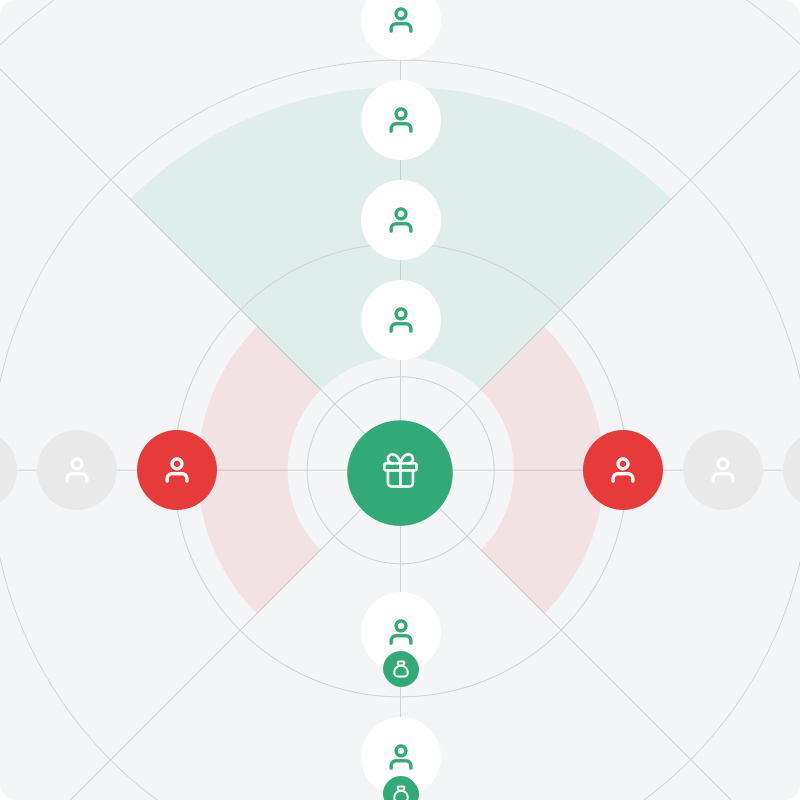
Catch one person opening both referrer and referee accounts to collect both payouts
Spot coordinated rings creating dozens of accounts to milk referral programs at scale
Keep ambassador commissions, invite credits, and refer-a-friend rewards on real customers
Legitimate referrers earn rewards without delays, holds, or extra verification
ShieldLabs recognizes the real visitor behind every anonymous session, so your team can stop fraudulent referrals before payouts clear
Identify returning visitors and users across sessions, cleared cookies, incognito mode, and rotated IP
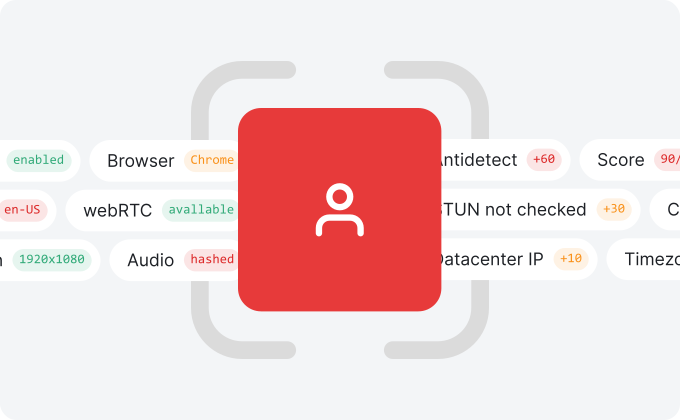
Detection of VPN, proxy, Tor, anti-detect browser, IP reputation and other risk signals on every visit, with 99.9% risk signal detection accuracy
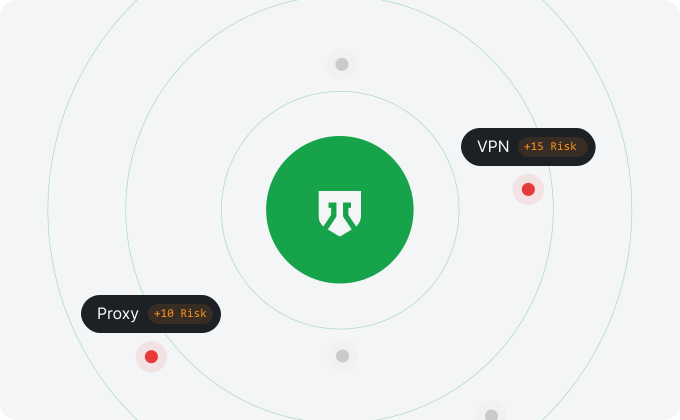
A ready-to-use score reflecting the risk of each visit, with the weight of every signal behind it
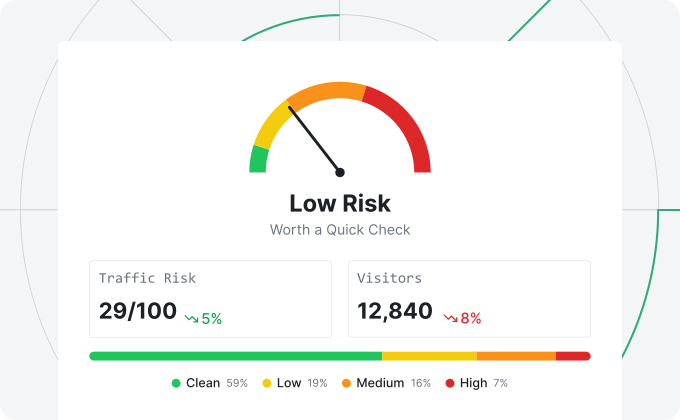
High-Risk Events detected out of the box: multi-accounting, account sharing, impossible travel and account takeover, each with Medium or High confidence
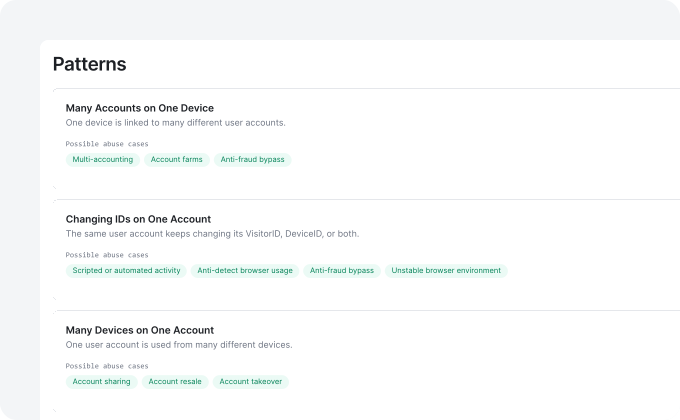
See how much of your traffic is masked, with an overall quality score and a breakdown of the sources sending your visits
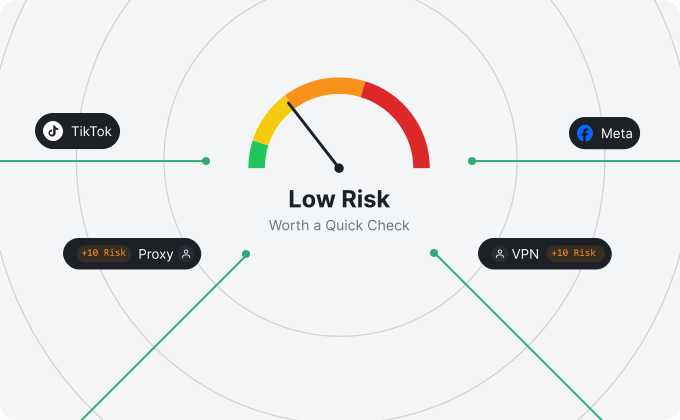
Easily integrate into any signup, referral redemption, or payout flow
Get 5,000 free identifications
It identifies every visitor and returns their risk signals and a risk score
See how much of your traffic is masked, with an overall traffic score
Get the risk score, risk signals and High-Risk Events in your backend to stop fraud and abuse
{
  "request_id": "0c284695-cf0b-4755-8beb-0a2e9536595e",
  "visitor_id": "aa8c616a-8a25-4a5e-bee2-a9a08e5128a4",
  "device_id": "6a45967d-1371-9652-ba99-b01ea3992208",
  "user_hid": "u_9f2a41c7",
  "public_ip": { "ip": "62.197.149.124", "country": "United States" },
  "local_ip": { "ip": "45.83.91.7", "country": "United States" },
  "connection_type": "vpn",
  "os": "Windows",
  "browser": "Chrome",
  "device_type": "desktop",
  "risk_score": 85,
  "signals": [
    { "name": "antidetect_browser", "weight": 60 },
    { "name": "vpn", "weight": 15 },
    { "name": "timezone_mismatch", "weight": 10 }
  ]
}Free 5,000 one-time identifications, with transparent pricing that scales with your needs
Referral fraud is the exploitation of a customer-referral program by one person claiming rewards under multiple identities to collect payouts they are not entitled to. Some platforms call the same behavior referral abuse or referral program fraud, but the underlying tactic is identical: one person, many accounts.
ShieldLabs surfaces this with persistent identification across sessions, so the same person is recognized regardless of email, IP, or cleared cookies.
Fraud teams typically classify referral fraud into four shapes, but all four reduce to the same multi-account signal at signup: one person, many identities.
ShieldLabs surfaces the underlying tactic with persistent identification on every visit, linking the accounts behind all four shapes.
Referral fraud usually breaches a platform's terms of service rather than criminal law, so most enforcement is handled by the operator rather than the courts.
ShieldLabs gives operators the evidence to enforce their terms: persistent visitor and user identification, risk signals, and High-Risk Events such as multi-accounting.
Referral fraud is customers exploiting a customer-referral program by opening fake accounts to collect their own rewards, while affiliate fraud is paid partners gaming the program to inflate commissions. Different actors, overlapping detection layer.
ShieldLabs surfaces the multi-account signal behind both, linking related accounts regardless of email, IP, or cleared cookies.
A self-referral is the most common referral fraud shape: one person opens two accounts, one as the referrer and one as the referee, and collects both sides of the payout. It is detected by linking the supposed new customer back to the existing referrer through signals that email or IP rules miss:
Matched before the payout is issued, the referrer-referee pair can be held for review instead of credited automatically.
Effective referral program fraud prevention combines three layers so risky payouts are caught before credits clear, not after.
ShieldLabs returns a 0-100 risk score with a full signal breakdown from a single JS snippet on signup, so fraud teams can choose verification, hold, or automatic credit for each case before payouts clear.
Operators detect referral fraud at signup by combining several signals into one risk picture, so abuse is caught upstream before a credit is issued or a payout clears.
ShieldLabs runs all of this from a single JS snippet, returning persistent visitor and user identification with a 0-100 risk score on every visit, even when cookies are cleared and IPs rotate.
ShieldLabs stops referral fraud by flagging risky payouts and helping block fraudulent and abusive traffic. It returns a risk score, a full signal breakdown and High-Risk Events, and you choose the action for each case.
ShieldLabs includes 5,000 free identifications, so you can see the results on your own traffic first.
ShieldLabs sits between referral attribution platforms and heavyweight fraud suites: it adds the device-and-network signal layer that referral tools lack, as enterprise-level functionality without enterprise pricing. Referral attribution platforms track who referred whom, but do not fingerprint devices or detect anti-detect browsers. ShieldLabs gives you the full signal set on a transparent plan, with High-Risk Events and a 0-100 risk score on every signup. It drops next to a referral platform via API, ready in 5 minutes.