

How to prevent guest checkout fraud

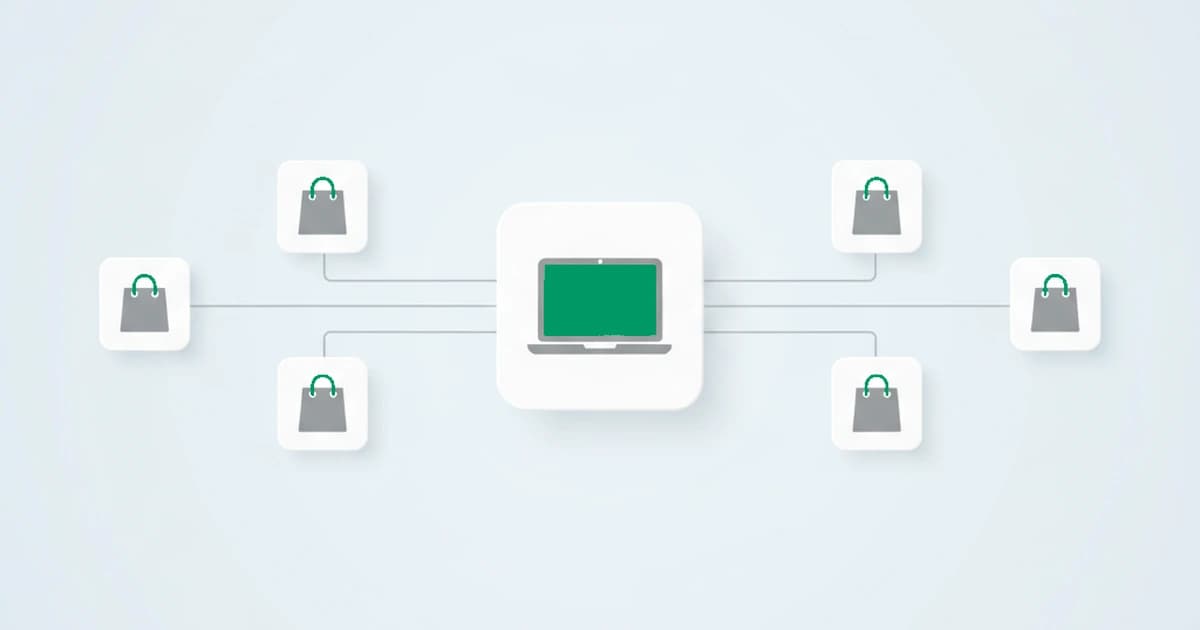
Last updated on August 11, 2026 · 8 min read
Guest checkout exists because friction kills sales. Baymard Institute research puts online cart abandonment near 70%, and forcing shoppers to create an account before they can buy is one of the top cited reasons, so most stores let people check out as a guest with nothing more than an email and a payment method. That convenience is real, and so is the tradeoff. A guest order carries no login, no order history, and often a fresh email each time, which means the store loses the account record it would normally use to recognize a repeat fraudster. That gap matters because card-not-present fraud, the kind that runs through online checkout rather than a physical terminal, has grown into the largest share of payment-card fraud losses, and accountless guest orders are where it hides most easily. The volume moving through online checkout is enormous: over Black Friday and Cyber Monday 2025, Stripe Radar screened more than 578 million transactions and prevented more than 24.6 million attempted fraudulent ones.
This guide explains what guest checkout fraud is, why fraudsters prefer the accountless path, whether guest checkout is safe for merchants, and how to prevent it, including the one signal that links a pile of unrelated-looking guest orders back to a single person behind them.
Key takeaways
- Guest checkout fraud is abuse of the accountless checkout path, where a buyer completes an order without creating or logging into an account.
- Removing the account also removes the history a store relies on to spot a returning fraudster: no login, no past orders, and usually a new email each visit.
- Common forms include stolen-card testing, refund and return abuse, and promo abuse run through repeated guest orders.
- Payment checks like AVS, CVV, and 3-D Secure validate the card, but they do not tell you the same person is behind ten different guest orders.
- The signal that restores that continuity is the device: it survives across guest checkouts even when there is no account, so a fraudster returning as a brand-new guest is still linked to the same device.
What is guest checkout fraud?
Guest checkout fraud is abuse that runs through the accountless checkout path, where a shopper completes a purchase without registering or signing into an account. The store collects a shipping address, an email, and a payment method for that one order, and nothing more. Because the buyer is never asked to authenticate against a standing account, each guest order arrives as a clean slate with no history attached to it.
That clean slate is the whole problem. When a customer has an account, a store can see their past orders, their previous chargebacks, and how long they have been around, and that history is what flags a buyer who has caused trouble before. Guest checkout strips all of it away. A fraudster who was refused last week can come back today as a brand-new guest, use a different name and a different email, and look exactly like a first-time customer, because as far as the account layer is concerned, they are one.
The stakes are large: Juniper Research projects global ecommerce fraud losses rising from $56 billion in 2025 to 131 billion dollars by 2030.
Why fraudsters prefer guest checkout
Guest checkout is attractive to a fraudster for the same reason it is attractive to an honest shopper, it is fast and it asks for almost nothing. But the fraudster values a second property the honest shopper never thinks about: it leaves no trail that connects one visit to the next.
- No account to burn. With registered accounts, a store can ban a bad actor and that ban sticks to the account. A guest has no account to ban, so the same person can return again and again.
- A fresh identity every time. A new email address is free and takes seconds to create, so each guest order can carry a different name, email, and sometimes a different address, defeating a simple email or name blocklist.
- No history to contradict the story. Every guest order looks like a first purchase, which is exactly what a fraudster wants each order to look like.
This is why accountless checkout becomes the preferred channel for card testing, where stolen card numbers are validated with small purchases, for refund and return abuse run across many one-off orders, and for promo abuse that claims a first-order discount over and over. Each of these depends on the store treating the same person as a series of unrelated strangers.
The main types of guest checkout fraud
Guest checkout fraud takes a few recognizable shapes, and they share a reliance on the missing account:
| Type | What the fraudster does |
|---|---|
| Stolen-card testing | Runs small guest orders to check which stolen card numbers still work, then moves to larger purchases |
| Refund and return abuse | Places repeated guest orders and exploits refund or return policies across what look like separate customers |
| Promo and first-order abuse | Reuses a new-customer discount, free shipping, or a welcome offer by checking out as a fresh guest each time |
| Chargeback and friendly fraud | Buys as a guest, receives the goods, then disputes the charge, with no account history to weigh against the claim |
| Reshipping and address cycling | Cycles through guest orders with varied names and addresses to move goods bought on stolen cards |
What ties these together is that each fraudulent order is built to look like an ordinary first-time purchase, with its own email, its own name, and often a masked IP from a VPN or proxy. Checked one order at a time, none of them looks wrong. The pattern only appears once you can see that many of these separate-looking orders came from the same place.
What most guest checkout fraud has in common
Strip away the tactics and most guest checkout fraud reduces to one shape: a single person placing what look like independent orders. The store is supposed to see many different customers. In reality one person, or one small operation, sits behind a run of guest orders, changing the email and the name between each one while the buyer stays the same.
That is the multi-accounting pattern applied to a checkout with no accounts at all. Each order is dressed up to look distinct, with a fresh email, a different name, and sometimes a different address. Checked individually, none of them looks wrong, because the very thing that used to link them, the account, is gone by design. What the orders genuinely share is the device they were placed from, and a device is far harder to swap than an email address or a name in a form field.
How to prevent guest checkout fraud
No single control stops guest checkout fraud, so prevention layers a few defenses that each cover a different gap:
- Keep guest checkout, but instrument it. Removing guest checkout costs you real conversions, so the goal is to keep the low-friction path and add detection behind it rather than force everyone into an account.
- Lean on the payment layer for the card. AVS, CVV, and 3-D Secure confirm that the card and cardholder details line up, and they remain your first line against a stolen or lost payment card.
- Add a device-identity layer for the person. Payment checks validate the card on one order, so pair them with a signal that links the same buyer across separate guest orders even when every order uses a new email.
- Watch anonymity and velocity. Guest orders arriving over VPNs, proxies, and anti-detect browsers, or a burst of orders from one place in a short window, are strong repeat-fraud signals.
- Match returns and refunds against the buyer, not the email. Refund and return abuse only works while each request looks like a separate customer, so linking requests back to one device closes the loop.
- Hold or review high-risk guest orders. A quick check before fulfilling a risky, high-velocity guest order catches the obvious runs before goods or refunds leave.
Done together, these keep guest checkout fast for honest shoppers while making a run of accountless fraud far harder to hide.
How ShieldLabs prevents guest checkout fraud
ShieldLabs restores the continuity a missing account would have given you, by reading the device behind every guest order. You add one JavaScript snippet to your checkout flow, and each visit returns persistent identification, built from device fingerprinting signals, that survives cleared cookies, a rotated IP, and a fresh email. When a fraudster returns as a brand-new guest, the identifier links that new order back to the same device as the earlier ones, so the repeat buyer behind stolen-card testing, refund abuse, and promo abuse is surfaced directly instead of hiding inside a stream of first-time buyers.
Alongside it, each visit returns a risk score from 0 to 100 and the named risk signals, VPN, proxy, Tor, and anti-detect browser use, that a repeat buyer leans on to look like a series of unrelated strangers. This sits beneath your payment stack: AVS, CVV, and 3-D Secure keep validating the card, and ShieldLabs adds the device-identity layer for the person behind the accountless order. ShieldLabs scores the session, names the evidence, and helps block fraudulent orders, and you read the linked device and the score through the API and webhooks to choose the action for each guest order: allow, hold, or review. The free tier covers your first 5,000 identifications.
We tested this against the way a returning fraudster behaves. As one machine placed repeat guest orders, wiping cookies between them, hopping IPs over a VPN, and presenting a fresh email each time, the device identifier kept pointing at the same hardware and re-linked every order back to the earlier ones. That persistence matters more now than it did in 2020, when Safari began blocking third-party cookies by default and many stores lost the stored identifier they had leaned on, because a device signal is read fresh on each visit rather than pulled from a cookie.
Sources
- Baymard Institute: Checkout Usability research
- Federal Trade Commission: Credit, Debit, and Prepaid Cards
- Wikipedia: Credit card fraud
- Juniper Research: Fraudulent eCommerce Transactions to Surpass 131 Billion Dollars by 2030 (2025)
- Stripe: Stripe processed record volume over Black Friday and Cyber Monday 2025 (2025)
Frequently asked questions
- What is guest checkout fraud?
- Guest checkout fraud is abuse of the accountless checkout path, where a shopper completes an order without creating or logging into an account. The store collects only an email, an address, and a payment method for that one order, so each guest purchase arrives with no history attached. That missing history is what lets a fraudster return as a brand-new guest, with a different name and email, and look like a first-time customer every time.
- Why do fraudsters prefer guest checkout?
- Because it leaves no trail that connects one visit to the next. There is no account to ban, a new email costs nothing and takes seconds, and every order looks like a first purchase with no past record to contradict it. That makes accountless checkout the preferred channel for stolen-card testing, refund and return abuse, and promo abuse, all of which depend on the store treating the same person as a series of unrelated strangers.
- Is guest checkout safe for merchants?
- Guest checkout is safe to offer as long as you instrument it, because removing it costs real conversions. The risk is not the guest path itself but the loss of account history that would normally flag a returning fraudster. You keep the low-friction checkout and add a detection layer behind it, so the same low friction serves honest shoppers while repeat fraud across accountless orders becomes far easier to spot.
- How do you detect fraud without an account?
- By finding what separate-looking guest orders share rather than what each one shows on its own. Payment checks like AVS, CVV, and 3-D Secure validate the card on a single order, and on top of them a device signal links the same buyer across many guest orders even when every order uses a new email and name. Risk signals such as VPN or anti-detect browser use, and order velocity from one place, add further evidence that one person is behind several orders.
- How does ShieldLabs help?
- ShieldLabs reads the device behind each guest order and links returning buyers back to the same device, exposing the repeat buyer behind stolen-card testing, refund abuse, and promo abuse. It returns persistent identification plus a risk score with the named risk signals, and it sits beneath your payment stack rather than replacing it, so AVS, CVV, and 3-D Secure keep validating the card while ShieldLabs adds the device-identity layer. Your team chooses the action for each guest order, allow, hold, or review, and the free tier covers your first 5,000 identifications.
Related articles
Stop Sybil Attacks Without KYC: Evidence-First Prevention for Marketplaces
Build an evidence-first defense for marketplace Sybil attacks: payment-weighted reputation, graph-based detection, device and anonymity signals, plus...


How to stop multi-accounting in online gambling: sportsbooks, poker, and casinos
How to stop multi-accounting in online gambling: why players open multiple betting accounts, the signals that link them to one person, and an operator playbook.

How to detect betting bots on sportsbooks, casinos, and poker sites
How to detect betting bots: the five kinds operators face, the device, network, and timing signals that expose them, and how to stop bot-driven abuse.