

Card testing fraud explained: the signals that flag a testing session

Last updated on September 23, 2026 · 10 min read
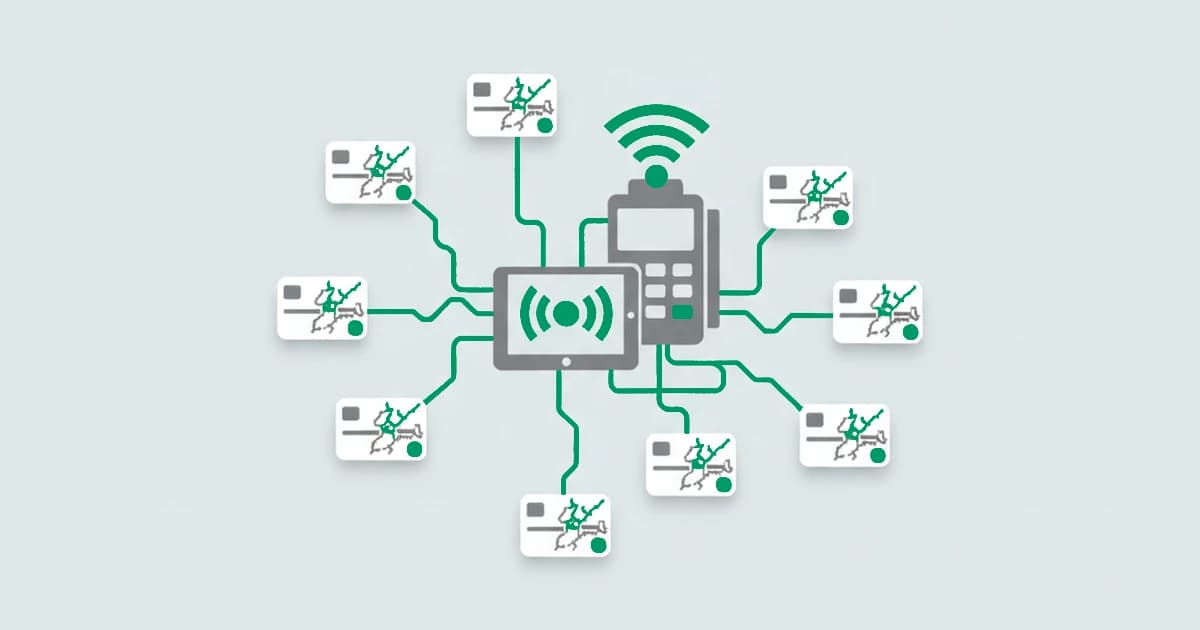
Card testing has gotten big enough that the card networks now police it by the hundred thousand. Under monitoring rules Visa put in place in 2025, a merchant that sees more than 300,000 card-enumeration attempts in a single month is flagged as excessive. Enumeration is the polite word for card testing: running stolen card numbers through a checkout to see which ones are still alive. The attack looks like noise, a flurry of tiny charges that mostly decline, which is exactly why it slips past a tired fraud rule. The useful question is not how to block each charge, but how to recognize that the whole burst is one actor.
Key takeaways
- Card testing is a fraudster validating stolen cards by pushing a stream of small charges through your checkout, keeping the ones that approve for a bigger purchase later.
- Your payment processor sees the charges and the declines. What it does not see is that the cards rotate while the device and connection behind them stay the same.
- The reliable tell is linkage, not the individual charge: many different cards, many declines, one session. Reading the device and network ties the run back to one actor.
- ShieldLabs flags the testing run and helps block that fraudulent traffic, while the decline-velocity rule, the charge decision, and any CAPTCHA keep running in your processor and your code.
What is card testing fraud?
Card testing fraud, sometimes called carding, is the step where a fraudster checks whether stolen card numbers still work before spending real money on them. They buy a batch of card data, then run each one through a checkout or a donation form as a small charge, often under a dollar, to see which cards approve. The approved cards go in a "live" pile for a larger purchase or resale; the declined ones are thrown away. A related variant, a BIN attack, starts from one valid card's bank identification number and guesses the remaining digits, generating fresh candidate cards to test rather than buying a list.
The reason it targets smaller shops is the same reason it is easy to miss. A single test charge is tiny, so it does not trip the alarms tuned for a big fraudulent order, and a store without much fraud scrutiny is a convenient place to validate cards quietly. The damage is not the test charges themselves; it is the pile of processing and authorization fees, the chargebacks when real cardholders dispute the charges, and the risk that an acquiring bank flags the account as high-risk once the pattern shows up.
What your payment processor already catches, and where it stops
The first line against card testing is your payment stack, and it is a good one. A processor watches the rate and pattern of authorizations, so a sudden burst of small charges with a high decline rate is something tools like a gateway's built-in fraud rules are built to throttle. A CAPTCHA on the checkout slows the automated scripts that drive the volume, and a rate limit caps how many attempts come from one source. The charge decision, the decline-velocity rule, and the bot-script throttle belong in your processor and your checkout code, and they stay there.
What that layer reads well is the transaction. What it reads less well is the actor. A processor sees fifty declines and can throttle them, but it does not natively know whether those fifty cards came from fifty people or from one machine cycling a list. When the attacker rotates cards faster than any single card trips a rule, and spreads attempts to stay under the velocity threshold, the per-charge view runs out of signal. That is the gap a session-level read fills.
The cards rotate, the session does not
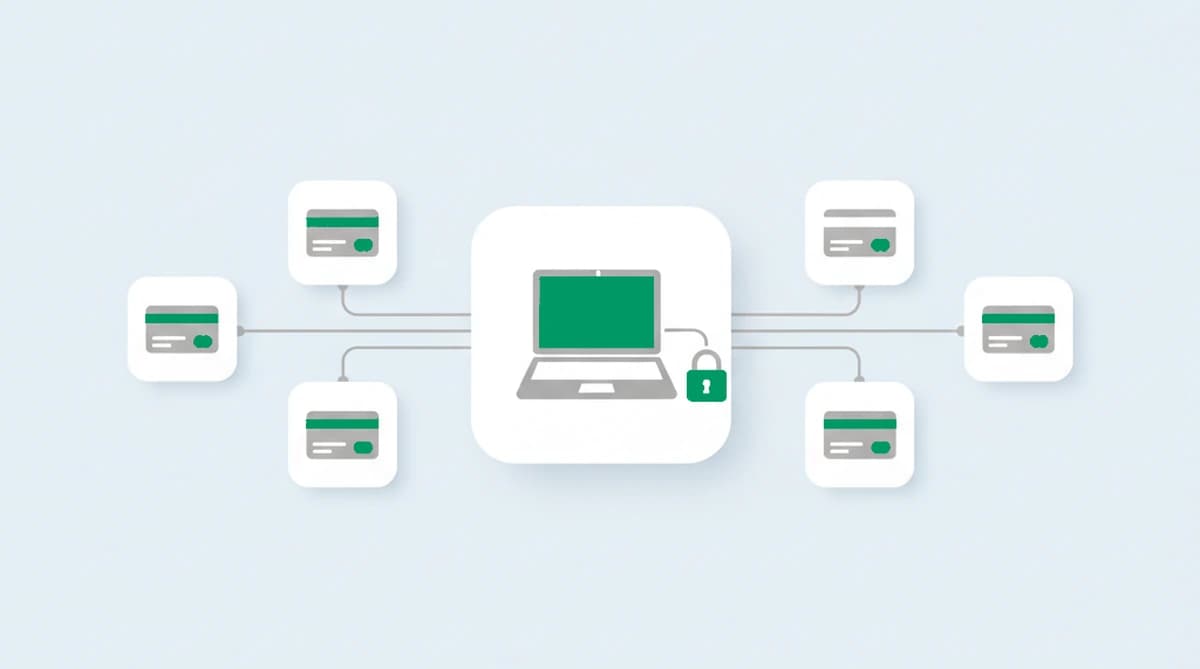
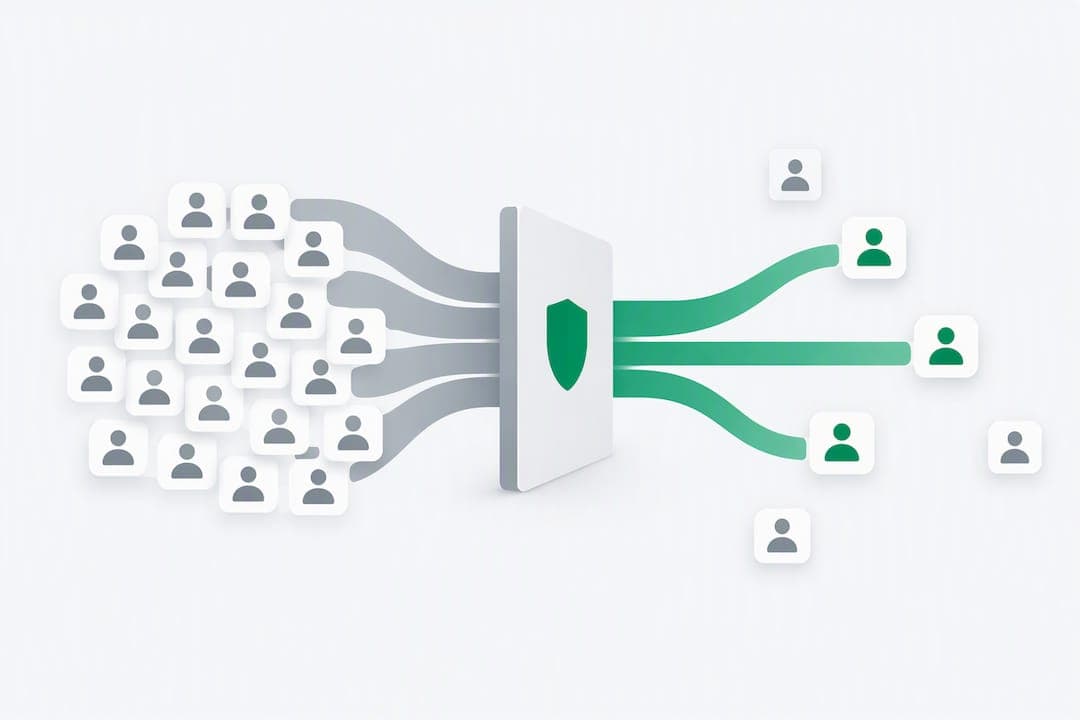
Here is the part the per-charge view misses. The card numbers in a testing run are disposable by design, a fresh one every attempt, so anything that reasons about the card alone sees a stream of unrelated strangers. What does not change nearly as fast is the machine and the connection driving the attempts. The same device, often behind the same VPN or proxy, submits one card after another, and that session is the thread that ties the burst together.
Reading the device and the network behind the checkout is what turns fifty unrelated declines into one recognizable actor. The card-network guidance says as much without naming the fix: a classic card-testing tell is dozens of different cards processed under one profile or one device. A stable device identifier makes that link directly, surviving the cleared cookies and rotated IPs the run leans on, and the connection often carries risk signals, a VPN, an anonymous proxy, or an anti-detect browser, that mark the session as built to hide. This is the same one-actor-many-identities pattern that sits under multi-accounting prevention; here the many identities are cards instead of accounts.
The signals that flag a testing session
No single charge is a verdict; the read is how strongly the session looks like one actor working a list. The tells that do the work:
| Signal at checkout | What it suggests | Strength |
|---|---|---|
| Many different cards from one device | one actor cycling a stolen list, not many shoppers | High |
| A burst of small charges with a high decline rate | the footprint of testing, not normal buying | High |
| An anonymized connection: VPN, proxy, or anti-detect browser | the session is built to hide where it comes from | Medium-High |
| A device new to your store going straight to repeated checkout attempts | no browsing, no history, just card submissions | Medium-High |
| The same device returning after a block under a fresh IP | an actor working around a per-IP rule | Medium |
The strongest single read is the device, because it is the thing the attacker cannot swap as cheaply as a card or an IP. A real customer reaches checkout once with one card; a testing run arrives on a device that has done nothing but submit cards, often behind a connection meant to mask it. A defender weighs these into a risk score rather than acting on any one row, so a legitimate shopper who simply retyped a declined card is not mistaken for an attack.
How to spot a card-testing session
- Read the device and connection on each checkout attempt, not just the card.
- Link the attempts to one session so a run of different cards from one device reads as a single actor.
- Check the connection for risk signals like a VPN, proxy, or anti-detect browser.
- Weigh the signals into a risk score, including the burst of declines and the lack of any normal browsing.
- Act on the result in your backend: add friction, hold, or decline, alongside your processor's own checks.
Where the device signal fits with your payment stack
The charge, the CAPTCHA, the endpoint rate limit, and the approve-or-decline decision run in your processor, your gateway, and your checkout code. A device-and-network read adds a different thing: it scores the session on its own and recognizes when the same device and connection sit behind a run of card attempts, so the testing run is flagged before it burns through more cards.
What the signal layer adds is the read those tools lack on their own: an independent answer to whether this checkout session traces back to a device working through a list, masked behind an anonymized connection. The two halves chain together. Your processor decides the charge and throttles the velocity; the device-and-network read tells you which sessions are one actor in disguise, so the action you take is aimed at the testing run rather than at every customer who mistypes a card.
Which businesses card testing hits hardest
Card testing follows low-friction payment forms where a small charge slips through unnoticed:
- Donations and nonprofits. Open-amount, no-goods donation forms are the classic testing ground, since a fraudster can validate cards for pennies with nothing to ship and no order to flag.
- E-commerce and digital goods. High checkout volume hides testing traffic, and instant-fulfillment digital products let a validated card be cashed out immediately.
- Subscriptions and SaaS. A cheap first charge or a trial-to-paid step is an easy, repeatable place to test a card.
- Ticketing and events. Fast, high-volume on-sale windows give testers cover to run cards in bulk before anyone notices.
Wherever cards rotate through a form, the session and device behind them stay consistent, which is what the device layer reads regardless of vertical.
Preventing card testing fraud with ShieldLabs
ShieldLabs helps you prevent card testing by reading the device and network behind each checkout. You add one JavaScript snippet to your checkout, and on each visit it returns a risk score from 0 to 100 with the named signals behind it: whether the device is one your checkout has already seen, whether the connection carries risk signals like a VPN, proxy, or anti-detect browser, and whether the session behaves like a run of attempts rather than a real purchase. ShieldLabs never reads the card numbers; it recognizes the returning device and issues a stable DeviceID that holds while the cards rotate. You join that DeviceID to your own payment records to count how many cards one device has tried, and across attempts the shared DeviceID shows when many "different" checkouts trace back to one device, so a testing burst reads as one actor in the analytics dashboard instead of a pile of separate declines.
The card number changes on every attempt; when we ran the device read against a burst of checkout tries, the device identifier and the connection behind them stayed put, which is what turns fifty unrelated declines into one recognizable actor. That burst is the same behavior the card networks moved to police in 2025, when a monitoring threshold began flagging any merchant that sees more than three hundred thousand enumeration attempts in a month.
ShieldLabs scores the device and network behind the checkout on a risk score from 0 to 100 and names the risk signals that fired. You read the risk score and named risk signals through the API and webhooks and choose the action for each case: add a step, hold the session, or pass it to your processor as higher risk, while the charge decision stays with your processor. The same identity layer carries into payment fraud prevention and the broader ecommerce account and offer abuse picture.
Sources
- Visa: 2025 Global eCommerce Payments and Fraud Report
- OWASP: Automated Threats to Web Applications: Carding (OAT-001)
- Wikipedia: Carding (fraud)
- Federal Reserve Bank of Kansas City: Card-not-present fraud rates in the United States
Frequently asked questions
- What is card testing fraud?
- Card testing fraud is when a fraudster runs stolen card numbers through a checkout as a stream of small charges to find out which cards are still active. The approved cards are saved for a larger purchase or resale, and the declined ones are discarded. Because each test charge is tiny and most of them fail, the activity looks like harmless noise, which is why it often targets smaller merchants and donation forms with lighter fraud scrutiny.
- How do you detect a card-testing attack?
- The reliable signal is not the individual charge but the link between the attempts. A testing run rotates cards quickly, but the device and the connection behind the checkout tend to stay the same, so reading the session ties a burst of different cards back to one actor. Combined with a high decline rate and an anonymized connection like a VPN or proxy, that linkage is what separates a testing run from a real customer retrying a declined card.
- What is the difference between card testing and a BIN attack?
- Card testing runs through a list of stolen card numbers to see which are live. A BIN attack starts from a single card's bank identification number, the first digits that identify the issuer, and generates new candidate card numbers by guessing the rest, then tests those. One validates cards someone already stole; the other manufactures fresh card numbers to try. Both show up at your checkout as a burst of attempts from a small number of sessions.
- Can you stop card testing without a CAPTCHA?
- A CAPTCHA and a rate limit slow the automated volume, and they are worth having, but they are not the only layer. Reading the device and network behind each checkout flags a testing session even when the attempts are paced to stay under a rate limit, because the same device and masked connection keep showing up across the cards. The two approaches work together: the CAPTCHA and the processor handle the charge and the volume, and the session read tells you which attempts are one actor.
- Does ShieldLabs stop card testing?
- ShieldLabs is the detection layer that helps stop it: it scores the device and network behind a checkout, names the evidence, and flags the sessions that look like one actor cycling cards, helping block fraudulent checkout traffic. Your payment processor still decides the charge, and ShieldLabs works alongside your gateway, fraud rules, and any CAPTCHA, and the free tier covers your first 5,000 identifications.
Related articles
Calculate Fraud Detection Pricing With ShieldLabs' 5,000 Free Tier
Estimate fraud detection costs with a buyer-focused pricing workbook and worked examples. Validate your projection using ShieldLabs' 5,000 free...

Fraud Teams: GDPR Fingerprinting With Explainable Signals
Operational guide for fraud teams on GDPR-compliant device fingerprinting: legal tests, explainable signal scoring, drift handling, and cross-border rules.
Stop Sybil Attacks Without KYC: Evidence-First Prevention for Marketplaces
Build an evidence-first defense for marketplace Sybil attacks: payment-weighted reputation, graph-based detection, device and anonymity signals, plus...