

The 8 best new-account fraud detection tools in 2026

Last updated on October 12, 2026 · 11 min read
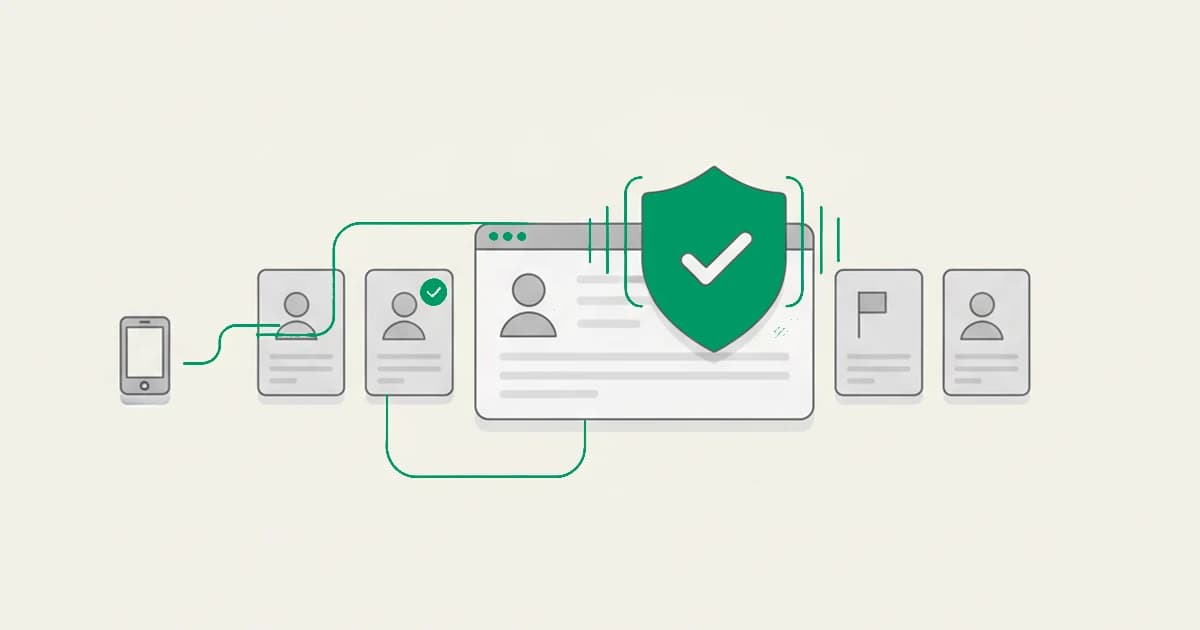
New account fraud detection is the practice of scoring an account at the moment it is created, so a business can tell a genuine first-time user apart from an account that is fraudulent from birth.
That covers a synthetic identity stitched together from real and fake data, a stolen identity used to open an account in someone else's name, a bot-scripted mass signup, and one person quietly opening their tenth account. To be clear about scope: this guide is about fraudulent accounts opened on your own platform at signup.
It is not about spotting impersonator profiles or fake brand accounts on social media, which is a separate problem solved by a different set of tools.
The US Federal Reserve has described synthetic identity fraud, where fabricated identities are used to open new accounts, as one of the fastest-growing financial crimes in the country, and payments platforms document the pattern directly, with Stripe's guidance on fake account creation treating detection at sign-up as a first-class category.
The reason it is hard is that a brand-new account has almost no history to judge. There is no track record, no prior logins, no past behavior, just a form submission that looks the same whether the person behind it is real or manufactured.
The reliable way to catch it early is to read what the signup cannot easily fake: the device and network it comes from, whether the identity holds up, and how the account clusters with others. This guide explains what new-account fraud detection is, how it works, and covers the tools across the segments below.
Key takeaways
- New-account fraud is an account that is fraudulent from creation, spanning synthetic identities, stolen identities, bot-scripted signups, and multi-accounting, all of which do their damage after the account exists, so the useful moment to score is signup.
- A new account has no history, so detection leans on what the signup cannot cheaply fake: device and network signals, identity checks, account linkage, and velocity.
- Device and network tools score the signup fast and detect multi-accounting; identity-verification platforms and sales-led suites that bundle case management and compliance add synthetic and stolen-identity checks and payments tooling.
- No single layer covers every case, so many teams pair a device and signal platform they can evaluate on their own traffic with an identity-verification step for the synthetic and stolen-identity slice.
What is new-account fraud detection?
New-account fraud detection is the practice of assessing an account at signup to decide whether it is a real new user or a fraudulent one, so the operator can hold, deny, or step up the risky signups before the account gets access to anything.
It is sometimes called account opening fraud detection or signup fraud detection, and it sits at the front door of the customer lifecycle, before onboarding, before the first transaction, before any value is issued.
The category exists because the account is the unit fraudsters need. A synthetic identity has to become an account before it can build credit or cash out. A bot farm has to register before it can drain a promo budget. A ban evader has to open a fresh account before they can return.
Detection at the signup moment is what stops the account from ever becoming useful. The mechanics of catching it early are the subject of a dedicated guide on how to stop new-account fraud; this roundup focuses on the tools that do the scoring.
How new-account fraud detection works
A new account has no behavioral history, so good detection reads several layers at signup and correlates them into one picture:
- Device and account linkage. A persistent device identifier links a new signup back to a device that has been seen before, even after cleared cookies, a new browser profile, a fresh email, or a rotated IP. When a "new" account is really a returning device, that is the strongest early tell, and it is how multi-accounting gets detected.
- Network and anonymity. Signup fraud leans on VPNs, proxies, Tor, and anti-detect browsers to make one operator look like a crowd of new users from new places. A tool that names those risk signals can flag the evasion instead of being fooled by it.
- Identity checks for synthetic and stolen IDs. Some new-account fraud is an identity problem, not just a device one. Verifying that a name, date of birth, document, or face belongs to a real, unique person is what separates a synthetic or stolen identity from a genuine applicant. This is the KYC and identity-verification layer.
- Disposable and reused details. Throwaway inboxes, disposable email addresses, and prepaid or reused cards are how one person manufactures the illusion of many distinct new users.
- Velocity and shared attributes. A burst of registrations in a short window, matching addresses, and reused instruments tie signups together even when the device changes. Mass fraudulent signups are a form of the Sybil attack, where a single actor runs many fake identities to game a system.
Tools that work combine these layers and surface a clear result rather than a pile of raw signals you have to correlate yourself. What separates them is the durability of the device signal, whether they check identity as well as device, and how much of the correlation is done for you.
Different tools sit at different layers, which is why the right answer for a given team often means pairing two.
The tools below cover device intelligence, identity enrichment, and fraud operations. Compare each against the signup risks your team needs to detect.
The other tools are grouped by how you buy them and listed alphabetically within each group.
Tools at a glance
This table summarizes the intended fit of each tool. The sections below explain its coverage and limits.
| Tool | Best fit |
|---|---|
| ShieldLabs | Product and developer teams that want the signup scored fast with a durable device signal, named risk signals, and ready-made multi-accounting detection |
| Castle | Teams already on Cloudflare that want edge-plus-app coverage at signup and are comfortable writing their own new-account rules |
| Fingerprint | Developer teams that want a durable device identifier and a broad signal catalog, including mobile, and are comfortable composing the new-account decision themselves |
| IPQualityScore (IPQS) | Teams that mainly want IP, email, and phone reputation checks at registration and treat device linking as secondary |
| SEON | IGaming and fintech operators that want enrichment, AML, and case management alongside device data at the registration stage, and can absorb a sales-led entry |
| Verisoul | Gaming, rewards, and marketplace teams that want an account-linking graph, with optional selfie verification available when proving one unique human at signup matters |
| Sardine | Banks, fintechs, and crypto platforms that need new-account fraud, identity verification, KYC, and AML in one platform and can commit to an enterprise rollout |
| Sift | Larger fraud-operations teams that want consortium-scale network data behind their new-account decisions and can run an enterprise contract |
Self-serve device and signal tools
These tools install with a snippet or lightweight API and score the signup fast on device, network, and reputation signals.
ShieldLabs
ShieldLabs scores the signup at the identity layer without asking your users for anything, with enterprise-level functionality without enterprise pricing.
You add one JavaScript snippet, and each signup returns persistent identification with 99.9% identification accuracy, a durable device identifier that survives cleared cookies, a new email, and a rotated IP, so an account that looks new but comes from a device you have seen stays linked.
It automatically detects multi-accounting, account sharing, impossible travel, and account takeover at signup. The new-account fraud result includes a risk score from 0 to 100, bot and automation detection, and named risk signals such as VPN, proxy, Tor, and anti-detect browser use.
ShieldLabs flags the risky signups and helps stop new-account fraud, so teams can decide whether to deny, hold, or step up each one. Pricing is a one-time free allocation of 5,000 identifications, then plans from 99 USD a month.
The scope boundary matters here. ShieldLabs reads the device and network at signup, while government-ID checks and KYC stay with an identity-verification step, so for synthetic and stolen-identity cases it supplies the device, anonymity, and linkage signal alongside that step. Case management also stays with dedicated tools.
It covers web traffic through one JavaScript snippet, with an API and webhooks on every plan.
Best for: product and developer teams that want the signup scored fast with a durable device signal, named risk signals, and ready-made multi-accounting detection.
Castle
Castle is a self-serve account-security platform with a dual-layer architecture: it runs at the Cloudflare edge and inside your app through an SDK, so signals from one sharpen the other.
Fake accounts and multi-accounting are explicit use cases, and its own example rule targets the new-account shape directly, counting unique users per device fingerprint where a promo code exists over a time window.
It returns three scores from 0 to 100 for bot, abuse, and account takeover, backs them with device fingerprinting it rates up to 99.5 percent accurate, and adds disposable-email intelligence plus a distinct fraud-registered-email-domain signal. Pricing starts free at 1,000 calls a month, then Pro at 200 USD a month for 100,000 calls.
The tradeoff is that Castle gives you the building blocks, not a finished new-account pattern. Detection is a rule you compose and tune rather than a named surface handed to you, the scoring leans on self-learning models, and it is a device and behavior layer with no built-in identity verification for synthetic IDs.
Best for: teams already on Cloudflare that want edge-plus-app coverage at signup and are comfortable writing their own new-account rules.
Fingerprint
Fingerprint is a device-intelligence platform, and repeat signups and multi-accounting are among its documented use cases.
Its Visitor ID is engineered to persist across cleared cookies, incognito, and a rotated IP, so a new signup from a device seen before stays linked, and its Smart Signals name VPN, proxy, incognito, virtual machine, and velocity to flag the evasion behind a fresh account.
Everything rolls up into a single Suspect Score, and the catalog is broad, with web and native mobile SDKs across iOS and Android. The Pro Plus tier is published at 99 USD a month for 20,000 API calls, on top of a permanent free tier.
The tradeoff is that Fingerprint returns raw signals and one composite Suspect Score, not a pre-built new-account-fraud decision, and it is a device layer, not an identity checker, so a synthetic or stolen identity behind a clean device is not its job.
As one engineer put it on G2, the signals are helpful but not the whole picture, so teams often build their own model on top.
Best for: developer teams that want a durable device identifier and a broad signal catalog, including mobile, and are comfortable composing the new-account decision themselves.
IPQualityScore (IPQS)
IPQualityScore pairs IP reputation with email and phone validation to flag new signups that route through a suspicious connection or reuse a burned contact detail. Its VPN, proxy, Tor, and residential-proxy detection is backed by a proprietary honeypot network across many countries, and it ships dedicated duplicate-and-fake-account detection plus a prevent-fake-registration solution that map onto new-account fraud.
Free interactive lookup tools make it easy to test before committing. A permanent free tier covers 1,000 lookups a month, with self-serve plans from 99 USD a month.
The tradeoff sits in the packaging. On the self-serve tiers you get IP, email, phone, and URL reputation, but device fingerprinting and the mobile SDK are gated to a custom Enterprise plan, so the device-linkage layer that catches multi-accounting is not in the entry tiers.
Output is a score from 0 to 100 plus raw signals, and reviewers flag a dated dashboard, so you assemble the new-account pattern yourself.
Best for: teams that mainly want IP, email, and phone reputation checks at registration and treat device linking as secondary.
SEON
SEON is a fraud platform widely used in iGaming and fintech, and registration monitoring is a documented use case, with one operator reporting a 190 percent increase in multi-accounting detection at signup.
It pairs device intelligence with data enrichment: it resolves an email or phone into a wider digital footprint and links signups that share otherwise hidden attributes, which is how it surfaces the same person behind many new accounts. Synthetic-identity risk at onboarding is a documented outcome for its banking customers.
It markets 900-plus signals, transparent scoring, a custom rules engine, disposable-email checks, case management, and AML tooling. The Starter tier is published at 699 USD a month for 2,500 fraud checks, with everything above quoted by sales.
The tradeoff is cost and access at the small end. That entry price works out to roughly 28 cents per check, and past a few thousand checks a month you move into a sales-quoted plan rather than an instant signup. Reviewers also note a learning curve and ongoing rule calibration.
Best for: iGaming and fintech operators that want enrichment, AML, and case management alongside device data at the registration stage, and can absorb a sales-led entry.
Verisoul
Verisoul is a fake-account prevention platform, and repeat signups is one of its named use cases. Its Account Linking graph visualizes in real time which new accounts share a device or fingerprint, which is the direct view an operator needs to see one person opening many accounts.
It combines device fingerprinting, proxy and VPN detection, and optional selfie and document verification through FaceMatch and ID Check, so it can reach into the synthetic and stolen-identity slice that a device-only tool cannot. It offers a no-code rule builder so decisions can be tuned without engineering. Paid plans start at 249 USD a month for the Professional tier.
The tradeoff is access and identifier model. The free Starter tier is dashboard-only with no API, and every self-serve button routes to a demo, so there is no instant signup for an API-first evaluator. Verisoul also returns match probabilities rather than a stable device identifier you can join against your own warehouse.
Best for: gaming, rewards, and marketplace teams that want an account-linking graph, with optional selfie verification available when proving one unique human at signup matters.
Enterprise fraud and onboarding platforms
These are sales-led suites that bundle case management and compliance, adding identity verification, KYC, and payments tooling around the signup signal.
Sardine
Sardine is an enterprise risk platform for banks, fintechs, and crypto, and it covers identity as well as device signals for new-account fraud. Alongside device intelligence, behavior biometrics, and its True Piercing feature for unmasking VPN and IP-spoofing users, its onboarding module carries Global KYC, Global KYB, identity verification, document verification, and bank verification.
That combination is built to catch the synthetic and stolen identities that slip past a device-only check, with case management to work the alerts. One neobank credits it with tracing a laundering ring across thousands of accounts.
The tradeoff is fit and friction. Sardine is enterprise and sales-led with no public pricing and a bank-grade integration cycle, so it is not a same-week evaluation, and reviewers repeatedly flag a steep learning curve and rule-tuning overhead on day one.
Best for: banks, fintechs, and crypto platforms that need new-account fraud, identity verification, KYC, and AML in one platform and can commit to an enterprise rollout.
Sift
Sift is an enterprise fraud platform, and Account Creation is one of its named solutions. Its core output is the Sift Score, a real-time risk score powered by a Global Data Network of roughly a trillion annual events across hundreds of brands, so a new account that is new to you may already be known to the network.
Account Defense adds device fingerprinting and behavioral analysis, and a Fall 2025 Console module for incentive abuse brought first-class multi-account and fake-account defenses. It is sold as a sales-led enterprise platform with no public pricing and a roughly two-month implementation reported by reviewers.
The tradeoff is access and transparency. There is no self-serve tier and no free trial, so it cannot be evaluated or bought without a sales process, and the model-driven Sift Score is a recurring "black box" complaint on G2, where analysts say it is hard to explain which of many signals actually drove a decision.
Best for: larger fraud-operations teams that want consortium-scale network data behind their new-account decisions and can run an enterprise contract.
How to choose
No single tool on this list is the universal answer, and many teams end up layering two: a device and signal layer that scores every signup fast, and an identity-verification step for the accounts where a name or document has to be proven real. Start from your own threat model and how much you want done for you.
Three questions decide most of it. First, is your new-account problem a device problem or an identity problem? If fraudsters are farming accounts, evading bans, or abusing offers, a device-intelligence tool that links signups and names risk signals catches most of it.
If they are opening accounts with synthetic or stolen identities to build credit or cash out, you need an identity-verification or KYC layer, and a device signal alone will not confirm a person is real. Second, do you want multi-accounting at signup detected for you out of the box, or the raw signals to build your own rules on?
A tool with ready-made multi-accounting detection saves your team from writing correlation logic. Third, do you also need payments, AML, or case management around the signup signal? If yes, a broader platform earns its cost; if you only need the signup scored fast, a platform you can evaluate on your own traffic today covers it quickly.
Match those answers to the entries above. If your problem is everyday account farming, ban evasion, and offer abuse on the web, a device-intelligence platform you can test on your own traffic covers most of it in an afternoon.
If a large share of your fraud is synthetic or stolen identities, pair that signal with an identity-verification step or reach for a platform that bundles KYC.
And because new-account fraud shades into related problems, it is worth pinning down where it ends: the linkage sub-case has its own deeper cut in the best multi-accounting detection tools roundup, and the mirror-image problem of a fraudster taking over an existing account is covered in the best account takeover detection tools guide.
Sources
- Stripe: Fake account creation
- Federal Reserve Financial Services: New account fraud
- Wikipedia: Synthetic identity theft
- Wikipedia: Sybil attack
- Wikipedia: Disposable email address
Recommended
Frequently asked questions
- What is new-account fraud detection?
- New-account fraud detection is the practice of scoring an account at signup to tell a genuine new user apart from one that is fraudulent from creation, so the operator can hold, deny, or step up the risky signups before the account gets access. It covers synthetic identities, stolen identities, bot-scripted mass signups, and multi-accounting.
- What is the difference between new-account fraud and account takeover?
- New-account fraud is an account that is fraudulent from the moment it is created, so the fraudster owns the account from the start. Account takeover is the opposite direction: a legitimate account that already belongs to a real customer is hijacked later through stolen credentials, a SIM swap, or a phishing attack.
- Is this the same as detecting fake accounts on social media?
- No. This guide is about fraudulent accounts opened on your own platform at signup, where the goal is to keep synthetic identities, stolen identities, bots, and multi-accounters from registering. Detecting fake or impersonator accounts on social media is a different problem: finding profiles that pretend to be a real person or brand on a network you do not control.
- How do you detect new-account fraud at signup?
- By judging what a new account cannot easily fake, since it has no history to judge. The strongest early signal is a shared device, linked with a persistent device identifier that survives cleared cookies, a new email, and a rotated IP, which reveals when a "new" account is really a returning device.
- How does ShieldLabs help detect new-account fraud?
- ShieldLabs links a new signup to returning device context and automatically detects multi-accounting, account sharing, impossible travel, and account takeover. Named device and network signals, bot detection, and an explainable 0–100 risk score show why the signup is risky. Identity verification remains a separate check for stolen or synthetic identity cases.
Related articles
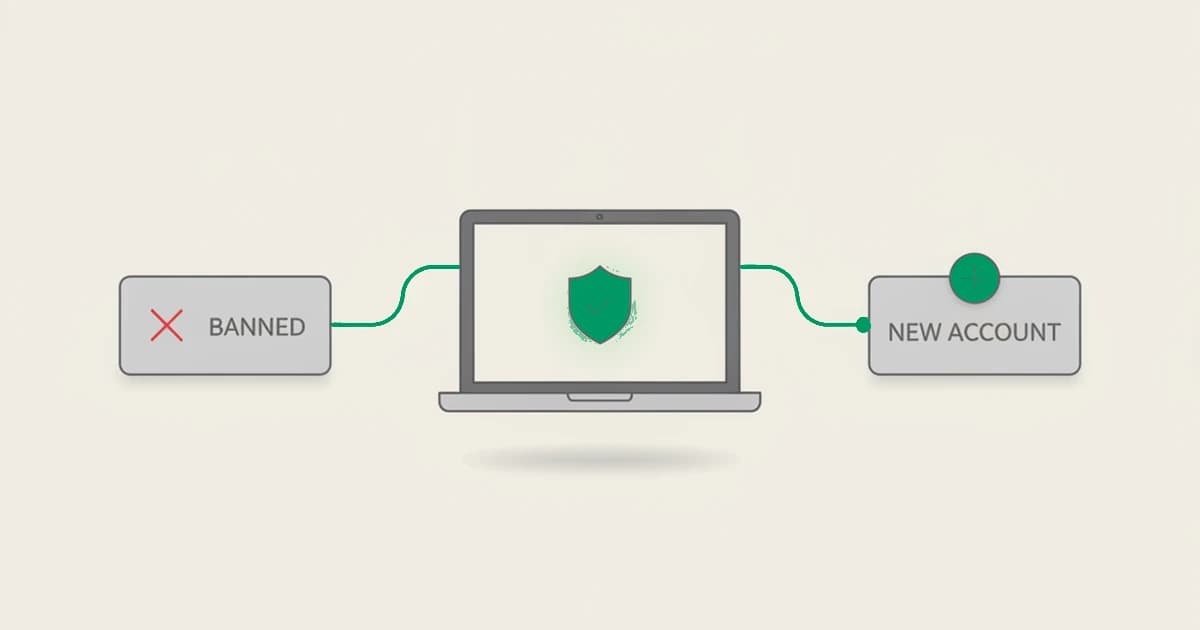
Device ban: how to block a repeat offender so the ban survives a new account
A device ban makes a ban stick to the device, not the account, so a banned user cannot walk back in under a fresh email. How it works and how to build it.

How to detect account sharing?
Detect account sharing from four devices on one account by default, with Medium or High confidence. Review browser/device history and legitimate multi-device use.
How ban evasion detection works: re-identifying returning banned users
How ban evasion detection works: why account-only bans fail, and the signals that re-identify a returning banned user behind a brand-new signup.
