

The 14 best account takeover detection tools in 2026

Last updated on October 8, 2026 · 20 min read
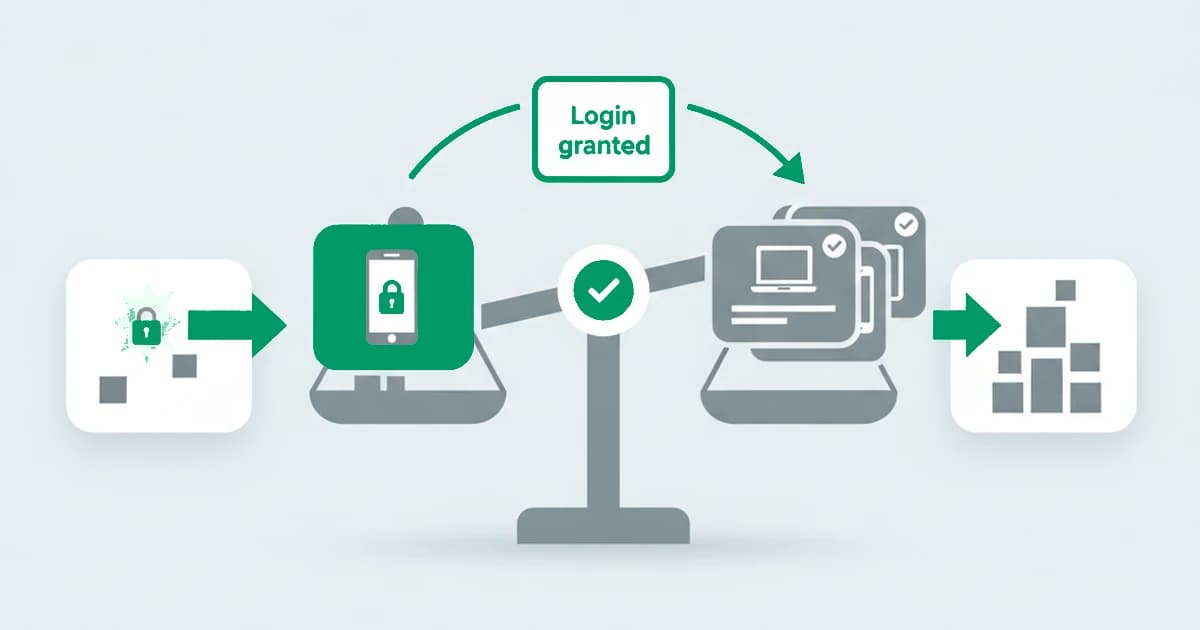
Account takeover starts with credentials that already work. An attacker signs in with a real username and password, so the login looks legitimate, the password check passes, and the fraud only surfaces once the account is drained or its recovery details are changed. In 2025, stolen credentials were the single most common way into a breach, according to the Verizon Data Breach Investigations Report, which is exactly why account takeover is so hard to catch: nothing about the credentials is wrong. It is also the priciest fraud to clean up: the 2026 Javelin Identity Fraud Study counted 6 million US account-takeover victims in 2025, up from 5.1 million a year earlier, with losses above $15 billion.
What separates an attacker from the real owner is not the password but the context around the login, above all whether the device is one the account has used before. This guide explains why account takeover detection is hard to get right, how to evaluate a tool, and covers 14 account takeover detection tools across the segments below, from device-intelligence APIs you can evaluate on your own traffic today to sales-led identity, behavioral, and bot-defense suites.
Key takeaways
- Account takeover uses valid credentials, so the strongest signal is not the password but the context: the device, the connection, and the behavior behind the login.
- The tools split into categories: device intelligence, behavioral biometrics, credential-exposure monitoring, identity and adaptive MFA, and bot defense. Most teams combine two.
- Evaluate on signal depth, coverage across the whole session rather than just the login event, real-time step-up, explainability, and how it fits your existing stack.
- Start with a device-intelligence tool you can evaluate on your own traffic today to flag logins from unfamiliar devices; add a sales-led suite when you need case management and compliance around the signal.
What is account takeover detection?
Account takeover detection is the practice of spotting when a legitimate account is being accessed by someone other than its owner, usually with stolen or guessed credentials. Because the login itself is valid, detection relies on the signals around it: whether the device is recognized, whether the connection is suddenly anonymized, whether the behavior matches the account's history, and whether the credentials have shown up in a known breach.
It is hard for a specific reason. A password proves a secret, and a stolen password proves the same secret just as well, so no single credential check can tell the owner from the thief. The context can, though. A login from a device the account has never used, arriving over a VPN from a new country, is one of the more reliable early signals of takeover, which is why device and behavioral signals sit at the center of modern ATO detection rather than the login credentials themselves.
We measured what actually separates an account's owner from an intruder when both arrive on valid credentials, and the deciding factor was never the password. What moved the read was context: whether the login came from a device the account had used before, and whether the connection had abruptly turned anonymous. Stolen credentials were the single most common way into a breach in 2025, according to the Verizon DBIR, which is why the dependable signal lives in the device and the connection rather than in a password a thief already holds.
How to evaluate an account takeover detection tool
Account takeover tools come from several different categories, and the right one depends on where your risk is. Six criteria separate them:
- Signal depth. Does it recognize the device behind a login, read risk signals like VPN and anti-detect browsers, and factor in behavior, or does it only check credentials against a breach list?
- Coverage across the session. Attacks do not end at login. A strong tool watches the whole session, including profile changes, password resets, and high-value actions, not just the sign-in event.
- Real-time enforcement. A useful signal arrives fast enough to trigger a step-up challenge before damage is done, not in a report the next morning.
- Explainability. A score you can break into named signals is one your team can act on and defend to a customer, unlike a single opaque verdict.
- Integration. A JavaScript snippet and an API call is a different lift from a mobile SDK, an IAM integration, or an edge deployment. Match it to your stack.
- Pricing model. Platforms with a free tier let you evaluate on your own traffic today; sales-led suites that bundle case management and compliance are priced on volume and annual contracts.
ShieldLabs publishes this list and includes its own product. ShieldLabs is listed first because it scores highest on the criteria above: signal depth, coverage across the session, real-time enforcement, explainability, integration, and pricing model. The other tools are grouped by detection category and listed alphabetically within each group.
Account takeover detection software selection matrix
| Software layer | What it detects or changes | Best place to use it | What it does not replace |
|---|---|---|---|
| Device and risk-signal intelligence | A login from a new device, anonymized connection, or linked risky account | Web signup, login, recovery, and sensitive actions | MFA, credential checks, or a native mobile SDK unless the vendor supplies one |
| Behavioral biometrics | Interaction patterns that differ from the account's history | High-value sessions with enough behavioral data | Device recognition on a first visit |
| Credential and breach intelligence | Credentials exposed or reused elsewhere | Password reset and login controls | Detecting a takeover made with valid, unreported credentials |
| Bot and automation defense | Automated login volume and scripted abuse | Edge or login endpoints | Human takeovers with valid passwords |
| Identity and adaptive MFA | A verification step when risk rises | Authentication and recovery flows | The independent risk signals used to choose whom to challenge |
Start with the layer that answers your actual failure mode, then check its web, mobile, API, or IAM integration against your stack. If device evidence is the missing piece, account takeover prevention shows where it fits in the login flow.
Device and signal intelligence
These tools, all of which you can evaluate on your own traffic, recognize the device and connection behind a login and flag when it is one the account has never used, the most common early signal of takeover.
ShieldLabs
ShieldLabs is a device intelligence platform built to surface account takeover where most attacks show themselves: a login from a device the account has never used. It brings enterprise-level functionality without enterprise pricing. You add one JavaScript snippet, and each visit returns persistent identification with 99.9% identification accuracy and a risk score from 0 to 100 with the named signals behind it, including the risk signals (VPN, proxy, Tor, and anti-detect browser use) that often accompany a takeover, detected with 99.9% risk signal detection accuracy, along with bot and automation detection. It detects four High-Risk Events out of the box, multi-accounting, account sharing, impossible travel and account takeover, each with Medium or High confidence, and flags the risky logins so you can step up an unfamiliar login instead of blocking a real customer. It covers web traffic through one JavaScript snippet, with an API and webhooks on every plan, and works alongside your MFA or identity provider; behavioral biometrics and credential-leak monitoring sit outside its scope. Pricing is a free tier of 5,000 identifications, then plans from 99 USD a month.
Best for: teams that want to flag logins from unfamiliar devices and anonymized connections with an explainable score their own auth stack can act on.
Castle
A self-serve platform focused on account security that pairs two layers: an edge integration you can deploy through Cloudflare with no code, and an in-app SDK, so what it blocks early sharpens what it catches later. It returns three separate 0 to 100 scores for Bot, Abuse, and Account Takeover, plus a customer-owned rules engine, device fingerprinting, and email intelligence. Its free tier and its Pro plan at 200 USD a month for 100K calls make it easy to test, and it does not paywall signals between Free and Pro.
Two tradeoffs stand out. Castle returns three scores rather than one composite, so you compose the ATO decision across them, and its self-serve Pro tier caps at 100K calls before a large jump to sales-led Enterprise. It also leans on "self-learning AI" framing, which suits teams comfortable with model-driven scoring more than teams that want deterministic, explainable logic.
Best for: teams that want to write and own their own account-protection rules across an edge and in-app layer rather than accept a single verdict.
Fingerprint
A device intelligence API built on the open-source FingerprintJS project, which other vendors also draw on. It produces a persistent visitor identifier that recognizes a returning device across cleared cookies and rotated IPs, a basis for spotting a login from a device an account has not used before. Its Pro Plus tier at 99 USD carries a broad Smart Signals catalog covering VPN, proxy, bot, incognito, and virtual-machine use, and native iOS and Android SDKs extend it to mobile apps. SOC 2 Type II and ISO 27001 back it for regulated buyers.
The tradeoff is that Fingerprint returns raw signals and a single Suspect Score rather than pre-built fraud verdicts. Reviewers note they had to build their own model on top to make the read fraud-specific, and cost is the top G2 complaint once volume climbs past the included calls. Pricing then jumps from Pro Plus straight to custom Enterprise with no mid-tier.
Best for: developer teams that want a persistent device identifier to anchor their own ATO rules, on web or mobile.
SEON
A fraud platform centered on data enrichment: it resolves an email or phone number into a wider digital footprint and combines that with device intelligence to judge whether a login is genuine. SEON markets more than 900 signals, a rules engine, and a lifecycle view spanning onboarding, activity monitoring, and payments, with AML compliance and case management on higher tiers. Reviewers single out transparent, explainable scoring as a strength.
The tradeoff is fit and price. The published Starter plan runs 699 USD a month but caps at 2,500 checks, so anyone scaling past a few thousand logins moves into sales-quoted Premium. SEON markets a signal count rather than a named list, and reviewers flag a learning curve: it rewards a team that will tune rules, not one wanting plug-and-play.
Best for: iGaming and fintech teams that want enrichment signals and AML tooling alongside device data at login.
Behavioral biometrics
Behavioral biometrics reads how a user types, moves, and holds a device across the whole session, flagging a takeover when the interaction pattern stops matching the account's established owner.
BioCatch
A behavioral biometrics platform that continuously analyzes how a user types, moves a mouse, and holds a device, then flags takeover when the interaction pattern stops matching the account's established owner. Because it reads behavior across the whole session, it can catch a takeover that begins after login, including social-engineering cases where a victim is coached through actions in real time that a one-time login check would miss.
The tradeoff is that behavioral biometrics needs enough genuine interaction history to model a user before it can spot a deviation, so it is strongest on established accounts and higher-value sessions rather than the first touch. It is an enterprise, sales-led platform rather than a self-serve API, so expect a longer rollout.
Best for: banks and large platforms that want continuous, in-session behavioral detection layered on top of a device or identity check.
Credential and breach intelligence
This layer attacks takeover upstream, warning you when a user's password already appears in breach or malware data so you can reset or step up the account before an attacker uses it.
SpyCloud
A credential-exposure platform that recaptures data from breaches and infostealer malware logs, then matches it against your users so you can reset or step up accounts whose passwords are already known to be compromised, ideally before an attacker uses them. It attacks account takeover upstream, at the leaked-credential stage, a different point on the timeline from device or behavioral tools that read the login itself.
The tradeoff is exactly that scope: SpyCloud tells you which credentials are exposed, not whether the person signing in right now is the real owner. It is a warning feed that pairs with a session-level signal rather than replacing one, and it is enterprise and sales-led.
Best for: security teams that want early warning when a user's credentials surface in breach or malware data, feeding resets and step-up before the login happens.
Bot and automation defense
These platforms intercept the automated credential-stuffing and login floods behind high-volume takeover attempts at the edge, before they reach your login.
Arkose Labs
A bot-defense platform that intercepts automated credential-stuffing and takeover attempts at login with risk-based challenges. Its signature is Matchkey, an adaptive puzzle engineered to stay cheap for humans but computationally expensive for bots and automation, so the economics of a high-volume attack collapse. Behind it sit a cross-customer intelligence network and a 24/7 threat-research team, and Arkose backs efficacy with contractual warranties, which is rare in the category.
The tradeoff is friction and segment. Arkose leans on challenges, and even fans on G2 mention real users occasionally solving multiple visual puzzles just to log in. It is enterprise, sales-led, and top-bracket priced with no self-serve tier or non-production test mode, and it targets the automated share of ATO rather than a lone human on a stolen password.
Best for: large sites facing heavy automated credential-stuffing that want to raise the cost of attack at the edge.
DataDome
A bot and online-fraud platform with an Account Protect module that detects automated login attacks in real time using device and network signals enforced at the edge, across dozens of points of presence at very low latency. Unusually for an enterprise vendor it publishes its tiers, and it has moved early on classifying AI-agent traffic, not just classic bots. Customers typically run it as a layer on top of an existing CDN such as Cloudflare.
The tradeoff is segment and transparency. The entry tier starts at 3,830 USD a month, a high entry point, and there is no self-serve signup or free trial. Detection is presented as thousands of AI models rather than a named signal list, so you trust the engine rather than read why it fired, and the focus is automated traffic more than a single human on stolen credentials.
Best for: teams that want bot mitigation and automated-ATO defense in one edge layer on top of their CDN.
Identity and adaptive MFA
These identity platforms score each sign-in on context like device, location, and network, then step up verification inside the login flow itself.
Okta Adaptive MFA
An identity platform whose adaptive multi-factor authentication steps up verification when a sign-in looks risky, weighing context like device, location, and network before deciding whether to prompt for a second factor. For the very large base of teams already standardized on Okta, it turns MFA from an always-on tax into a targeted challenge, reserving friction for the logins that warrant it.
The tradeoff is scope and lock-in. The risk signals are geared to the Okta ecosystem and the login moment, so it is adaptive step-up rather than a full-session or standalone detection layer, and its depth of device and network signal is narrower than a dedicated device-intelligence tool. It sits behind enterprise licensing.
Best for: teams standardized on Okta that want adaptive step-up as part of their existing IAM.
Ping Identity (PingOne Protect)
An identity platform whose PingOne Protect service adds risk-based, adaptive authentication: it scores each sign-in on contextual signals like device, location, network, and behavior, then raises or lowers friction inside the login flow itself. Because the risk read lives in the identity layer, the step-up decision and the authentication happen in one place rather than being stitched together from a separate scoring API.
The tradeoff is that this value is closely tied to running Ping's identity stack. It is most compelling if PingOne is already your IAM, and less so as a standalone signal feed alongside another provider. It is an enterprise, sales-led product with the rollout that implies.
Best for: organizations that want ATO risk scoring built directly into their Ping identity and access management.
Enterprise fraud and identity networks
These enterprise suites weigh device and identity signals against large cross-customer data networks, usually as one module in a broader fraud and decisioning platform.
Kount
An Equifax fraud platform with account-takeover coverage across e-commerce and payments, combining device intelligence and identity signals with a large data network. Because Kount grew up as a payments-fraud and chargeback suite, ATO sits inside a broader decisioning platform, which suits merchants that want one vendor spanning transaction fraud, chargebacks, and account defense rather than a dedicated login layer.
The tradeoff follows from that breadth: account takeover is one module in a wide suite, so a team whose only problem is unfamiliar-device logins may be buying more platform than it needs, and it is sales-led and enterprise-priced as part of Equifax. Its network and identity data are deep, but a self-serve, developer-first experience is not the point.
Best for: merchants that want ATO coverage inside a broader payments-fraud and chargeback platform.
LexisNexis ThreatMetrix
A long-established enterprise device and identity platform, now part of LexisNexis Risk Solutions, widely deployed by banks and lenders for login and transaction risk. Its strength is scale and the identity data behind it: device signals are cross-referenced against one of the larger global fraud-intelligence networks, which is why regulated financial institutions have trusted it for years.
The tradeoff is that it is sold and priced through the LexisNexis enterprise channel, with the procurement cycle and integration effort of a long-standing enterprise platform. Teams wanting a self-serve API and a five-minute install will find it aimed at a different buyer, and its developer experience predates the API-first generation of device tools.
Best for: large financial institutions already inside the LexisNexis ecosystem that want device and identity risk together.
Sift
A fraud platform with account-takeover coverage, scoring logins and actions against a large cross-network dataset Sift calls its Global Data Network, roughly a trillion events a year across hundreds of brands. That consortium scale means a user who is new to you may not be new to Sift, which helps flag repeat fraud patterns at login. It pairs an analyst Console with an embeddable Sift Score API for teams building their own risk engine, plus a premium human-expertise service layer.
The tradeoff is reach and price. Sift is enterprise and sales-led with no public pricing, no free tier, and a two-month average implementation per its own G2 reviews. The score is model-driven and hard to explain: reviewers describe a black box that is "hard to second-guess" and noisy "when a hundred signals fire at once."
Best for: larger e-commerce and fintech teams that want a network-scale score across fraud and ATO and have a fraud-ops team to run it.
TransUnion TruValidate
TransUnion's fraud and identity suite, assembled from the earlier iovation device-reputation and NeuStar identity products, covering device recognition and identity signals for account and transaction risk. Its pull is the bundle: device intelligence sits alongside TransUnion's identity and credit data, so a lender can weigh the login device and the person behind it from one relationship.
The tradeoff is that the value concentrates when you buy into that wider TransUnion data relationship. As a standalone device signal it competes with lighter, faster-to-integrate APIs, and it carries enterprise sales and procurement. The iovation-era device reputation is mature but not a modern self-serve developer product.
Best for: enterprises, especially banks and lenders, that want device intelligence bundled with TransUnion's identity data.
How to choose
Account takeover prevention is not one problem, so the right tool depends on the attack you actually face, and most teams end up combining layers rather than picking a single winner.
Match the layer to the threat. If your attacks are high-volume and automated, credential-stuffing runs and bot-driven login floods, a bot-defense layer like Arkose or DataDome removes most of the noise at the edge before it reaches your login. If the attacker is a human on a stolen but valid password, the credential check passes and volume signals stay quiet; here device intelligence (an unfamiliar device, an anonymized connection) and behavioral biometrics (interaction that no longer matches the owner) are what surface the intruder. If your exposure is reused passwords from known breaches, a credential-exposure feed warns you before the login is even attempted. And if you want the risk read to live inside authentication itself, an adaptive-MFA or identity platform steps up verification in the flow.
These categories compose rather than compete. A common pattern is a device or behavioral layer feeding a step-up decision in your identity provider, with a credential-exposure feed resetting known-compromised accounts in the background. Two questions narrow the shortlist. First, is your surface web, mobile, or an API? That decides between a JavaScript-first tool, a mobile SDK, and an edge or IAM integration. Second, do you want to see the evidence or trust a verdict? An explainable score with named signals shows why a login was flagged; a managed verdict trades that visibility for speed. A platform you can evaluate on your own traffic today, with a free tier, lets any team test an approach before committing.
Sources
- Verizon: 2025 Data Breach Investigations Report (2025)
- Javelin Strategy & Research: 2026 Identity Fraud Study: The Illusion of Progress (2026)
- Wikipedia: Credential stuffing
- Wikipedia: Multi-factor authentication
Recommended
Frequently asked questions
- What is account takeover detection?
- Account takeover detection is spotting when a legitimate account is accessed by someone other than its owner, usually with stolen credentials. Because the login is valid, detection relies on the context around it: whether the device is recognized, whether the connection is anonymized, whether the behavior matches history, and whether the credentials appear in known breaches. The tools that do it come from device intelligence, behavioral biometrics, credential-exposure, identity, and bot-defense categories.
- How do account takeover detection tools work?
- They read signals other than the password. Device intelligence checks whether the login comes from a device the account has used before; behavioral biometrics checks whether typing and movement match the owner; credential-exposure tools check whether the password is known to be breached; and bot-defense tools spot the automation behind high-volume attacks. Each returns a risk read that your system can act on, most usefully by stepping up verification on a suspicious login rather than blocking outright.
- Do account takeover detection tools replace MFA?
- No, they complement it. MFA adds a factor at login, while ATO detection decides when that extra factor is actually needed, so a returning device on a normal connection passes quietly and an unfamiliar one gets challenged. Used together, they cut friction for real users and reserve the strong check for risky logins. Detection also covers in-session actions that a one-time MFA prompt at login does not.
- Do I need both a fraud tool and an account takeover tool?
- Often the same platform covers both, but they answer different questions. Fraud tools focus on the risk of a transaction or a new account, while account takeover tools focus on whether an existing account's login is genuine. If your main exposure is compromised existing accounts, an ATO-focused layer matters; many teams run a device or behavioral layer that serves both purposes.
- Which account takeover tool is best for a small team?
- A platform you can evaluate on your own traffic, with a free tier, is usually the right starting point, because you can integrate and test without a sales process. ShieldLabs offers enterprise-level functionality without enterprise pricing that any team can start on, and Fingerprint and Castle also have free tiers; all three flag the most common ATO signal, a login from an unfamiliar device, without a long rollout. Teams that need case management or compliance tooling add a sales-led identity, behavioral, or bot-defense suite on top.
- Does ShieldLabs stop account takeover?
- No single tool stops it, and ShieldLabs is the device-recognition layer that works alongside your IAM and MFA. It gives every login persistent identification and a risk score with the named signals, plus four ready-made High-Risk Events (multi-accounting, account sharing, impossible travel and account takeover), so you can tell an account's own device from an unfamiliar one and step up the risky logins. ShieldLabs flags the risky logins and helps block fraudulent and abusive traffic. Pricing is a free tier of 5,000 identifications, then plans from 99 USD a month.
Related articles
7 Bot Detection Tools for Web Signup and Login
Compare seven bot detection tools across browser/device evidence, account behavior, edge mitigation and challenges, with current integration and plan checks.

SSR Safe Angular Bot Detection: OWASP Layering and Server Validation
Angular-focused, actionable steps to run SSR safe client checks, validate tokens server side, apply OWASP layering, and use ShieldLabs signals for...

Calculate Fraud Detection Pricing With ShieldLabs' 5,000 Free Tier
Compare fraud detection pricing models and calculate ShieldLabs costs using 5,000 free identifications once, monthly plans and annual billing.