

The 8 best fraud detection software in 2026

Last updated on September 23, 2026 · 17 min read
Fraud has industrialized, and the cost tracks the growth of everything moving online. Online payment fraud alone is on track to top $362 billion globally over five years, by Juniper Research's projection, and that is before you count fake accounts, promo abuse, and account takeover. The drain is already being felt: businesses lost an average of 7.7 percent of annual revenue to fraud across 2024 and 2025, by Stripe's estimate. Fraud detection software is how teams keep up without turning every login and checkout into an interrogation.
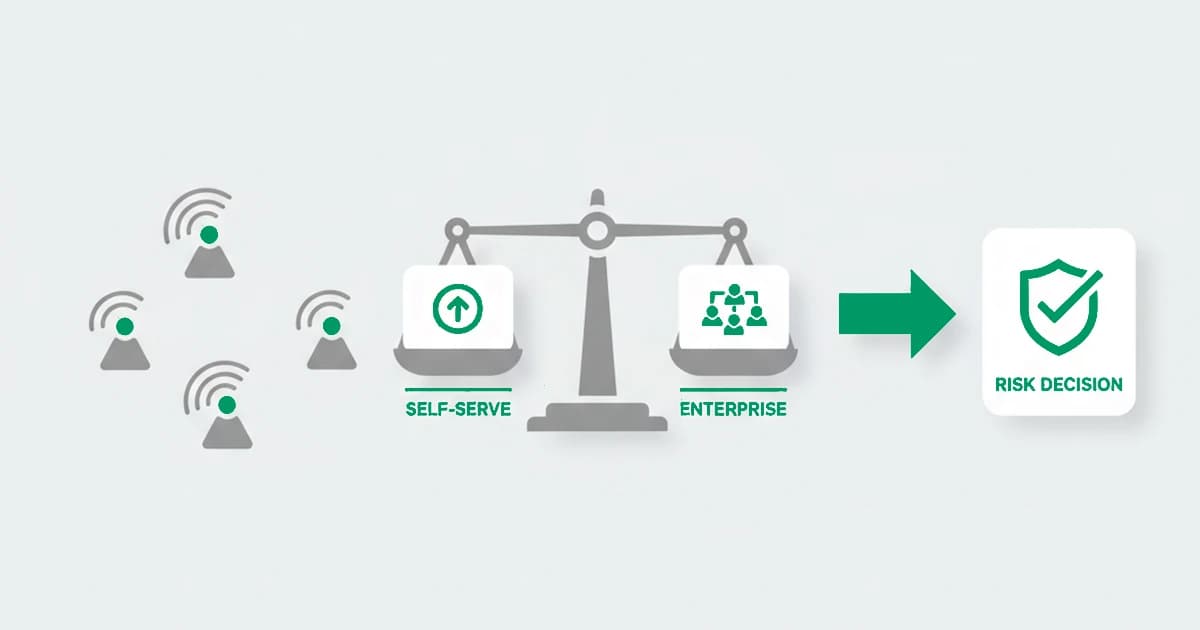
The category is broad, though, and the tools inside it solve very different problems. This guide explains what fraud detection software is, what to look for, and covers the tools across the segments below, from platforms you can evaluate on your own traffic today that read the device behind a session, to sales-led suites that bundle case management and compliance and decision or guarantee whole transactions.
Key takeaways
- Fraud detection software scores the risk of an action, a signup, login, or payment, using signals the action itself does not reveal, then hands you a decision to act on.
- The market splits into platforms you can evaluate on your own traffic today and sales-led suites that bundle case management, compliance, decisioning, or chargeback guarantees.
- Evaluate on signal depth, especially device and risk signals, explainability, real-time scoring, how it fits your stack, and pricing predictability.
- Start with a tool you can test on real traffic before a contract; add a decisioning platform or a chargeback guarantee when your workload calls for one.
What is fraud detection software?
Fraud detection software is a system that assesses whether an online action is likely to be fraudulent and returns a signal or a decision your business can act on. It works by reading context the action alone does not show: the device behind a session, whether the connection is anonymized, how the identity behaves, and how any of it compares to known-good and known-bad patterns. The output is usually a risk score or a verdict, which you use to approve, review, challenge, or decline.
The term covers a wide range. Some tools are narrow signal layers that answer one question well, such as whether a device has been seen before or whether a connection is hiding behind a VPN. Others are full decisioning platforms that combine dozens of signals into a single verdict, and some go further and take on the financial liability for the transactions they approve. Knowing which layer you actually need is most of the battle.
Features to look for in fraud detection software
The best fit depends on where your fraud starts, but a few features separate strong tools from weak ones:
- Signal depth, especially device and anonymity. Does it recognize the device behind a session and surface VPN, proxy, Tor, and anti-detect browser use, or does it lean on a single opaque model?
- Explainability. A score you can break into named signals is one your team can act on and defend to a customer; a black-box verdict is faster but harder to trust.
- Real-time scoring. A useful signal arrives in time to act on the live session, not in a report the next day.
- Ready-made detection. Account-level abuse such as multi-accounting and account takeover should be flagged out of the box, not left for you to model from raw signals.
- Integration effort. A JavaScript snippet and an API call is a different lift from a multi-week platform rollout. Match it to your team.
- Pricing model. Free tiers and flat plans are predictable; per-transaction and annual enterprise contracts need modeling before you commit.
We tested this signal layer on its own terms, judging the device and network read rather than any single product. Sending the same device back through an emptied cookie jar, a swapped IP, and a private window, we ran the read again: a device-derived identifier still recognized it with 99.9% identification accuracy, and a connection routed through a VPN or datacenter still surfaced as anonymized with 99.9% risk signal detection accuracy. That durability is why device and risk signals sit at the top of this list: since browser storage limits tightened in 2020, a cookie no longer survives long enough to lean on, while the device and the connection do not reset when an email, a card, or an IP is swapped.
ShieldLabs publishes this list and includes its own product. ShieldLabs is listed first because it scores highest on the features above: signal depth, explainability, real-time scoring, ready-made detection, integration effort, and pricing model. The other tools are grouped by how you buy them.
Self-serve and developer-first tools
ShieldLabs
ShieldLabs is a platform that reads the device and network behind every session, the layer a lot of fraud hides in, with enterprise-level functionality without enterprise pricing. You add one JavaScript snippet, and each visit returns persistent identification with 99.9% identification accuracy and a risk score from 0 to 100 with the named signals behind it, including the risk signals, VPN, proxy, Tor, and anti-detect browser use, read with 99.9% risk signal detection accuracy. Bot and automation detection is covered in the same read. It detects four High-Risk Events out of the box, multi-accounting, account sharing, impossible travel and account takeover, and flags risky users so you can act on them. It covers web traffic through one JavaScript snippet, with an API and webhooks on every plan. Pricing is a free tier of 5,000 identifications, then plans from 79 USD a month, with no credit card for the free tier.
Best for: teams that want an explainable device-and-risk signal with ready-made detection of account-level abuse.
Fingerprint
Fingerprint is a device intelligence API built on the open-source FingerprintJS project, which has more than 27,000 GitHub stars. It produces a persistent visitor identifier that survives cookie clearing and IP rotation, plus a catalog of 20-plus Smart Signals covering VPN, proxy, incognito, tampered browsers, emulators, and bots, rolled into a single Suspect Score. It has native iOS and Android SDKs, SOC 2 and ISO 27001, a permanent free tier, and usage-based pricing from 99 USD a month. G2 rates it 4.7 across nearly 400 reviews, with integration ease the top praise. The tradeoff is that Fingerprint hands you raw signals, not verdicts: as one reviewer put it, it is not a full-feature fraud provider and does not bill itself as one, so teams often build their own scoring model on top of the identifier. The other repeated complaint is cost as volume grows, with overage charges once you pass a plan's included calls.
Best for: developer teams that want a persistent device identifier and mobile coverage to anchor their own detection logic.
SEON
SEON is a fraud and AML platform built on data enrichment. It resolves an email or phone number into a digital footprint, checking social and web presence, then combines that with device intelligence, velocity checks, and a custom rules engine, so a fraud team can see why something was flagged rather than trust a black box. It is widely used in iGaming, fintech, and payments, markets more than 900 first-party signals, and adds AML transaction monitoring and case management for regulated operators. Reviewers praise the explainable scoring, and it rates 4.6 on G2 and 4.9 on Capterra. Its published Starter plan runs 699 USD a month, but it caps monthly checks and routes anyone scaling past it into sales-quoted Premium, so self-serve access ends at that tier. The tradeoffs reviewers raise most: SEON markets its signal count without enumerating the signals, and the rules engine expects ongoing calibration, so teams wanting a fully plug-and-play tool face a learning curve.
Best for: fraud and compliance teams that want enrichment signals and hands-on rule control, especially in iGaming and fintech.
Enterprise decisioning platforms
Forter
Forter is an identity-based decisioning platform for large online retailers and travel brands, built on a cross-merchant identity network it says spans 1.2 billion identities and more than 300 billion USD in transactions a year. It approves or declines trusted users in real time at checkout, most decisions in under a second, and backs them with a chargeback guarantee, contractually taking on the liability when a decision it approved turns out fraudulent. That guarantee, plus a message that false declines cost more than fraud, is why brands like Adidas, Nordstrom, and Instacart appear in its roster. It bundles fraud, payment optimization, and chargeback recovery into three suites and sells globally in five languages. It is enterprise and sales-led, priced through custom annual contracts. The tradeoff, and its most-cited G2 complaint, is transparency: reviewers say it is hard to understand the exact logic behind a decision and that they cannot get full access to the raw data behind it, which frustrates technical teams that want to inspect and tune.
Best for: large retail and travel merchants that want fast, guarantee-backed identity decisions and can absorb an enterprise contract.
Kount
Kount is an Equifax company, and its fraud platform spans payment fraud, chargeback management, and account protection, aimed largely at e-commerce and card-not-present merchants. It combines device and identity signals with a large fraud data network and offers workflow tooling for teams that want detection, decisioning, and dispute handling inside one enterprise product rather than stitched together from parts. Being part of Equifax gives it access to Equifax identity data. The tradeoff is the shape of the product: it is sales-led enterprise software with no public self-serve pricing, so it fits an established merchant with a procurement process better than a team that wants to integrate and test the same day.
Best for: merchants that want broad payments-fraud coverage and identity data inside a single enterprise platform.
Sardine
Sardine is a risk platform aimed at fintech, banking, and crypto, the businesses where fraud and compliance sit on the same desk. It pairs device intelligence and behavior biometrics with a feature it trademarks as True Piercing for unmasking VPN and IP-spoofing users, and wraps them in case-management workflows plus KYC, KYB, and AML transaction monitoring, so a team can work an alert to resolution in one console. Its recent positioning leans on agentic AI, a named cast of automation agents for anomaly detection, rule tuning, and dispute filing, and it runs the Sonar consortium as a shared cross-customer fraud-intelligence network. It is enterprise and sales-led, with no public pricing or self-serve path, and holds a 4.8 G2 rating across a small review pool. The tradeoff reviewers cite is onboarding: the platform is broad and rule-heavy, with a steep learning curve that takes time and staff to configure well.
Best for: regulated money-movement businesses that need device signals, case management, and AML together in one platform.
Signifyd
Signifyd is a commerce-protection platform built around guarantee-backed decisions. Rather than only scoring an order, it approves or declines it and takes on the financial liability for approved orders that later turn out to be fraudulent, which moves chargeback risk off the merchant. Founded in 2011, it is a close structural rival to Forter in the e-commerce fraud space and is frequently the alternative merchants weigh against it. The model suits retailers that would rather offload fraud losses and cut manual review than run their own risk logic. The tradeoff is control and fit: a guarantee-backed decision is by nature more of a managed verdict than an open signal you inspect and rule on yourself, and the model is built for retail checkout rather than signups, logins, or non-commerce abuse. It is enterprise and usage-based, sold through a sales process.
Best for: retailers that want guarantee-backed order approvals and less manual review, and will trade some decision control for a liability shift.
Sift
Sift has operated as a fraud platform since 2011, and it scores payments, signups, and content in real time across a large cross-network dataset it calls the Global Data Network, drawing on roughly a trillion events a year from thousands of sites. That consortium scale is the pitch: a user who is new to you is often not new to Sift, so known fraud patterns carry over. It sells to in-house fraud, risk, and trust-and-safety teams at mid-market and enterprise companies, has a large customer base in e-commerce and fintech, and holds a 4.6 rating across more than 600 G2 reviews. Pricing is enterprise and sales-led, with no public tiers and no self-serve trial, and G2 reviewers put average implementation at around two months. The recurring tradeoff is transparency: the Sift Score is a model output that reviewers describe as a black box that is hard to second-guess, and false positives show up as a repeated complaint.
Best for: larger fraud teams that want a network-scale score across multiple fraud types and can absorb an enterprise rollout.
How to choose
There is no single best fraud detection software, only the one that matches your threat model and the size of your team. Start by naming where your fraud actually begins. If it starts upstream, with suspicious traffic, fake accounts, and repeat abusers on fresh identities, a device-and-signal layer you can evaluate on your own traffic catches it early and integrates in an afternoon. If it starts at the transaction, with chargebacks and disputed orders, a decisioning or guarantee platform earns its cost. If it sits on top of regulated money movement, a platform that folds in KYC, AML, and case management is worth the longer setup.
Team size is the other axis. If you want to prove value on real sessions before a contract, a platform with a free tier, transparent pricing, and a fast integration lets you evaluate on your own traffic today. Sales-led suites that bundle case management and compliance earn their price when you have analysts, a case-management workload, and the volume to justify a network-scale model or a chargeback guarantee. Many teams end up layering: a device-signal layer in the application, a decisioning or guarantee platform at checkout, and a compliance tool where regulation demands one. Match each tool to the job it does best, and let them cover for each other rather than expecting one to do everything.
Sources
- Juniper Research: Online Payment Fraud Losses to Exceed $362 Billion Globally
- Stripe: Fraud scores explained: How businesses assess transaction risk (2026)
- Wikipedia: Fraud detection
- Wikipedia: Device fingerprint
Frequently asked questions
- What is fraud detection software?
- Fraud detection software assesses whether an online action such as a signup, login, or payment is likely to be fraudulent, then returns a risk score or a decision your business acts on. It works by reading context the action itself does not reveal, like the device behind a session, whether the connection is anonymized, and how the behavior compares to known patterns. Tools range from narrow signal layers to full decisioning platforms.
- How does fraud detection software work?
- It collects signals from the session, the device, the network, the identity, and the behavior, then weighs them into a risk read, using rules, statistical models, or both. The result is delivered in real time so your system can approve a clean session, challenge a risky one, or decline an obvious attack. Explainable tools let you inspect which signals drove the score and act on it with confidence.
- How much does fraud detection software cost?
- It varies widely. Self-serve tools often have a free tier and flat plans starting around 99 USD a month, while enterprise platforms are sales-led and priced on transaction volume, usually into five figures a year, sometimes with a guarantee fee on approved orders. The pricing model matters as much as the number, so model your expected volume before committing.
- What is the best fraud detection software for a small business?
- A small business usually starts with a platform it can evaluate on its own traffic, with a free tier and predictable pricing, because it can be integrated and tested without a sales process. A device-and-signal layer that flags fake accounts, multi-accounting, and anonymized traffic covers the most common early-stage fraud, and a chargeback-focused tool can be added later if disputes become the bigger problem.
- Does ShieldLabs detect fraud?
- Yes. ShieldLabs detects the device, network, and bot signals that fraud depends on, and detects four High-Risk Events out of the box: multi-accounting, account sharing, impossible travel and account takeover. It gives every session persistent identification and a risk score with the named signals, flags risky users, and helps block fraudulent and abusive traffic, and you choose the action for each case: approve, review, or decline. Pricing is a free tier of 5,000 identifications, then plans from 79 USD a month.
Related articles
Calculate Fraud Detection Pricing With ShieldLabs' 5,000 Free Tier
Estimate fraud detection costs with a buyer-focused pricing workbook and worked examples. Validate your projection using ShieldLabs' 5,000 free...

Fraud Teams: GDPR Fingerprinting With Explainable Signals
Operational guide for fraud teams on GDPR-compliant device fingerprinting: legal tests, explainable signal scoring, drift handling, and cross-border rules.
Map JA3/JA4 to Endpoints: CAPTCHA vs Device Fingerprinting for Teams
Practical, implementation-first guidance for fraud and security teams. Map JA3/JA4, client hints, WebGL and behavioral signals to endpoints, and trigger...