

Privacy Preserving Identification: 897 Risk Flags for Business Teams


Last updated on October 13, 2026 · 10 min read
Privacy-preserving identification means recognizing a website visitor or device using signals like network and browser characteristics, without asking that visitor to log in or prove who they are. For business teams, the outcome is practical: returning visitors get recognized across sessions, risk gets scored in real time, and this happens through privacy-aware design choices like reduced precision and data minimization rather than invasive tracking.
TL;DR:
- A deployment lasting 4.5 months flagged 897 of roughly 205,000 sessions; takeover rates within 72 hours were 5.83% among flagged sessions and 0.43% overall.
- Heavy proxy chaining and deliberate fingerprint randomization weaken identification, while sampled reveal tokens support population estimates rather than certain attribution to individual visitors.
- Collect only coarse signals needed for the task, document each fingerprinting surface, assess disparate impact, and log score inputs from the outset.
- Use identification in flows that need little friction, such as free trials, but add stronger verification for payments and account recovery.
Table of Contents
- How Privacy-Preserving Visitor Identification Works
- Evidence, Efficacy and Realistic Limits
- Privacy-Aware Design and Compliance Considerations
- Implementation Checklist: Evaluate, Deploy and Measure
- Why ShieldLabs Fits This Checklist
- When to Rely on Identification vs. Stronger Verification
- FAQ
- Sources
How Privacy-Preserving Visitor Identification Works
Identification systems draw on two broad categories of signals. Passive signals, like HTTP headers and IP and network intelligence, arrive with every request and require no code on the page. Active signals, exposed through JavaScript, read browser and device characteristics directly. Both matter because passive signals are always available but coarse, while active signals add detail at the cost of needing a snippet on the page.
The engineering challenge is that fine-grained fingerprints drift. A browser update, a new extension or a changed screen resolution can break a fingerprint that looked stable yesterday. Research into coarse-grained browser fingerprinting addresses this by favoring fewer, more stable attributes over maximal precision, trading some uniqueness for durability. A related approach, often called Predictive-FP, uses adaptive prediction to bridge small changes in a fingerprint so the same device is still recognized after an update.
Network-level signals add another layer. Browsers are rolling out IP-masking features, and the IP Protection explainer describes probabilistic reveal tokens, a mechanism that lets a small, sampled fraction of proxied requests reveal the original IP address. This supports fraud estimation across a traffic population without enabling deterministic, large-scale tracking of any single user.
In practice, teams combine signal categories:
- Device characteristics at coarse precision, such as general browser family and operating system rather than exact build numbers.
- Network indicators, including IP reputation, data center ranges and proxy or VPN detection.
- Behavioral signals, like timing patterns and interaction cadence, that persist even when device details change.
Evidence, Efficacy and Realistic Limits
Production data gives teams a reasonable basis for expectations. In a 4.5-month deployment described in the Browser Polygraph research, coarse-grained fingerprinting flagged 897 suspicious sessions out of roughly 205,000.
Sessions flagged as high-risk showed a 5.83% account takeover rate within 72 hours, compared with 0.43% across all sessions in the same deployment. That gap shows coarse signals can carry real fraud signal even when they deliberately give up fingerprint precision.
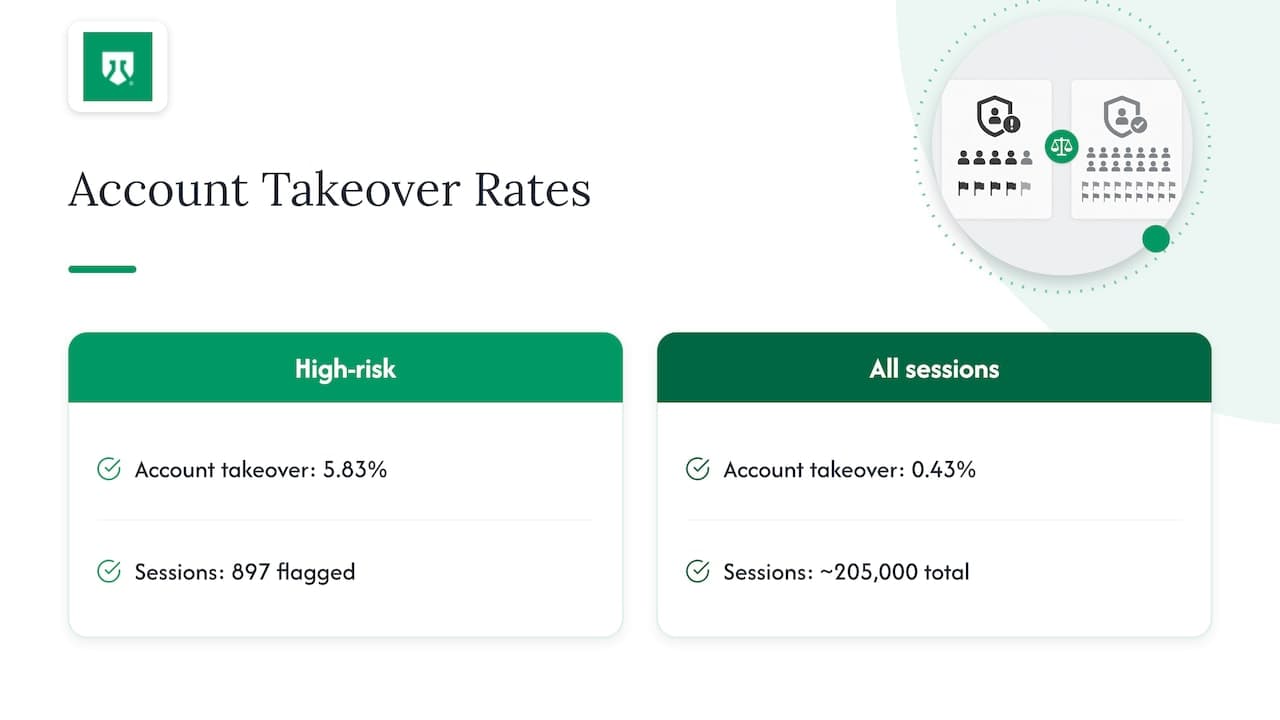
This is why coarse-grained approaches hold up better than they might seem to on paper: a fingerprint doesn't need to be unique to be useful, it needs to be stable enough to flag the same risky pattern returning again. Returning visitors can be identified with accuracy of up to 99% across cleared cookies, incognito sessions and months-long gaps between visits, though no identification method reaches certainty in every case.
Identification is weaker in a few predictable scenarios: heavy proxy chaining that rotates both IP and device signals together, deliberate fingerprint randomization by privacy-focused browsers, and probabilistic reveal tokens that offer a sampled signal rather than a deterministic one. Teams should treat those cases as reduced-confidence inputs, not blind spots to ignore.
Privacy-Aware Design and Compliance Considerations
Building identification that holds up under privacy review starts with restraint, not more data. A few principles keep the approach defensible:
- Collect only the entropy the risk task needs: a coarse device category often does the job that a dozen granular attributes were doing before.
- Document every fingerprinting surface and make it instrumented, following W3C fingerprinting guidance on minimizing exposed entropy and preferring limited precision or enumerations over raw values.
- Fold fraud risk assessment into privacy impact assessments, consistent with NIST guidance on evaluating signals for disparate impact.
- Review consent and notice requirements in jurisdictions where tracking technologies fall under existing privacy rules, and adjust collection accordingly.
Reveal mechanisms like probabilistic reveal tokens change what's available to analyze. Since only a sampled fraction of proxied requests expose an original IP, fraud models need to treat revealed IPs as a statistical sample rather than a guaranteed per-user identifier, which shifts analysis toward population-level risk estimates instead of individual certainty.
Pro Tip: Log which signals contributed to each risk score as you collect them, not after the fact. Retrofitting an audit trail is far harder than building one from day one.
Implementation Checklist: Evaluate, Deploy and Measure
Rolling out privacy-preserving identification is a sequence of small, checkable steps rather than one big launch.
- Add a front-end snippet to capture passive and active signals, paired with a server-side SDK to process and score them without exposing raw signals to the browser.
- Decide what gets stored: raw signals, derived risk scores, or both, and for how long, matching retention to the data minimization principle above.
- Define the operational metrics you'll watch: identifications per period, distribution across clean, low, medium and high risk bands, account takeover correlation, false positive rate, and risk broken down by acquisition channel.
- Run sample-based verification using revealed IPs or decrypted probabilistic reveal token samples to sanity-check model output against ground truth.
- Set retraining triggers tied to concept drift, since a model trained on last year's fingerprint distribution degrades quietly if nothing flags the shift.
- Keep an audit trail of signal provenance so every score can be explained after the fact, not just at the moment it's generated.
| Metric | What it tells you |
|---|---|
| Identifications per period | Volume of recognized returning visitors |
| Risk band distribution | Share of traffic in clean, low, medium, high bands |
| ATO correlation | How often flagged sessions precede account takeover |
| Channel risk breakdown | Which acquisition sources bring high-risk traffic |
For a deeper look at how browser-level IP masking changes which of these metrics stay reliable, see our breakdown of browser IP masking and fraud detection. Teams weighing fingerprinting against simpler tracking methods may also find our comparison of fingerprinting versus cookies useful before finalizing a data flow. For a broader view of how tracking signals intersect with marketing measurement, this digital footprint guide offers useful background.
Why ShieldLabs Fits This Checklist
Every step on that checklist maps to something in the ShieldLabs dashboard rather than something you'd need to stitch together separately. Identification persists across cleared cookies, incognito mode and months between visits, with recognition accuracy up to 99%. Detection covers anti-detect browser detection alongside VPNs, proxies, Tor, Apple Private Relay, data center ranges and browser automation, drawn from a large set of signals interpreted by deterministic rules and AI together.
- Risk scores arrive with the underlying signals attached, so the audit trail from the checklist above is built in rather than bolted on.
- Traffic quality analytics break down risk by band and by acquisition channel, matching the metrics teams are already tracking.
- Setup is a single JavaScript snippet, about five minutes to the first signal, with framework guides for React, Next.js, Vue, Angular, Svelte and Preact, plus server SDKs for Node.js, Python, Go and PHP.
Pricing is published and flat: 5,000 free identifications with no card required, then Starter at $79 per month, Growth at $319 per month, and Scale at $799 per month, with cost per identification dropping as volume grows. Review the visitor identification product page or start on the free tier to see risk bands against your own traffic before committing to a plan.
When to Rely on Identification vs. Stronger Verification
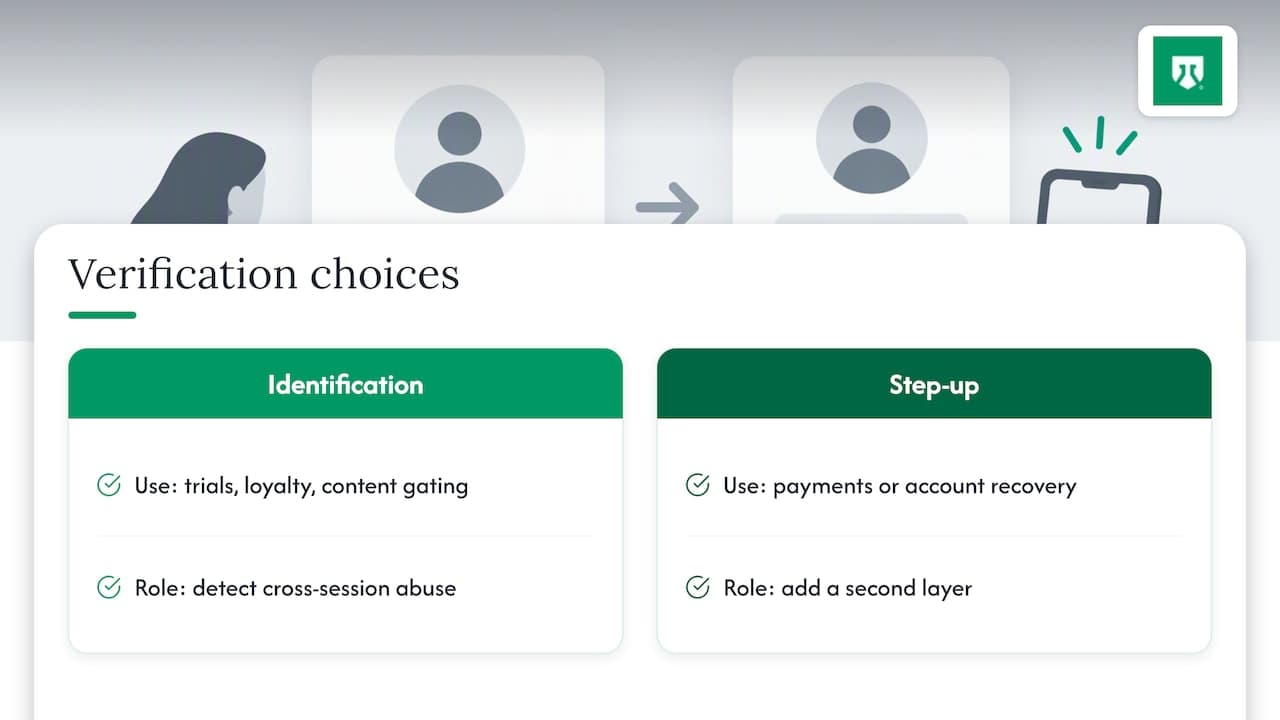
Privacy-preserving identification fits best in high-volume, low-friction flows: free trials, loyalty programs, content gating, anything where asking every visitor to verify identity would kill conversion. Cross-session abuse patterns, like one device cycling through a dozen trial accounts, are exactly where this approach earns its keep.
It's a weaker fit alone for high-value actions like payment authorization or account recovery, where step-up verification adds a necessary second layer. Detection produces a score and the signals behind it. What a system does with that score, whether to block, challenge or allow, stays a decision made in your own code.
— Jeff
FAQ
What is privacy-preserving identification in practice?
It's a way to recognize a website visitor or device using signals like network and browser characteristics, without requiring a login or identity proof. The goal is persistent recognition and risk scoring built on data minimization rather than invasive tracking.
How accurate is privacy-preserving identification?
Accuracy depends on the signals and method used, but production research shows coarse-grained fingerprinting can flag sessions with a 5.83% account takeover rate within 72 hours versus 0.43% across general traffic. ShieldLabs identifies returning visitors with up to 99% accuracy, though no method guarantees certainty in every case.
Does this work against anti-detect browsers and Apple Private Relay?
Specialized anti-detect browser detection and IP-masking-aware analysis can flag these cases, though browsers masking IPs through mechanisms like probabilistic reveal tokens limit how much of that traffic can be deterministically tied to one device. ShieldLabs covers anti-detect browser detection, Private Relay and similar anonymity layers as part of its signal set.
Is fingerprinting the same as using cookies?
No. Cookies require the visitor's browser to store and return a token, while fingerprinting infers identity from device and network characteristics that persist even when cookies are cleared. The two methods are often compared directly in fingerprinting versus cookies analyses for fraud teams.
What does ShieldLabs cost to get started?
ShieldLabs offers 5,000 free identifications with no card required, then Starter at $79 per month, Growth at $319 per month and Scale at $799 per month, with cost per identification decreasing at higher volume.
Sources
- Browser Polygraph: Efficient Deployment of Coarse-Grained Browser Fingerprints for Web-Scale Detection of Fraud Browsers
- IP Protection / PRT explainer
- W3C: Fingerprinting guidance
- NIST digital identity guidance (risk & privacy integration)
Recommended
Related articles

5 Low Latency Checks to Detect Anti Detect Browsers for Fraud Teams
Research backed playbook for fraud teams: five low latency checks to spot anti detect browsers, signal to score mapping, and a ShieldLabs setup path.

6 Step Datacenter Proxy Detection Workflow for Fraud Teams
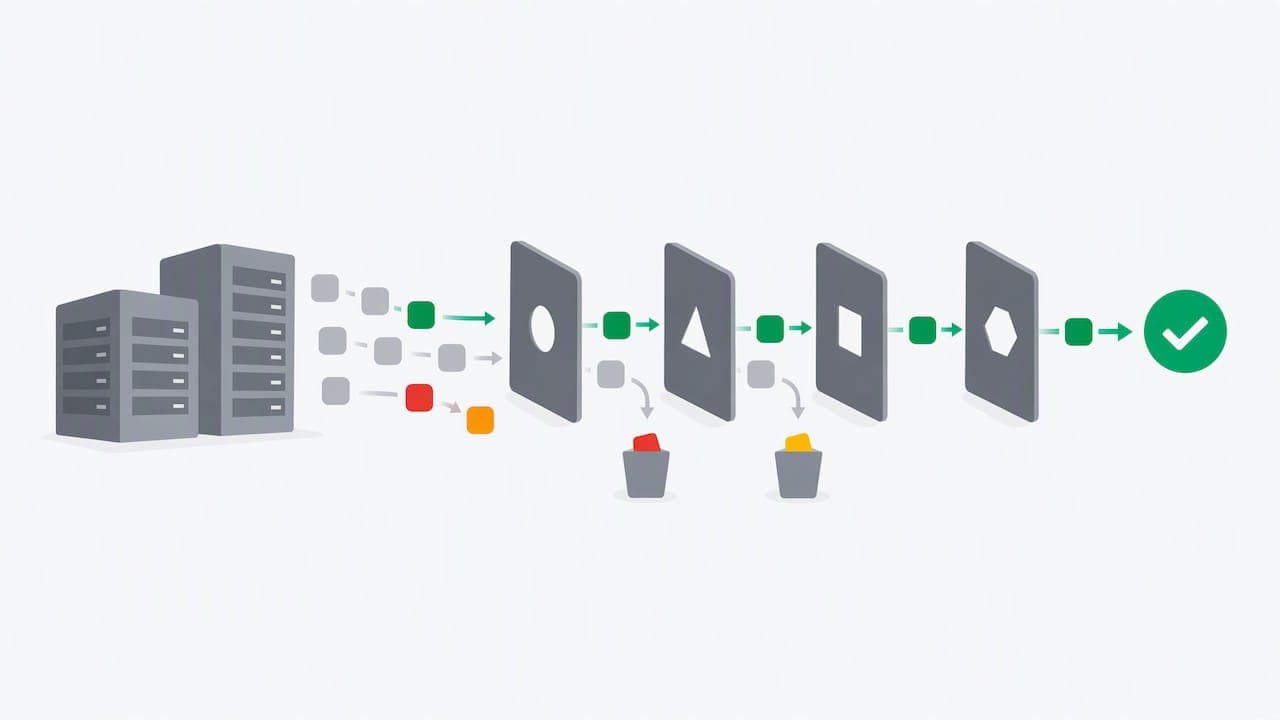
Practical production guide for fraud teams: detect datacenter proxies by pairing ASN, rDNS, device/TLS telemetry and IP population signals.
Web Device Binding: Coarse Fingerprints Link Visits for Fraud Teams
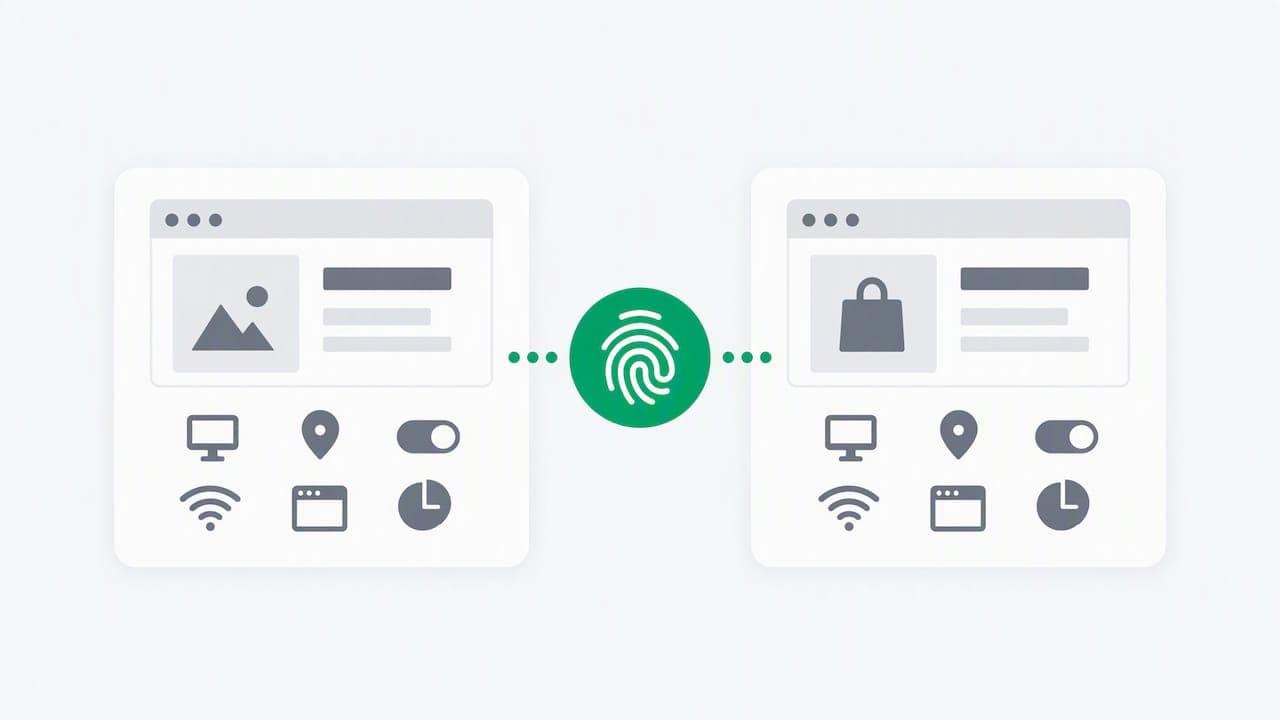
Learn how web device binding helps fraud teams recognize visitors with coarse fingerprints while managing privacy, latency, drift, and false positives.