

6 Step Datacenter Proxy Detection Workflow for Fraud Teams

Last updated on October 5, 2026 · 11 min read
Datacenter proxy detection means identifying traffic that originates from hosting or cloud infrastructure rather than a residential or mobile network, and the strongest starting signal is ASN and hosting classification. That lookup alone cannot confirm proxy use, so it needs to run alongside device and behavioral telemetry. Fraud teams get the best results by running server-side lookups at sensitive events and applying graduated responses instead of automatic blocks.
TL;DR:
- ASN and hosting classification are strong indicators but must be combined with device and behavioral telemetry for reliable detection.
- Network signals like reverse DNS and range history offer context but cannot confirm proxy use independently.
- Server-side lookups at high-impact events, layered with behavioral checks, form the core of an effective detection workflow.
- Cloud IP ranges require careful handling, as address pools can change rapidly and do not automatically signify proxies or malicious intent.
- Scaling detection with persistent, audit-ready data and graduated responses helps balance false positives and negatives effectively.
Table of Contents
- Network signals versus device and behavioral telemetry
- Step-by-step: building a detection workflow that holds up in production
- Reading IP population and behavioral patterns correctly
- Why cloud IP ranges need careful handling
- Running detection at scale without losing auditability
- Limitations, edge cases, and calibration
- Where ShieldLabs fits into this workflow
- A practitioner's take on triage and escalation
- Try the signals behind this workflow
- FAQ
- Sources
Network signals versus device and behavioral telemetry
Datacenter proxy detection rests on two signal families that answer different questions. Network-level signals tell us where traffic claims to originate; device and behavioral telemetry tell us what the client is actually doing.
Network signals worth checking include ASN ownership and whether the registry marks it as hosting or ISP, reverse DNS records, and the historical behavior of an address range; tools like the AI Crawlability Audit can help analyze how different crawlers and automated agents interact with sites. According to IPinfo's guidance on detecting datacenter proxies, ASN type, reverse DNS, and range history are strong starting indicators, but ownership alone does not confirm proxy behavior. Reverse DNS is useful corroboration rather than a standalone determiner, since PTR records are set by the block owner and are often generic or missing entirely.
Client and device telemetry fills the gap: TLS fingerprints, browser and device fingerprints, timezone and language mismatches, and markers of automation. A session claiming to be a residential visitor in one country but presenting a browser timezone and language set from another is a discrepancy worth scoring, not ignoring.
- ASN and hosting classification flags infrastructure ownership but not intent.
- Reverse DNS and range history add context when the PTR record is informative.
- Device and TLS fingerprinting reveals whether the client itself looks automated or inconsistent.
- Timezone and language mismatches between claimed location and client settings raise confidence when paired with network signals.
Ownership and behavior need to agree before a verdict is justified. A hosting ASN paired with a consistent, human-like device fingerprint is a different risk profile than a hosting ASN paired with automation indicators and a spoofed locale.
Step-by-step: building a detection workflow that holds up in production
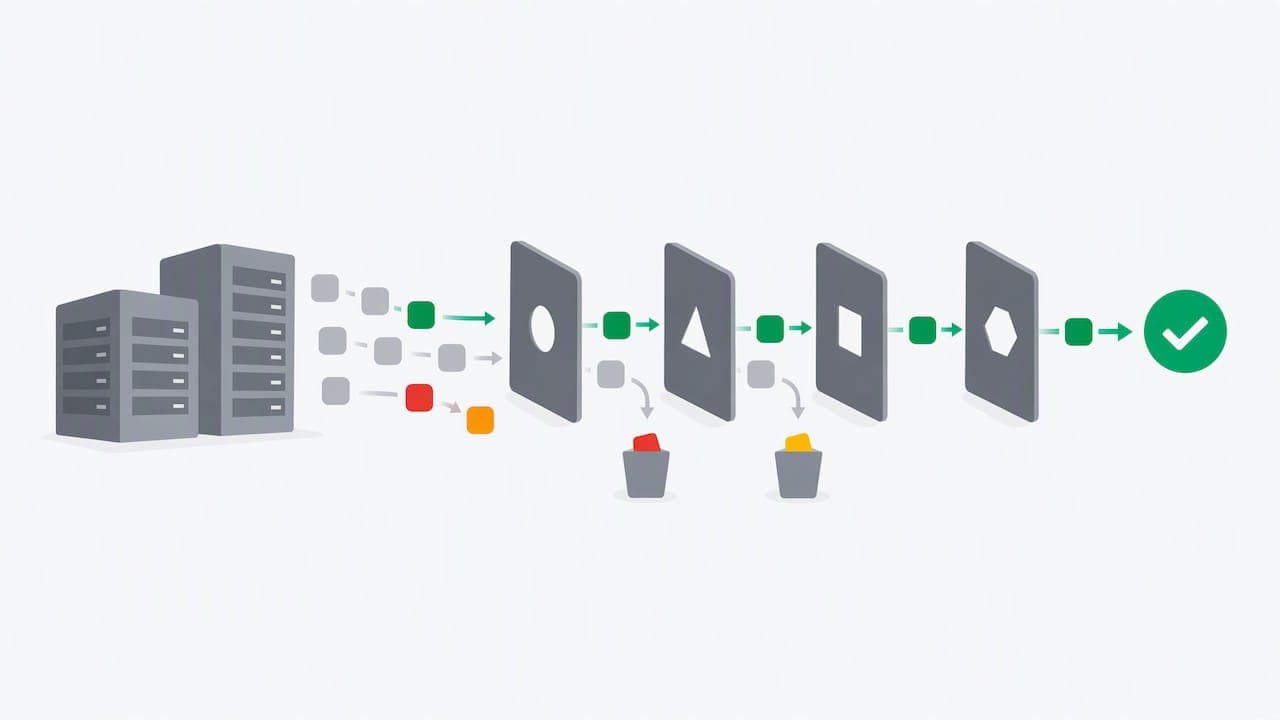
A reliable workflow runs lookups server-side, at the events where fraud actually causes damage: account creation, login, checkout, promo redemption, and other high-value actions. Client-side checks are visible and bypassable, so the decision logic belongs on the server.
- Run an ASN lookup against the requesting IP and capture whether it classifies as hosting or ISP.
- Check reverse DNS for corroborating context, treating a generic or missing PTR as neutral rather than exonerating.
- Cross-reference the address against anonymizer and proxy observation datasets for known patterns.
- Correlate the network verdict with device and TLS telemetry collected during the same session.
- Layer in behavioral checks, such as request timing and velocity, before finalizing a risk level.
- Cache the result briefly and attach an observation timestamp so the record can be re-evaluated later.
Persistence metrics matter here: tracking something like percent of days an address has been seen active and its last-seen timestamp helps distinguish a long-lived hosting range from a freshly allocated one, which is relevant since freshly delegated ranges carry more classification risk.
Pro Tip: Route the verdict into a graduated response (added verification, a short delay, reduced eligibility for promotions, or manual review) rather than an automatic denial, since a single mismatched signal rarely justifies an outright block.
Reading IP population and behavioral patterns correctly
A single IP serving many unrelated accounts is a meaningful signal, but the right question is whether the pattern deviates from what is expected for that kind of address, not whether an IP has more than one user at all. Office networks, campus gateways, and carrier-grade NAT all produce populated IPs that are entirely legitimate.
Google's research on IP-size distribution used a 90-day dataset analyzed with statistical tests and ensemble learning to flag anomalous shared-IP behavior, showing that distribution shape over time, not raw population count, is what separates abuse from normal sharing.
- Population size alone is a weak rule; deviation from an address's historical baseline is stronger.
- Burstiness and velocity, such as many accounts created from one IP in a short window, add confidence.
- Account relationships across an IP (shared devices, shared payment instruments, shared sessions) should be preserved and scored over time rather than triggering an instant rule.
Concentration and recurrence, tracked across sessions, beat any single-event threshold for separating a shared office connection from a fraud ring operating behind one address.
Why cloud IP ranges need careful handling
Cloud providers publish address ranges for their services, and some of those services route traffic through large, changing pools of outbound addresses. Google Cloud's documentation on App Engine's outbound addressing notes that two sequential calls from the same application can appear to originate from different IPs, which means a hosting-origin request is not automatically suspicious.
Treating every address inside a published cloud range as a proxy produces avoidable false positives. A few operational habits reduce that risk:
- Refresh provider range feeds on a schedule rather than relying on a static snapshot.
- Version range history so a reclassification can be traced back to when it changed.
- Weight hosting-origin traffic against corroborating device telemetry before acting on it.
A request from a known service's egress pool, paired with consistent and human-like device signals, is reasonably treated as legitimate rather than flagged by IP origin alone.
Running detection at scale without losing auditability
Scaling datacenter proxy detection across millions of events requires storing more than a yes-or-no verdict. Keeping provider observation time, classification reason, percent of days seen, and last-seen timestamp alongside each event gives downstream systems the context to re-score a decision later, not just the result of one lookup.
Google Cloud's documentation on IP address classification describes how provider ranges and classifications shift as infrastructure changes, which is exactly why a cached verdict needs an expiration and a re-validation path rather than a permanent label.
- Use short-lived caches with background re-validation instead of one-time lookups.
- Trigger a re-check when the associated IP or behavioral pattern changes mid-session.
- Log the full signal provenance (which checks ran, what they returned, and when) so a decision can be audited and tuned later.
Pro Tip: Expose the signal provenance to your own rules engine, not just the final score, so your fraud team can adjust thresholds without waiting on a vendor change.
Limitations, edge cases, and calibration
Hosting ownership is evidence, not proof. Freshly delegated ranges, legitimate corporate gateways, and ISP-operated proxy services all create classification gaps, and IPinfo's practitioner guidance frames ASN ownership as a strong starting point that still requires checking whether the client's observed behavior matches the network claim. Anti-detect browser detection narrows but does not close this gap, since techniques evolve faster than any static ruleset.
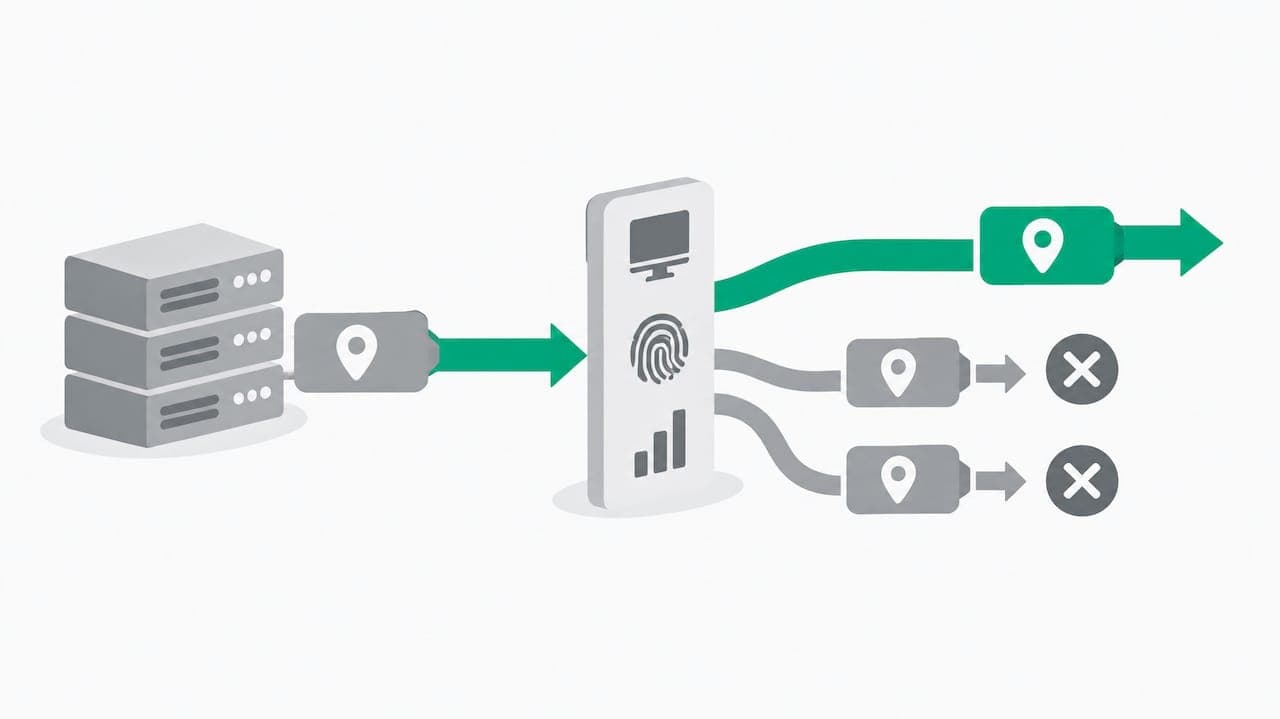
Detection outputs are best treated as probabilities that decay over time, not permanent labels. Calibration should weigh the cost of a false positive (a legitimate customer blocked at checkout) against the cost of a false negative, tested through staged rollouts, defined manual-review thresholds, and holdout cohorts before a new rule reaches full production traffic.
Where ShieldLabs fits into this workflow
We supply the device and network signals described above as part of the same detection layer, providing numerous signals per visit including ASN and hosting classification, anti-detect browser detection, and behavioral telemetry, scored and delivered with the reasoning behind each score so your own rules engine makes the final call.
- Identification persists across cleared cookies, incognito sessions, and IP rotation, with returning visitors recognized with high accuracy.
- Setup runs through a JavaScript snippet or server-side SDK, allowing for rapid initial signal collection.
- Our network and IP intelligence and proxy and VPN detection signals map directly onto the ASN, telemetry, and population-pattern checks covered in this workflow.
Pricing is published rather than quote-based, enabling evaluation of the signal set against own traffic before committing.
A practitioner's take on triage and escalation
Three rules hold up across most fraud workflows: check ASN and hosting classification first, corroborate with device telemetry before trusting the network signal alone, and default to graduated responses over hard blocks. Escalate to manual review when network and device signals disagree, not when either one alone looks suspicious.
— Jeff
Try the signals behind this workflow
Building the detection pipeline described here from scratch takes real engineering time, and we built the signal layer so your team does not have to start there. Our visitor identification and anonymity signal detection cover ASN classification, anti-detect browser detection, and device telemetry in one integration, with the free tier covering 5,000 identifications before any plan commitment. The signals inform your decision logic; the blocking rules stay in your code. Check pricing and plans to see where your traffic volume fits.
FAQ
What is the strongest single signal for datacenter proxy detection?
ASN and hosting classification is the strongest starting point, since it directly identifies whether an address belongs to a hosting or cloud provider rather than a residential ISP. On its own it is not conclusive, according to IPinfo's detection guidance, so it should be paired with device and behavioral telemetry before any action is taken.
Can a datacenter IP ever be legitimate traffic?
Yes. Cloud services route outbound traffic through large, changing address pools, and Google Cloud's App Engine documentation notes that consecutive calls from the same application can come from different IPs. A hosting-origin request paired with consistent device telemetry is reasonably treated as legitimate rather than flagged automatically.
How do reverse DNS lookups help with proxy detection?
Reverse DNS records add corroborating context but are weak as a standalone signal, since the block owner controls the PTR entry and it is often generic or absent. They work best combined with ASN classification and client telemetry rather than used in isolation.
What is IP population analysis and why does it matter?
IP population analysis looks at how many accounts or sessions share an address and whether that pattern deviates from the address's historical baseline. Google's research on IP-size distribution analyzed a 90-day dataset with statistical and ensemble methods to separate normal sharing from abuse, since population size alone does not distinguish an office network from a fraud ring.
Does ShieldLabs block fraudulent traffic automatically?
No. We provide the risk scores and underlying signals, including ASN classification and device telemetry, and your own code decides how to act on them. That keeps the final decision and any blocking logic inside your business rules rather than inside a black box.
Sources
- How to detect datacenter proxies | IPinfo blog
- Traffic anomaly detection based on the IP size distribution
- Outbound IP addresses for App Engine services | App Engine standard environment
Recommended
Related articles
Developers: Build Privacy First React Bot Detection With One JS Snippet
Developer playbook for privacy first React bot detection. Use invisible attestation, graduated responses, and auditable ShieldLabs signals. One JS snippet...

SSR Safe Angular Bot Detection: OWASP Layering and Server Validation
Angular-focused, actionable steps to run SSR safe client checks, validate tokens server side, apply OWASP layering, and use ShieldLabs signals for...

Device Spoofing Detection for Web Fraud Teams
How browser, device and TLS signals reveal spoofing on the web, plus where mobile attestation belongs in a separate defense layer.