

98%+ Ecommerce Bot Detection: Research Backed, OWASP Aligned

Last updated on September 28, 2026 · 11 min read
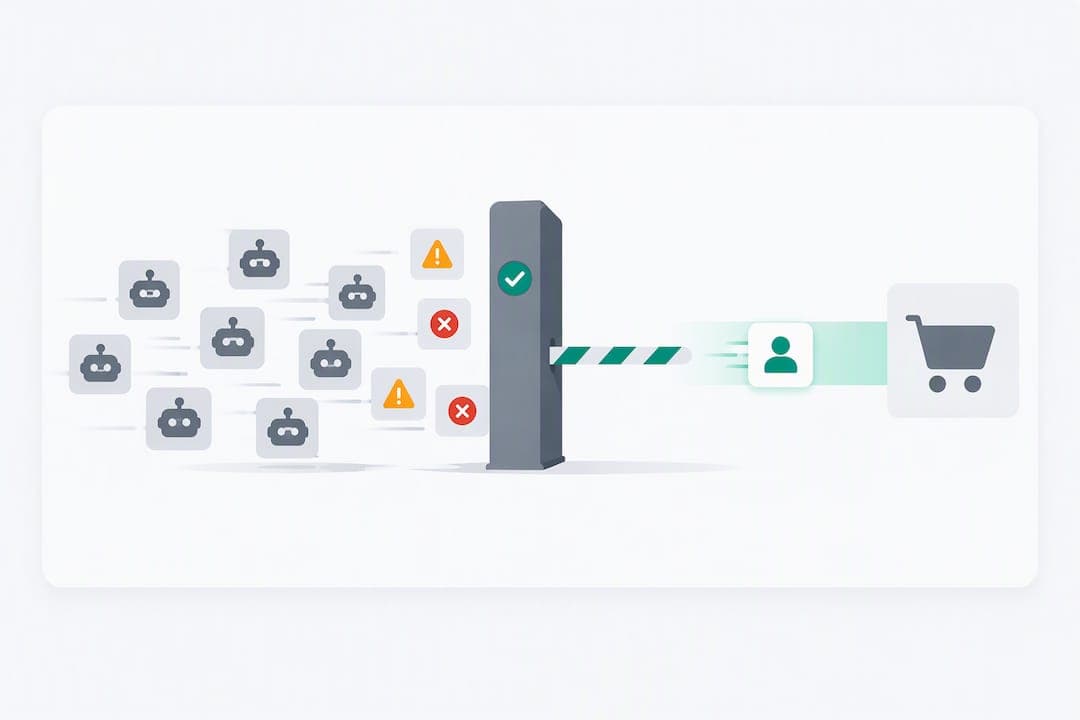
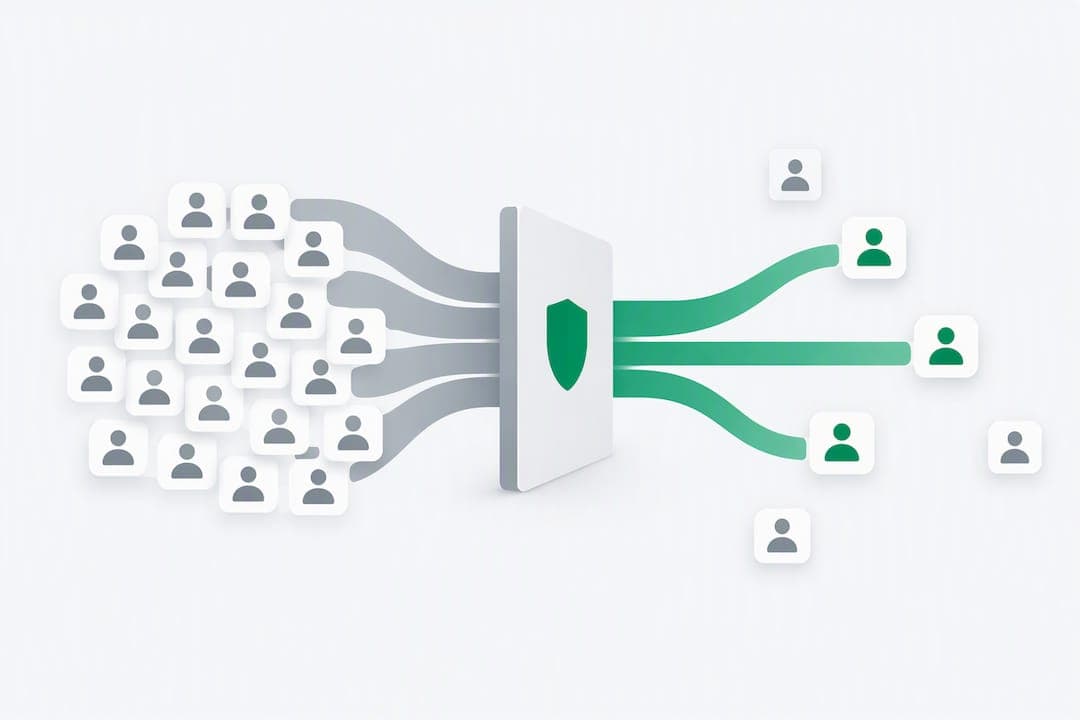
For ecommerce stores, layered bot detection that combines behavior telemetry with persistent visitor identification is the fastest way to reduce scalping, scraping, and credential stuffing at scale. The approach pairs behavioral and identity signals with edge and reputation controls, cutting automated abuse while keeping friction low for real shoppers. Teams should start by instrumenting telemetry and running detection in shadow mode before any automated blocking begins.
TL;DR:
- Layered bot detection combining behavior telemetry with persistent visitor identification can drastically improve accuracy and reduce false positives.
- Effective detection relies on static signals like IP reputation and dynamic signals such as mouse movement, enabling layered analysis and refined responses.
- Continuous monitoring, threshold tuning, and phased rollout are essential to balance security with customer experience and adaption to evolving threats.
- Persistent visitor identification helps link malicious activity across sessions, even when cookies are cleared or IPs change, improving repeat offender detection.
- Behavioral models outperform signature-based detection in scalability against sophisticated bots, especially during peak shopping periods and API-heavy store operations.
Table of Contents
- Which bot types target ecommerce and what damage they cause
- How detection works: signals, telemetry, and common detection methods
- Layered defenses and response strategy for ecommerce
- Practical implementation checklist: measurement, testing, and rollout timeline
- How visitor identification and transparent scoring support reliable bot detection
- When to prioritize behavioral detection versus signature or reputation controls
- How ShieldLabs helps with visitor identification and risk scoring
- Sources
- FAQ
Which bot types target ecommerce and what damage they cause
Ecommerce endpoints attract a predictable set of automated threats, each with its own footprint. Scrapers crawl product and pricing pages to feed competitor intelligence or resale platforms, generating repeated inventory polls and elevated 404 rates. Scalpers hit checkout and cart endpoints in bursts, often opening parallel carts across sessions to secure limited-stock items before human buyers can act. Credential stuffing tools cycle through leaked username and password pairs against login endpoints, producing high failed-login rates from a narrow set of infrastructure. Carding attempts test stolen card numbers through checkout or gift card redemption flows in small increments designed to stay under fraud thresholds. Account takeover attempts often follow successful credential stuffing, showing up as sudden changes to shipping addresses or saved payment methods. Infrastructure mapping bots probe API routes and sitemap structures to build a picture of the store's backend before a larger attack. Not every automated visitor is hostile: benign crawlers and AI crawlers index content for search engines or answer engines, and need a different response than clearly malicious traffic, a distinction the OWASP Bot Management and Anti-Automation Cheat Sheet maps out through its Automated Threats catalog.
Each endpoint needs a tailored response because the cost of a false positive varies by context:
- Login endpoints tolerate stricter step-up challenges since a blocked bad actor matters more than a rare delayed login.
- Checkout endpoints need low-latency decisions, since added friction at the point of payment directly affects conversion.
- Search and product pages can absorb heavier rate limiting without hurting the buying experience.
More detail on how these bot categories overlap with account and offer abuse is covered in ShieldLabs' merchant playbook.
How detection works: signals, telemetry, and common detection methods
Effective detection starts with the right signal taxonomy. Network-level data includes IP reputation, ASN, and TLS or HTTP fingerprints such as JA3 and JA4, which reveal inconsistencies between a client's declared browser and its actual handshake behavior. Client hints and client-side fingerprints add device and browser attributes that automation frameworks often fail to replicate consistently. Behavioral telemetry, including mouse movement, scroll patterns, and page traversal graphs, captures how a session actually navigates the store rather than what it claims to be. Identity linking ties these signals together across sessions so a returning visitor, human or automated, can be recognized over time.
Detection methods fall into a few families, each with trade-offs:
- Quick heuristics and IP or reputation lists catch known bad infrastructure fast but miss distributed or residential-proxy traffic.
- Machine learning models trained on static features, similar to SGAN architectures, improve on heuristics but can still be evaded by bots mimicking surface-level attributes.
- Session and graph-based behavioral models, including DGCNN and Transformer-based approaches, analyze how a session moves through the site and are harder for automation to fake convincingly.
- Hybrid layered pipelines combine fast heuristics with deeper behavioral models, filtering obvious traffic quickly and reserving expensive analysis for ambiguous sessions.
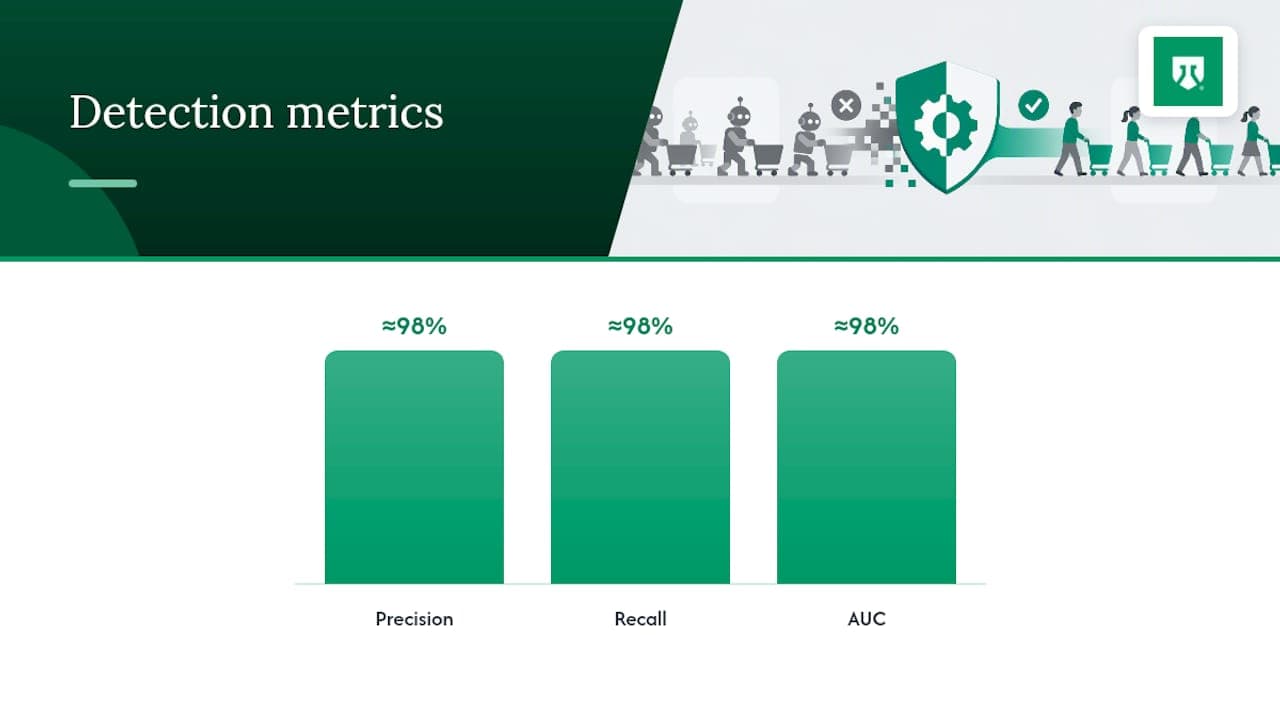
A layered detection pipeline combining fast heuristics, SGAN on static features, and a DGCNN on session traversal graphs achieved precision, recall, and AUC near or above 98% on a large ecommerce dataset, according to BOTracle, which evaluated the approach on a dataset of millions of monthly visits, representing a large ecommerce site. That result underlines why behavioral graph analysis, not static rules alone, tends to separate sophisticated bots from real shoppers.
None of this comes free. Behavioral models add latency and storage overhead, fingerprinting raises privacy and consent questions depending on the jurisdiction, and every method carries some false-positive risk that has to be weighed against the cost of blocking a real customer.
Layered defenses and response strategy for ecommerce
OWASP recommends structuring defenses across edge, application, and backend layers rather than relying on a single checkpoint, and its Bot Management Cheat Sheet maps this directly to the Automated Threats catalog:
- Edge: CDN and WAF rules, TLS and HTTP fingerprinting, and IP or ASN heuristics with per-key quotas on API routes filter obvious automation before it reaches the application.
- Application: Session-aware rate limits, identity-based quotas, and behavioral step-ups such as proof-of-work or CAPTCHA alternatives challenge ambiguous sessions without disrupting most shoppers. Honeypots and canary content flag automation that a human would never touch.
- Backend and business logic: Transaction anomaly detection, account-velocity rules, and asynchronous review catch abuse that slipped past earlier layers, with forensics logging supporting later investigation.
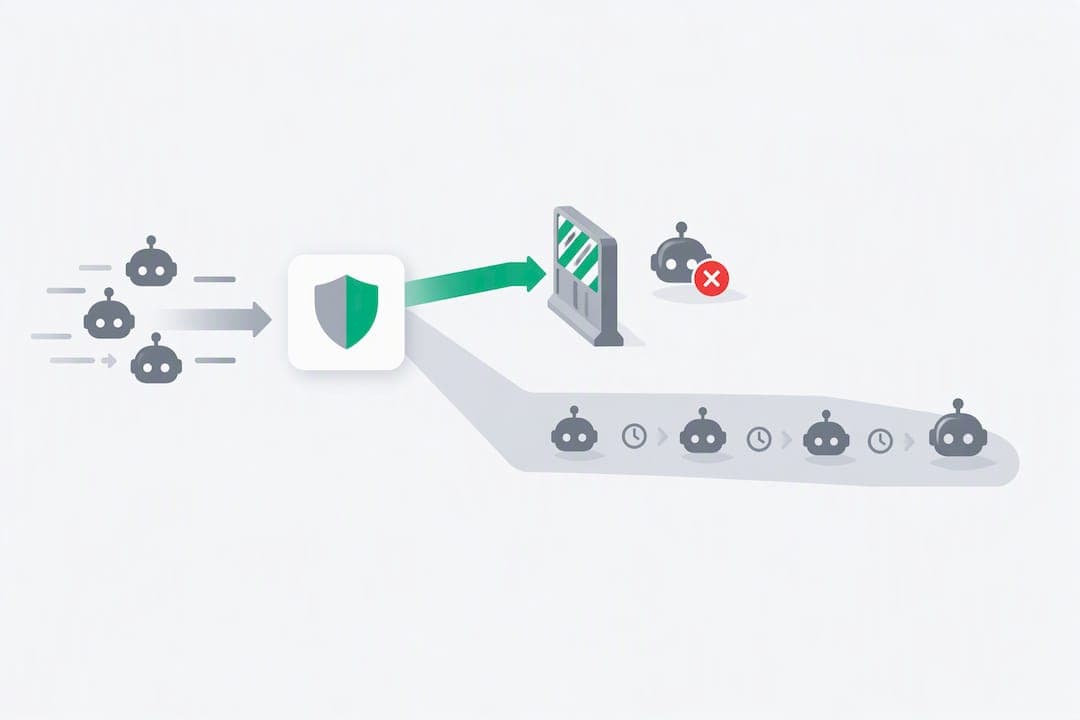
A graduated response matrix, tied to confidence bands, keeps the reaction proportional to the evidence: low-confidence signals get logged, medium confidence triggers a step-up challenge, higher confidence moves to tarpitting or soft-blocking, and the highest-confidence cases go to manual review. Tarpitting, or returning plausibly wrong data to suspected scrapers, degrades the attacker's return on effort while avoiding an outright block that tips them off.
Pro Tip: Reserve hard blocks for your highest-confidence signals only; soft actions like tarpitting or added latency preserve the customer experience while still raising the cost of automation.
Practical implementation checklist: measurement, testing, and rollout timeline
Before any mitigation goes live, collect a minimum telemetry set: request ID, timestamp, routing path, JA3 or JA4 fingerprint, user agent, contributing signals, and the resulting decision log. Store this centrally so patterns across sessions and accounts become visible.
A phased rollout limits business disruption:
- Run detection in visibility or shadow mode first, scoring traffic without taking action.
- Move to risk scoring with soft actions, such as added friction for medium-confidence sessions.
- Introduce automated mitigation paired with human review for edge cases.
- Tune thresholds continuously as attacker behavior shifts.
Track a small set of KPIs throughout: false-positive rate, share of bot traffic, volume of blocked abuse, and any conversion impact from added friction. Early-stage teams often start conservative on thresholds and tighten them as confidence in the signals grows.
- Use A/B and canary testing to compare mitigation variants on live traffic segments.
- Rehearse holiday or flash-sale events in advance, since bad bot traffic tends to spike sharply around peak shopping periods.
More KPI framing and workflow detail live in ShieldLabs' fraud prevention resources.
How visitor identification and transparent scoring support reliable bot detection
Persistent visitor identification adds a layer that behavioral models alone cannot: it links a session back to a prior visit even after cookies are cleared or an IP address changes, which matters when the same operator is running scalping or account-farming attempts across multiple sessions.
- Identification that persists across cleared cookies and IP rotation helps connect repeat offenders and coordinated account farms rather than treating each session as new.
- Explainable risk scores show the specific signals behind a verdict, so a team can audit a decision instead of trusting an opaque number.
- Integration is a single JavaScript snippet with SDKs for common frameworks, typically producing a first signal within minutes of setup.
ShieldLabs identifies returning visitors with up to 99% accuracy despite cookie clearing, incognito sessions, and IP rotation, giving detection pipelines a stable identity layer to attach behavioral scoring to. More on the underlying signal set is available on the detection blog.
When to prioritize behavioral detection versus signature or reputation controls
Behavioral detection paired with identity signals earns priority for flash sales, API-heavy storefronts, and any store facing scalpers who rotate proxies faster than IP lists can update. Signature and reputation tools still earn their place as a fast first filter on low-risk endpoints and as part of broader edge controls, where speed matters more than nuance. Whichever mix a team chooses, someone has to own ongoing monitoring, log review, and threshold tuning, since detection quality degrades the moment it is left unattended.
— Jeff
How ShieldLabs helps with visitor identification and risk scoring
Ecommerce teams already juggling CDN rules and rate limits often need a faster path to the identity layer without a long procurement cycle. ShieldLabs covers the anonymity signals that matter for ecommerce traffic, including anti-detect browser detection, VPN and proxy identification, and datacenter IP ranges, and surfaces the patterns behind multi-accounting and account farms operating from a shared connection.
- Every risk score arrives with the signals that produced it, so your team decides what action to take rather than relying on a black box.
- Traffic quality analytics break down risk by acquisition channel, showing which campaigns bring in anonymized or high-risk visitors.
- Setup runs through a single JavaScript snippet or SDK, typically live within minutes.
The free tier covers 5,000 identifications with no card required, and paid plans scale from there. Compare the Free, Starter, Growth, and Scale plans to find the tier that fits your traffic volume.
Sources
For deeper technical grounding, the OWASP Bot Management Cheat Sheet maps threats to defenses, the BOTracle framework demonstrates behavioral session modeling at scale, and the Springer study on ecommerce user behavior covers multi-modal behavioral fraud detection in production. For a managed-services perspective, see this guide on managed detection adoption.
- BOTracle: A framework for Discriminating Bots and Humans
- OWASP Bot Management and Anti-Automation Cheat Sheet
FAQ
How do I know if I am part of a botnet?
Unusual outbound traffic, unexpected CPU usage, or a device performing actions you did not initiate are common signs a device has been enlisted into a botnet. For an ecommerce operator, the more relevant question is whether your site is receiving botnet traffic, which shows up as coordinated request patterns from many distinct IP addresses hitting the same endpoints.
Can bots be detected?
Bots can be detected through a combination of network, fingerprint, and behavioral signals, though no single method catches every case. Layered pipelines combining heuristics with behavioral session models have reached precision and recall near or above 98% on large ecommerce datasets, which shows detection accuracy depends heavily on the combination of signals used.
Is the internet 51% bots?
There is no single, agreed figure for what share of internet traffic is automated, and claims vary widely by source and methodology. What is well documented is that bad bot traffic on ecommerce sites tends to surge sharply around holiday and flash-sale events, which is the pattern that matters most for retailers.
How to avoid bot detection?
This question is typically asked from the attacker's side, and legitimate businesses should instead focus on avoiding false positives that block real customers. The practical answer for site owners is to run detection in shadow mode first, tune thresholds against real traffic, and use graduated responses so borderline sessions get a step-up challenge instead of an outright block.
What is the difference between behavioral and signature-based bot detection?
Signature and reputation-based detection flags known bad IP addresses or request patterns, which works quickly but is easy for attackers to evade by rotating infrastructure. Behavioral detection analyzes how a session actually navigates a site, using signals like mouse movement and page traversal graphs, which is harder for automation to fake convincingly and tends to hold up better against scalpers and scrapers.
Recommended
Related articles

Calculate Fraud Detection Pricing With ShieldLabs' 5,000 Free Tier
Estimate fraud detection costs with a buyer-focused pricing workbook and worked examples. Validate your projection using ShieldLabs' 5,000 free...

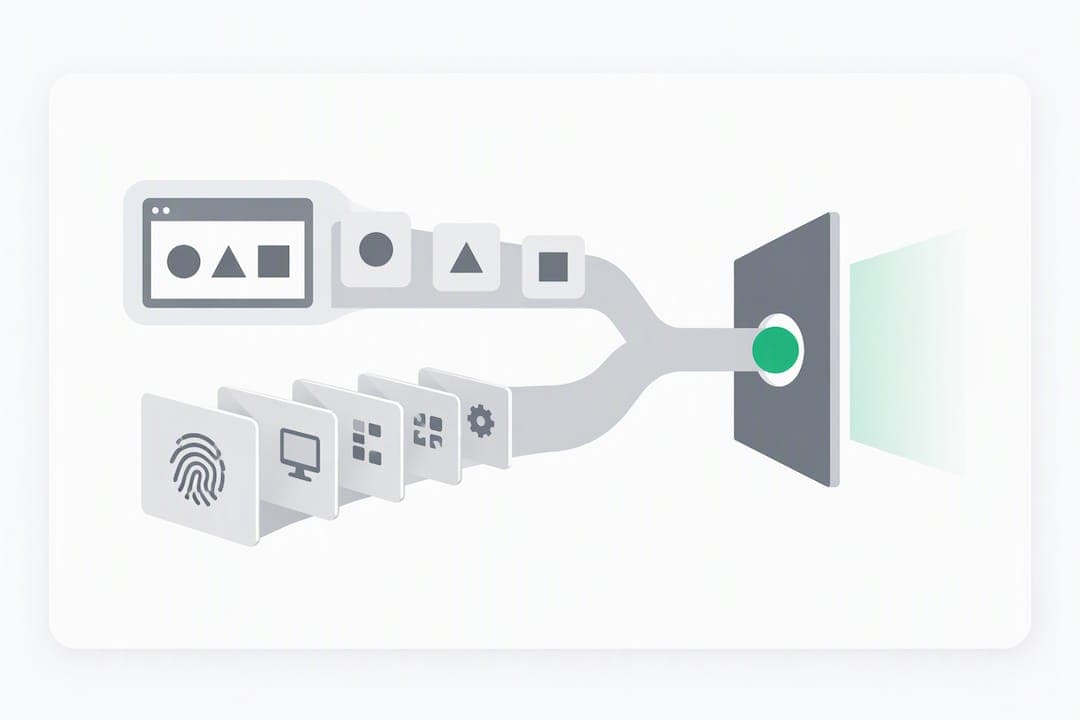
Map JA3/JA4 to Endpoints: CAPTCHA vs Device Fingerprinting for Teams
Practical, implementation-first guidance for fraud and security teams. Map JA3/JA4, client hints, WebGL and behavioral signals to endpoints, and trigger...
Stop Sybil Attacks Without KYC: Evidence-First Prevention for Marketplaces
Build an evidence-first defense for marketplace Sybil attacks: payment-weighted reputation, graph-based detection, device and anonymity signals, plus...