

VPN False Positives: 6 SOC Checks Before Escalating an Alert

Last updated on October 15, 2026 · 11 min read
A VPN false positive is almost always an infrastructure classification problem, not proof that a visitor is running a VPN or that an account is compromised. Shared IP addresses, relay networks, and outdated IP intelligence routinely trigger VPN flags on ordinary traffic. The operational rule follows directly: a VPN flag alone should never close or escalate a case. Analysts need account, MFA, device, and session evidence before acting, a principle grounded in guidance from ICANN SSAC, Apple, and CISA.
TL;DR:
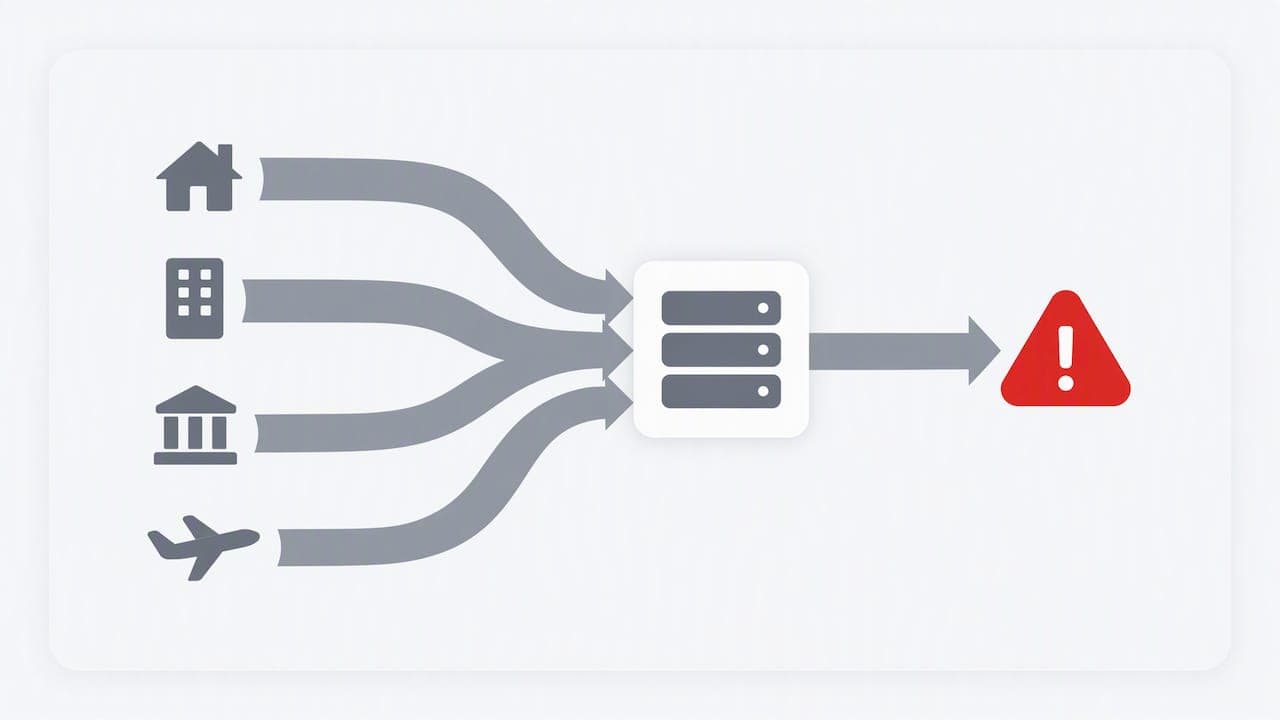
- Carrier grade NAT, Apple Private Relay, corporate gateways, and stale geolocation feeds can make ordinary traffic resemble VPN exits, so IP classification lacks individual attribution.
- Validate MFA results, recent password resets, concurrent regional sessions, account changes, and device consistency before escalating; then check ASN, reverse DNS, and relay ranges.
- When flags surge, cluster them by ASN or ISP and check feed updates, sensor changes, and rule deployments; broad spikes may reflect pipeline defects.
- Combine IP reputation with device and behavior signals; use a CAPTCHA or a code sent once before blocking on a shared relay address alone.
Table of Contents
- What actually causes VPN false positives
- A SOC triage checklist for validating a VPN alert
- Why some false-positive spikes signal a broken detector, not a bad actor
- Practical mitigations that cut false positives without losing coverage
- Balancing friction and risk in a fraud program
- Where ShieldLabs fits for teams reducing VPN false positives
- FAQ
- Sources
What actually causes VPN false positives
Most VPN false positives trace back to how IP addresses are shared, reassigned, or mislabeled, not to genuine VPN use. Understanding the mechanics helps a SOC decide how much weight an IP-based flag deserves.
Carrier-grade NAT (CGNAT) is the biggest contributor. Internet providers increasingly stack multiple layers of network address translation behind a single public IPv4 address to conserve address space. One public IP can represent many unrelated subscribers at the same time, which makes IP-only classification unreliable for identifying a single device or person, a point ICANN SSAC has raised directly in its guidance on changing IPv4 address semantics. Carrier-grade NAT behaves similarly to a VPN exit node from the outside, since many sessions appear to originate from the same address.
Stale or wrong IP intelligence compounds the problem. Address blocks change hands, hosting providers lease ranges to new tenants, and geo-IP databases lag behind those changes, so an address that was datacenter infrastructure may now sit inside a residential ISP's pool, or the reverse.
A few other sources show up consistently in false-positive investigations:
- Datacenter and shared hosting IP ranges that structurally resemble VPN or proxy exit nodes, even when no VPN is involved.
- Apple's iCloud Private Relay, which routes traffic through two separate relays and can assign an IP shared among several nearby users, as Apple's own developer documentation describes.
- Corporate proxies, SASE gateways, and managed VPN appliances used for legitimate remote work, which produce the same network signature as consumer VPN traffic.
- Mobile carrier NAT pools, which rotate and share addresses across subscribers in ways that mimic rotating-proxy behavior.
Differentiating a VPN from a proxy or Tor exit node at the network layer alone is difficult, since all three can present as a single shared or reassigned address with no further context attached.
A SOC triage checklist for validating a VPN alert
A VPN flag is a starting point for investigation, not a conclusion. The following sequence gives analysts a repeatable way to confirm whether a flagged session reflects genuine risk.
- Check authentication outcome first. Confirm whether MFA succeeded, whether the password was recently reset, and whether there were failed attempts immediately before the flagged session, since CISA's guidance on authentication bypass activity ties real compromise to authentication anomalies rather than network origin alone.
- Review concurrent sessions and recent account changes. Simultaneous logins from different regions, new devices added, or recovery email and phone changes around the same time raise the stakes of a VPN flag considerably.
- Pull device signals. Browser fingerprint consistency, WebRTC IP leaks, and user-agent anomalies help confirm whether the same physical device has used the account before, something research on VPN detection methods and persistent identifier tracking both support as more reliable than IP alone.
- Run network-level checks. Look up the ASN, reverse DNS, and whether the IP falls inside published Private Relay ranges or known carrier-NAT blocks before treating the address as a dedicated VPN exit node.
- Add behavioral context. Transaction history, multi-account patterns tied to the same device, and the acquisition channel or referrer that brought the visitor in all sharpen the picture beyond a single network signal.
- Escalate only on real indicators. Credential-exposure evidence, unauthorized configuration changes on VPN appliances, or alerts correlated across multiple accounts warrant incident response, following the hardening steps CISA issued after Fortinet credential exposure reports.
Pro Tip: Log the triage outcome, not just the alert, so your team can measure what share of VPN flags turn out to be genuine risk over time.
Why some false-positive spikes signal a broken detector, not a bad actor
A sudden jump in VPN false positives often means the detection pipeline itself has a problem, not that fraud activity has risen. CISA's Continuous Diagnostics and Mitigation triage guide identifies synchronization failures, incomplete desired-state data, misconfigured sensors, and data-store errors as common root causes of mass false positives, and recommends routing each type of defect to the team that owns the faulty input or rule rather than treating every spike as a security event.
IP reassignment and stale geo-IP updates can mislabel entire blocks overnight. An address range that a provider classified as residential can show up as datacenter or VPN infrastructure simply because a geo-IP vendor pushed an update, a drift that ICANN SSAC warns about when it notes that IPv4 address semantics no longer map reliably to a single endpoint.
Single-signal rules built on IP alone are brittle for the same reason. Reliable attribution needs timestamped NAT binding logs or other ancillary data, since the IP by itself cannot distinguish one subscriber from hundreds sharing the same address.
A few checks help confirm whether a spike is a detection problem; for teams that need to triage traffic-source classification issues when CDN or bot scanners affect IP reputation, understanding log-file SEO to spot GPTBot and CDN blind spots can provide useful background.
- Cluster recent flags by ASN or ISP to see if one network is driving most of the noise.
- Check whether a geo-IP feed or threat-intelligence source updated recently.
- Review whether a sensor, rule, or detection model changed deployment around the time the spike started.
Practical mitigations that cut false positives without losing coverage
Reducing VPN false positives does not require loosening fraud defenses. It requires spreading risk decisions across more than one signal so that a single shared address never carries the full weight of a verdict.
- Score multiple signals together. Weight device fingerprints, behavioral history, and account context alongside IP classification rather than letting IP decide the outcome alone, consistent with how ICANN SSAC frames the limits of IP-based attribution.
- Treat Private Relay and carrier-NAT traffic as a distinct category. Apply coarser location checks and reserve step-up authentication for cases that genuinely need stronger evidence, following Apple's guidance for networks preparing for Private Relay.
- Use platform attestations where they exist. Private Access Tokens for Apple traffic let a server confirm a request came from a genuine device without needing the original IP, reducing the chance of blocking a legitimate user outright.
- Keep a feedback loop for data-source corrections. When a false positive is confirmed, route it back to whoever owns the rule or feed that caused it, the same model CISA recommends for triaging defects at scale.
- Monitor false-positive rates by ASN and ISP over time. A rising trend tied to one network usually points to a stale data source rather than a new fraud pattern.
Pro Tip: Apply low-friction checks like a CAPTCHA or a one-time code before a hard block whenever the only signal is a shared or relay IP address.
Balancing friction and risk in a fraud program
The core distinction running through all of this is network identity versus user identity. An IP address identifies a network path, not a person, and conflating the two inflates false-positive rates while doing little to catch real abuse. Programs that track false-positive rate, triage time, and customer friction as standing metrics catch drift early.
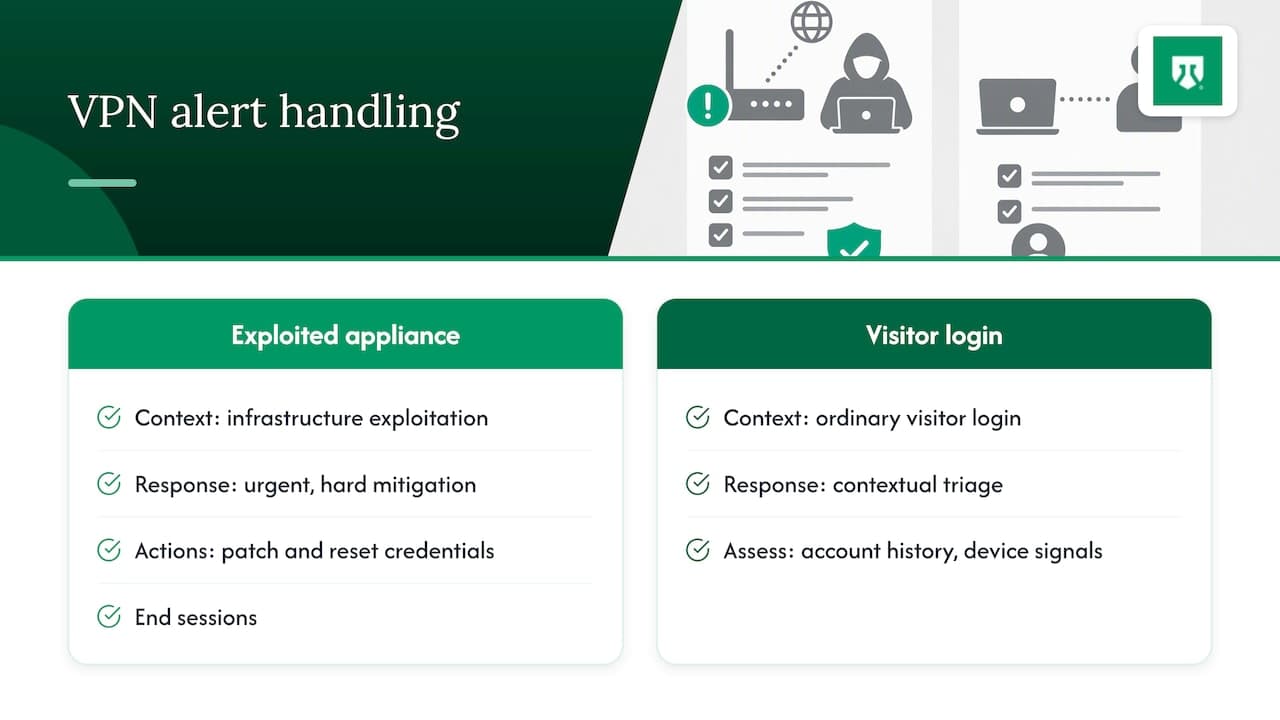
Alert handling should also differ by context. Evidence of a VPN appliance being exploited at the infrastructure level demands urgent, hard mitigation, patching, credential resets, session termination. A VPN detection on an ordinary visitor login deserves contextual triage instead, weighing account history and device signals before any action.
— Jeff
Where ShieldLabs fits for teams reducing VPN false positives
Reducing VPN false positives without losing fraud coverage comes down to having more than one signal to check against. Our anonymity detection covers VPNs, proxies, Tor, Apple Private Relay, datacenter ranges, and anti-detect browser detection, drawn from signals collected on each visit.
Every visit gets an explainable risk score, not just a binary VPN flag, so your team can see exactly which signals contributed before deciding whether to challenge, step up, or allow a session. Persistent visitor recognition works alongside that scoring, identifying a returning visitor with up to 99% accuracy even across cleared cookies and rotated IPs, which gives your team device and session history to weigh against a shared or relay address.
- Explainable visit risk scores built from anonymity, device, and behavioral signals, so your team keeps the final decision in its own code.
- Traffic-quality analytics broken down by risk band and acquisition source, useful for spotting whether a false-positive spike tracks back to one channel.
- Private Relay, Tor, and anti-detect browser detection included on every plan, not gated behind an enterprise contract.
Pricing starts with free identifications and no card required, then moves to published monthly plans as volume grows. Check our anonymity signal detection and risk scoring product pages for the full signal set your team would get access to.
FAQ
Can the FBI see through VPNs?
Whether a government agency can trace traffic through a VPN depends on the specific VPN provider's logging practices, legal jurisdiction, and the investigative tools available in a given case, and there is no single public answer that covers every VPN or every investigation. This falls outside what detection vendors or security teams can verify from the outside.
Is a Trojan detection ever a false positive?
Yes, antivirus and endpoint tools sometimes flag legitimate files or scripts as Trojans due to overlapping code patterns or outdated signature databases, which is a different mechanism from VPN IP-based false positives. Both cases call for the same principle: confirm with additional evidence, such as file origin or behavior, before treating the flag as confirmed malicious activity.
Will VPNs be banned in the USA?
There is no nationwide ban on VPN use in the United States, and VPNs remain legal for consumers and businesses alike. Policy discussions around specific platforms or use cases surface periodically, but they have not resulted in a general prohibition.
When shouldn't you rely on a VPN flag alone?
A VPN flag alone should never be the sole basis for blocking a user or closing a fraud case, since shared IPs from CGNAT, Apple Private Relay, or stale IP intelligence commonly trigger the same flag on legitimate traffic, as ICANN SSAC and Apple's developer guidance both note. Pair the flag with account, device, and session evidence before deciding how to act.
Sources
- Itp
- Prepare your network or web server for iCloud Private Relay - iCloud - Apple Developer
- Fortinet Releases Guidance to Address Ongoing Exploitation of Authentication Bypass Vulnerability CVE-2026-24858 | CISA
- Continuous Diagnostics and Mitigation (CDM) Defect False Positive Triage Guide
Recommended
Related articles
Traffic Quality Analysis: 5 Checks Marketers Run Before Cutting Spend
See how marketers assess traffic quality with channel metrics, campaign tags, IAB and MRC standards, and fraud signals before changing spend.


Measure First: Reduce False Positives, Keep Coverage for Fraud Ops
Playbook for fraud teams: measure rule-level false positives, run shadow tests and regression checks, then add visitor ID signals to cut noise.
Traffic Laundering Detection: 4 Checks Before Billing Decisions
Detect traffic laundering with four checks across supply paths, device and network signals, and forensic samples; track decision rates using MRC guidance.