

How to detect geolocation spoofing and prevent fraud

Last updated on July 4, 2026 · 9 min read
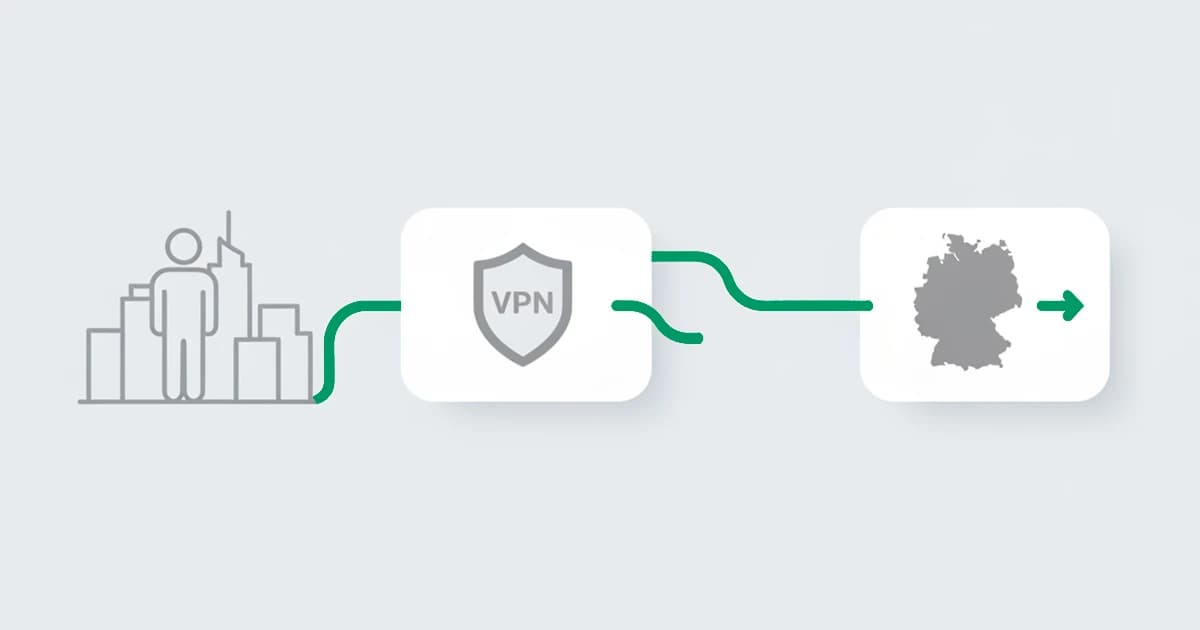
A visitor sitting in New York can look, to your website, like they are in Frankfurt, with one click. That is geolocation spoofing, and it quietly corrupts every decision a platform makes on the assumption that location is real: which promo a visitor qualifies for, which ad a campaign paid for, whether a login looks like the account's owner. Most masked traffic is ordinary privacy behavior: Security.org reported in 2025 that 32 percent of American adults use a VPN. But a meaningful slice rides the same tools to fake a location and scale abuse. The good news for teams trying to stop fraud: faking one location layer is easy, but keeping every layer consistent is hard, and that gap is where detection lives.
TL;DR
Geolocation spoofing is the practice of making web traffic appear to come from a country other than where the visitor really is, using a VPN, residential proxy, Tor, or an anti-detect browser. It powers geo-restricted content access, regional promo and bonus abuse, ad fraud, and account takeover. No single IP lookup can prove it, because one IP is easy to fake and easy to share. Durable detection reads many signals at once: the egress IP, the browser timezone, the connection type, and a visitor's prior country history. It scores how consistently they describe the same person, then surfaces the mismatch for a team to act on.
What is geolocation spoofing?
Geolocation spoofing is when someone deliberately misrepresents the geographic location their device reports to a website or app, so they appear to be somewhere they are not. On the web, that usually means routing traffic through a server in another country and rewriting the location signals a site would normally trust: the IP address first, and often the browser's timezone and language on top.
A quick disambiguation, because the search term is noisy. "Geolocation spoofing" overlaps with GPS spoofing, but the two are not the same thing. GPS spoofing broadcasts counterfeit satellite signals to fool a hardware receiver, the domain of drones, navigation systems, and phones with mock-location apps.
Web geolocation spoofing, the subject of this article, never touches a satellite. It manipulates the location your browser and network hand to a server. If you run a website and care about where your traffic genuinely comes from, the web flavor is the one that affects you.
| Web geolocation spoofing (this article) | GPS spoofing | |
|---|---|---|
| What's faked | The location your browser and network report (IP, timezone) | The satellite signal a hardware GPS receiver reads |
| How it's done | VPN, proxy, Tor, anti-detect browser, browser extension | Counterfeit radio signals, mock-location apps |
| Where it bites | Websites, apps, fraud and risk teams | Phones, drones, vehicles, navigation |
| How it's detected | Cross-layer signal analysis on the visit | GNSS signal authentication, hardware and sensor checks |
The mechanic belongs to the broader family of spoofing attacks: present a forged identity that a system is built to trust. With geolocation, the forged attribute is where you are.
How does geolocation spoofing work?
Spoofing a location is cheap, and the playbook barely changes year to year. The move is always the same: rewrite what is visible at one layer, and bet that nobody checks the others. The common tools:
- Commercial VPNs. The simplest method. Route traffic through an exit server in the target country so the visible IP resolves there. One toggle, a new country.
- Residential proxies. Traffic is routed through real consumer IP addresses rented by the thousand. Because the IP looks like an ordinary home connection, datacenter-based VPN lists never flag it. This is the hardest case to catch on IP alone.
- Tor. Routing through multiple relays lands the exit node in an unpredictable country, hiding the origin.
- Anti-detect browsers. An anti-detect browser rewrites the browser fingerprint (user agent, timezone, language, canvas, fonts) so the declared environment matches the spoofed country instead of the real machine.
- Browser extensions and the Geolocation API. Extensions can override the values returned by the browser's HTML5 Geolocation API, feeding a site hand-picked latitude and longitude. The top result for many "spoof geolocation" searches is literally a one-click Chrome extension.
- Cloud browsers and virtual machines. A remote browser hosted in the target region produces traffic that originates there end to end.
The thread connecting all of them: each tool changes one layer convincingly, the IP, or the timezone, or the reported coordinates, but rarely keeps every layer consistent. A residential proxy can fix the IP while the browser clock still reads the user's real timezone. That gap between layers is the whole game. Detection that reads only the IP loses it; detection that compares layers finds it.

Why do people spoof their geolocation?
Not every spoofed location is fraud. A traveler on a hotel VPN and a fraud ring inflating ad bids both rewrite their location. The difference is intent, and intent is something a team reads, not the data. Here is the honest split:
| Often legitimate | Often abuse |
|---|---|
| Privacy from trackers | Reaching geo-restricted or licensed content |
| Working while traveling | Claiming regional promos, bonuses, or pricing meant for another market |
| Security and QA testing | Inflating ad geo-targeting to bid up high-CPM countries |
| Avoiding price discrimination | Creating accounts in regions a platform restricts |
| Hiding origin during account takeover | |
| Evading regional sanctions or compliance gates |
For a platform-integrity, growth, or fraud team, the abuse column is where the money leaks. A visitor spoofing geolocation to claim a country-locked welcome bonus eight times, or a geolocation spoofer routing affiliate clicks through premium-CPM regions, both quietly turn a feature meant for acquisition into a payout pipe.
Is geolocation spoofing illegal?
Geolocation spoofing is usually a terms-of-service violation, not a crime. Most platforms prohibit misrepresenting your location to bypass licensing, pricing, or regional limits, and they enforce that through their own rules. Using a VPN to watch a show licensed elsewhere, for instance, breaks a streaming service's terms but rarely a law.
It crosses into fraud, and potential legal exposure, when spoofing is the means to steal something: claiming payouts under false pretenses, committing ad fraud, or covering tracks during account takeover. On its own, though, location spoofing is typically a policy problem a platform enforces, which is exactly why detection (the data) and response (the action) are worth keeping separate.
Why does geolocation spoofing matter for traffic and fraud teams?
A faked location quietly corrupts decisions made on the assumption that location is real. Three of the most common cost centers, treated as directional since the real numbers vary widely by platform:
- Ad fraud. Bid prices vary by geography. Traffic spoofing high-CPM countries inflates what advertisers pay for worthless impressions, and pollutes the attribution a growth team steers by.
- Promo, bonus, and referral abuse. Region-locked offers assume one claim per real person in the eligible market. A geolocation spoofer with a fresh browser profile claims them on repeat.
- Account takeover. A login from a "normal" country can hide a takeover in progress when the spoofed origin is picked specifically to slip past an impossible-travel check.
The deeper damage is quieter, and it lands on your analytics. When a slice of traffic lies about where it comes from, geographic conversion data, market-by-market CAC, and fraud baselines all bend toward signals that are not true. You end up tuning the business for customers who were never really there.
How do you detect geolocation spoofing on web traffic?
Websites detect geolocation spoofing by reading many independent location signals on a single visit and scoring how consistently they describe one real person in one real place. No single signal proves a location is faked, and any vendor claiming otherwise oversells it. Each signal below is weak alone and hard to beat in combination, so resilient detection correlates them. The techniques that do the work:

- IP location and classification: the visible IP's country, ISP, and ASN, read against reverse DNS, WHOIS, and IP reputation feeds, establish where the connection claims to be and whether that origin is trustworthy.
- Datacenter versus residential: ASN ownership flags whether the IP sits in a consumer broadband range or a hosting provider, the cleanest first cut between an ordinary local visitor and a masked one.
- Real-origin leak checks: a DNS leak whose resolvers resolve in a different country than the visible IP, or a leaked local-network address, points back to where the visitor actually is.
- Cross-layer location consistency: the IP-derived country gets compared against the browser timezone, the system locale and declared language, and the connection type, so any disagreement between these sources outweighs any single one.
- Latency and routing tells: round-trip time that disagrees with the claimed country suggests traffic is being relayed, because light cannot reach a Frankfurt IP in the time a New York connection would take.
- Impossible travel: tying each visit to a persistent identifier and comparing the new country against prior history flags a trip no one could take, like a session from Ohio and one from Tokyo forty minutes apart.
- Mid-session location jump: a location that shifts during one continuous session, not across days and with no re-authentication in between, points to a visitor reshaping their location on the fly, an anomaly distinct from impossible travel across separate visits.
- Cross-signal correlation: each location tell is weak alone, so they are weighed into a single risk score, and a session whose location layers can contradict each other becomes its own anomaly.
The pattern across all of them: detection is about correlation, not any single check. A determined user on a residential proxy raises the difficulty, but the more layers they spoof, the more surfaces they have to keep perfectly consistent. Consistency at scale is exactly what gives it away.
In our checks, we measured VPN sessions that claimed a far-off exit country, and the round-trip time gave them away before anything else did. Light travels through fiber at only about 67 percent of its vacuum speed, so a packet needs real milliseconds to cross an ocean, and an IP that resolves to Frankfurt while answering on New York timings has to be relayed. The check only gets more useful as the IP says less: in 2021, Apple shipped iCloud Private Relay and pushed ordinary users onto a shared, coarse egress, so we lean on the browser timezone against the IP rather than the address alone.
Why isn't IP geolocation alone enough?
IP geolocation alone is not enough because a single IP proves neither a single location nor an honest one. The oldest approach is "look up the IP's country and trust it." It breaks in both directions, and both are getting worse.
A single IP doesn't prove a single location. Carrier-grade NAT (CGNAT) routes many unrelated subscribers through one public IP. The address range reserved for it, 100.64.0.0/10 in RFC 6598, exists precisely so providers can share addresses, and shared public IPs are now standard practice, so the same IP can represent a crowd of genuinely different people in genuinely different places. Browser-native masking pushes the same way: iCloud Private Relay and Chrome IP Protection route ordinary users through a shared, coarse egress, so a clean IP says even less about where someone really is than it used to.
A clean IP doesn't prove an honest location. Residential proxies hand a user a fresh, legitimate-looking home IP in any country on demand. An IP-only rule sees a clean residential address and waves it through, even as the browser timezone, connection type, and account history all say otherwise.
The conclusion is uncomfortable for anyone relying on IP alone: a matching IP is not proof, and a clean IP is not proof either. IP is one weak signal that only becomes reliable when the rest of the stack agrees with it.
Detecting geolocation spoofing with ShieldLabs
The hard part of catching a faked location is not reading any one layer. It is reconciling the IP-derived country against the browser timezone, locale, and connection type on every visit, then keeping that read accurate as VPN and proxy providers rotate their exit ranges. ShieldLabs owns that reconciliation, so your team doesn't build and maintain it. One JavaScript snippet scores every visitor in about five minutes from install to first risk signal.
Each visit returns a risk score that weighs the layer-by-layer inconsistencies and flags the session when a visitor's reported location stops agreeing with itself, like an IP in Frankfurt paired with a New York timezone. All of it happens in the background, with no friction for the visitor. The score arrives with the full set of 300+ risk signals, including the ones a spoofer leans on, including proxy and VPN detection, datacenter IP, and Tor, so a location is never trusted on its IP alone. That cross-checking is the core of location spoofing detection: the reported place has to agree with the rest of the session before it is believed.
Because a spoofer rotates IPs and clears cookies between attempts, a stable identifier ties a "fresh" visit back to a returning device even after those resets, which is how ShieldLabs detects Impossible travel and Multi-accounting directly as High-Risk Events, each with Medium or High confidence. The analytics dashboard also rolls the same data up by traffic quality, so your team can tell where its traffic genuinely comes from as a trend over time rather than one visit at a time.
The risk score, risk signals, and High-Risk Events are available through an API and webhooks, so ShieldLabs helps block fraudulent and abusive traffic and your team acts on the result in its own flow.
Sources
- Security.org: 2025 VPN Consumer Report (nationally representative survey) (2025)
- Wikipedia: Carrier-grade NAT
- IETF: RFC 6598: IANA-Reserved IPv4 Prefix for Shared Address Space
- MDN Web Docs: Geolocation API
- Wikipedia: Spoofing attack
- Wikipedia: DNS leak
Frequently asked questions
- Can JavaScript alone detect geolocation spoofing?
- JavaScript catches some tells, like a browser timezone or declared language that contradicts the country an IP resolves to, but the strongest evidence sits at the network and transport layer that page scripts cannot reach, where the egress IP, connection type, and routing live. Reliable detection pairs the browser-side read with server-side signals, then scores how well the whole picture agrees, so the answer is partly, but not on its own.
- Can a VPN be detected?
- A VPN can be detected, but it shows up as an anonymized connection, which is one input rather than a verdict. Plenty of real users run a VPN for privacy. Reliable detection flags the VPN and then weighs it against the browser timezone, the connection type, and the visitor's country history, so a VPN only points to spoofing when the other layers also disagree.
- Can you detect residential proxies?
- Residential proxies are the hardest case, because the IP looks like an ordinary home connection. IP reputation alone often misses them, which is why detection leans on cross-layer consistency and persistent identification instead. A residential proxy can fix the IP, but it rarely keeps the timezone, connection type, and prior country history consistent across sessions.
- What is a geolocation mismatch?
- A geolocation mismatch is when two location sources on the same visit disagree, most commonly the IP-derived country and the browser's timezone. An IP that resolves to Germany paired with a browser clock set to New York time is a classic mismatch. Because someone rerouting their traffic usually fixes the IP but forgets the timezone, that disagreement is stronger evidence of spoofing than either source on its own.
Related articles

Calculate Fraud Detection Pricing With ShieldLabs' 5,000 Free Tier
Estimate fraud detection costs with a buyer-focused pricing workbook and worked examples. Validate your projection using ShieldLabs' 5,000 free...


Map JA3/JA4 to Endpoints: CAPTCHA vs Device Fingerprinting for Teams
Practical, implementation-first guidance for fraud and security teams. Map JA3/JA4, client hints, WebGL and behavioral signals to endpoints, and trigger...

Stop Sybil Attacks Without KYC: Evidence-First Prevention for Marketplaces
Build an evidence-first defense for marketplace Sybil attacks: payment-weighted reputation, graph-based detection, device and anonymity signals, plus...