

The 8 best free-trial abuse prevention tools in 2026

Last updated on October 12, 2026 · 10 min read
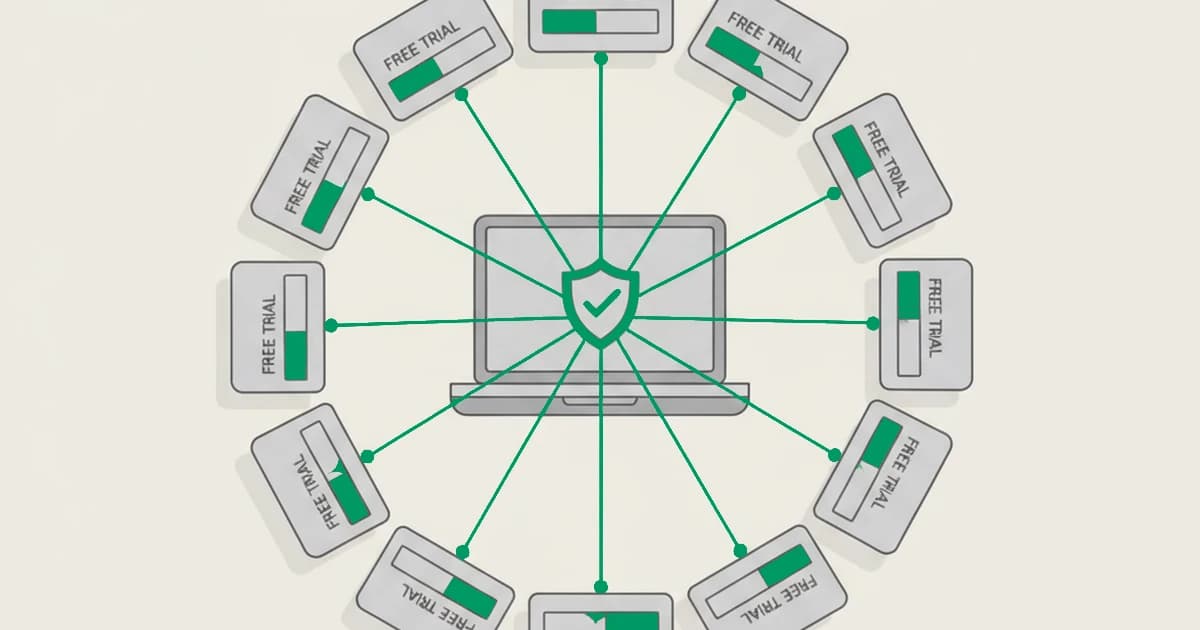
Free trial abuse prevention is the practice of stopping one person from claiming a free trial many times over by hiding behind many new accounts.
The tactic is old and cheap: a trial, a free tier, or a fresh API-key allotment is worth farming when the same person can reset it by opening account after account, each dressed up to look like a first-time user.
It is a real enough problem that payments platforms document it directly, with Stripe's guidance on preventing free trial abuse treating it as a first-class signup-fraud category, and developers trade tactics for it openly in threads like the recurring "how do you handle free trial abuse" question on r/SaaS.
The mechanism underneath is almost always multi-accounting: one operator, many accounts, one offer claimed over and over. It is a form of the Sybil attack described in 2002, where a single actor runs many fake identities to game a system.
It is hard to catch because each trial signup is built to look distinct, so the reliable way to unmask it is to find what the signups share, most often the device and the network behind them. This guide explains what free-trial abuse prevention is, how it works, and covers the tools across the segments below.
Key takeaways
- Free-trial abuse is one person claiming the same trial or free tier many times, and the mechanism behind it is almost always multi-accounting: many signups, one real user.
- Simple per-account checks miss it because each signup looks new, so the signal that catches it is what the signups share, usually a device or an anonymized network.
- Effective prevention links trial signups back to a persistent device identifier that survives cleared cookies, a new email, and a rotated IP, then detects multi-accounting before the trial or API key is issued.
- The market splits into platforms you can evaluate on your own traffic today and sales-led suites that bundle case management and compliance, such as identity verification and payments tooling.
What is free-trial abuse prevention?
Free-trial abuse prevention is the practice of identifying when a single person is claiming a trial or free tier repeatedly through multiple accounts, so the operator can hold, deny, or step up the extra signups before the value is issued.
It works by looking past the details a trial farmer can freely change, name, email, phone, and card, to the things they cannot cheaply vary: the device they sign up from, the network they route through, and the way those signups cluster together in time.
The core signal is a shared origin. When ten new trials all start from one machine, that is not ten new users evaluating your product, it is one person farming the offer.
Prevention tools differ in how durably they recognize the device behind the signups, how well they read anonymized connections built to hide it, and whether they detect multi-accounting for you or leave you to assemble it from raw signals.
Because a trial or a free API key is issued the moment someone signs up, the useful moment to score is signup, before the value goes out the door.
Define the benefit and eligibility controls before selecting a tool. The offer-abuse prevention playbook provides that framework across trial, bonus and promo claims.
How free-trial abuse prevention works
Good prevention reads several layers and correlates them into one picture:
- Device and identity linkage. A persistent device identifier links trial signups back to one machine even after cleared cookies, a new browser profile, a fresh email, or a rotated IP. This is the single strongest signal, because the device outlives the disposable details a trial farmer resets between signups.
- Disposable and reused details. Throwaway inboxes and disposable email addresses, plus prepaid or reused cards, are how one person manufactures the illusion of many distinct new users. A tool that flags them cuts off the cheapest way to reset a trial.
- Network and anonymity. Trial farmers lean on VPNs, proxies, Tor, and anti-detect browsers to make one device look like a crowd of new users from new places. A tool that names those risk signals can flag the evasion instead of being fooled by it.
- Velocity and shared attributes. A burst of signups in a short window, matching addresses, and reused instruments tie signups together even when the device changes.
Tools that work combine these and, importantly, return ready-made detection rather than a pile of raw signals you have to correlate yourself. What separates them is the durability of the device signal, the depth of anonymity detection, and how much of the correlation is done for you.
A trial-farming run is multi-accounting at signup, exactly what these tools are built to detect, so you can step in before the trial or the key is issued.
The tools below are grouped by approach and listed alphabetically within each group.
Tools at a glance
This table summarizes the intended fit of each tool. The sections below explain its coverage and limits.
| Tool | Best fit |
|---|---|
| ShieldLabs | Product and developer teams that want multi-accounting detection ready-made at signup, with named risk signals and an explainable score they can act on |
| Castle | Teams already on Cloudflare that want edge-plus-app coverage and are comfortable writing their own trial-abuse rules |
| Fingerprint | Developer teams that want a durable device identifier and a broad signal catalog, including mobile, and are comfortable composing the trial-abuse decision themselves |
| IPQualityScore (IPQS) | Teams that mainly want IP, email, and phone reputation checks at trial signup and treat device linking as secondary |
| Verisoul | Gaming, rewards, and marketplace teams that want an account-linking graph, with optional selfie verification available when proving one unique human matters |
| Rupt | Subscription and e-learning products that want repeat-trial detection alongside account-sharing controls, with a pre-built challenge step included |
| TrueGuard | Small SaaS teams that want a low-cost, self-serve tool aimed squarely at free-tier and trial abuse, with a fast snippet-plus-API install |
| SEON | IGaming and fintech operators that want enrichment, AML, and case management alongside device data, and can absorb a sales-led entry |
Device and network signal platforms
These install with a snippet or lightweight API and score the signup on device, network, and reputation signals.
ShieldLabs
ShieldLabs is a platform built around the multi-accounting that drives free-trial abuse, with enterprise-level functionality without enterprise pricing. You add one JavaScript snippet, and each visit returns persistent identification with 99.9% identification accuracy that survives cleared cookies, a new email, and a rotated IP, so the many new trials started from a single device stay linked.
It automatically detects multi-accounting, account sharing, impossible travel, and account takeover at signup. An explainable risk score from 0 to 100, bot and automation detection, and named risk signals such as VPN, proxy, Tor, and anti-detect browser use accompany the result before the trial or API key is issued.
ShieldLabs flags the abusive signups and helps stop free-trial abuse, so teams can decide whether to deny, hold, or step up each one. Pricing is a one-time free allocation of 5,000 identifications, then plans from 99 USD a month.
ShieldLabs covers web traffic through one JavaScript snippet, with an API and webhooks on every plan.
Best for: product and developer teams that want multi-accounting detection ready-made at signup, with named risk signals and an explainable score they can act on.
Castle
Castle is a self-serve account-security platform with a dual-layer architecture: it runs at the Cloudflare edge and inside your app through an SDK, so signals from one sharpen the other.
Multi-accounting is an explicit use case, and its own example rule targets the trial-abuse shape directly, counting unique users per device fingerprint where a promo code exists over a time window.
It returns three scores from 0 to 100 for bot, abuse, and account takeover, backs them with device fingerprinting it rates up to 99.5 percent accurate, adds disposable-email intelligence, and gives you a customer-owned rules engine. Pricing starts free at 1,000 calls a month, then Pro at 200 USD a month for 100,000 calls.
The tradeoff is that Castle gives you the building blocks, not a finished pattern. Trial abuse is a rule you compose and tune rather than a named detection surfaced for you, the scoring leans on self-learning models, and its public review base is thin.
Best for: teams already on Cloudflare that want edge-plus-app coverage and are comfortable writing their own trial-abuse rules.
Fingerprint
Fingerprint is a device-intelligence platform, and repeat signups and multi-accounting are among its documented use cases. Its Visitor ID is engineered to persist across cleared cookies, incognito, and a rotated IP, so repeated trial signups from one device stay linked, and its Smart Signals name VPN, proxy, incognito, virtual machine, and velocity to flag the evasion behind them.
Everything rolls up into a single Suspect Score, and the catalog is broad, with web and native mobile SDKs across iOS and Android. The Pro Plus tier is published at 99 USD a month for 20,000 API calls, on top of a permanent free tier.
The tradeoff is that Fingerprint returns raw signals and one composite Suspect Score, not a pre-built free-trial-pattern. As one engineer put it on G2, the signals are helpful but not the whole picture, so teams often build their own model on top to turn them into a trial-abuse decision.
Overage is billed per additional thousand calls, which reviewers flag as costly at scale.
Best for: developer teams that want a durable device identifier and a broad signal catalog, including mobile, and are comfortable composing the trial-abuse decision themselves.
IPQualityScore (IPQS)
IPQualityScore pairs IP reputation with email and phone validation to flag trial signups that route through a suspicious connection or reuse a burned contact detail. Its VPN, proxy, Tor, and residential-proxy detection is backed by a proprietary honeypot network across many countries, and it ships dedicated duplicate-and-fake-account detection features that map onto free-trial abuse.
Free interactive lookup tools make it easy to test before committing. A permanent free tier covers 1,000 lookups a month, with self-serve plans from 99 USD a month.
The tradeoff sits in the packaging. On the self-serve tiers you get IP, email, phone, and URL reputation, but device fingerprinting and the mobile SDK are gated to a custom Enterprise plan, so the device-linkage layer that catches many-trials-on-one-device is not in the entry tiers.
Output is a score from 0 to 100 plus raw signals, and reviewers flag a dated dashboard, so you assemble the trial-pattern yourself.
Best for: teams that mainly want IP, email, and phone reputation checks at trial signup and treat device linking as secondary.
Verisoul
Verisoul is a fake-account prevention platform, and repeat signups is one of its named use cases. Its Account Linking graph visualizes in real time which accounts share a device or fingerprint, which is the direct view an operator needs to see one person opening many trials.
It combines device fingerprinting, proxy and VPN detection, and optional selfie and document verification through FaceMatch and ID Check, and it offers a no-code rule builder so decisions can be tuned without engineering. Paid plans start at 249 USD a month for the Professional tier.
The tradeoff is access and identifier model. The free Starter tier is dashboard-only with no API, and every self-serve button routes to a demo, so there is no instant signup for an API-first evaluator.
Verisoul also returns match probabilities rather than a stable device identifier you can join against your own warehouse, which changes how you build linking logic on top.
Best for: gaming, rewards, and marketplace teams that want an account-linking graph, with optional selfie verification available when proving one unique human matters.
Tools built around trial and repeat-signup abuse
These lead with free-tier or repeat-trial abuse as their core use case, so the detection is shaped around one operator opening many trials.
Rupt
Rupt is a developer-focused tool centered on account-sharing detection, and repeat trial abuse sits inside the same product.
Its device identification issues a persistent Device ID it argues is more durable than drifting fingerprints, and its behavioral signals include an explicit Repeat trials detector alongside concurrency and device-swap checks, so a fresh trial from a known device is caught as a repeat rather than a new user.
One customer credits Rupt's repeat sign-up detection with doubling their growth rate. Modular Challenges add a pre-built response layer, so a flagged signup can be routed to a 2FA or verification step you do not have to build. The free Preview tier covers up to 500 monthly tracked users, with the Premium tier at 299 USD a month.
The tradeoff is shape and output. Rupt's center of gravity is account sharing, one account many people, which is the inverse of trial abuse, and its API returns a verdict plus reasons rather than a numeric score with a per-signal breakdown. It also does not name anti-detect browser detection.
Best for: subscription and e-learning products that want repeat-trial detection alongside account-sharing controls, with a pre-built challenge step included.
TrueGuard
TrueGuard is a self-serve fraud-prevention tool that leads with free-tier abuse as its wedge, with a dedicated free-tier-abusers landing and a two-step install of a JavaScript snippet plus an API.
It ships a durable browser ID that survives cookie clears, incognito, and VPN or proxy setups, so repeat trial signups from one device stay tied together, and it pairs that with email intelligence for disposable inboxes, network analysis for VPN and proxy traffic, and a combined risk and bot score per event.
A live demo widget fingerprints the visitor in real time, which lets you check the output before signing up. The permanent free tier covers 1,000 events a month, with the Standard tier at 49.99 USD a month for 10,000 events.
The tradeoff is depth. TrueGuard returns a risk and bot score and lets you write rules, but it does not ship ready-made detection of multi-accounting or account sharing, it does not name anti-detect browser detection as a discrete signal, and its solution catalog is narrow next to a full platform.
Best for: small SaaS teams that want a low-cost, self-serve tool aimed squarely at free-tier and trial abuse, with a fast snippet-plus-API install.
Broader fraud suites
These are sales-led suites that bundle case management and compliance, wrapping enrichment and AML tooling around the same signal, quoted through sales past the entry tier.
SEON
SEON is a fraud platform widely used in iGaming and fintech, and multi-accounting at registration is a documented outcome, with one operator reporting a large increase in multi-accounting detection at signup.
It pairs device intelligence with data enrichment: it resolves an email or phone into a wider digital footprint and links signups that share otherwise hidden attributes, which is how it surfaces the same person behind many trials. It markets 900-plus signals, transparent and explainable scoring, a custom rules engine, disposable-email checks, case management, and AML tooling.
The Starter tier is published at 699 USD a month for 2,500 fraud checks, with everything above quoted by sales.
The tradeoff is cost and access at the small end. That entry price works out to roughly 28 cents per check, and past a few thousand checks a month you move into a sales-quoted plan rather than an instant signup. Reviewers also note a learning curve and ongoing rule calibration.
Best for: iGaming and fintech operators that want enrichment, AML, and case management alongside device data, and can absorb a sales-led entry.
How to choose
No single tool on this list is the universal answer, and many teams end up layering two: a device and signal layer for the everyday case, and a broader platform or verification step for organized rings. Start from your own threat model and how much you want done for you.
Three questions decide most of it. First, do you want the multi-accounting behind trial abuse detected for you out of the box, or the raw signals to build your own rules on?
A tool with ready-made multi-accounting detection saves your team from writing correlation logic; one that returns a device identifier or a set of signals expects you to build the linking rules yourself. Second, is your surface web or mobile?
A JavaScript-first tool and a mobile-SDK-first tool are genuinely different fits, and a web signup flow has different needs than a native app. Third, do you also need identity verification, payments, or case management around the abuse signal?
If yes, a broader fraud suite earns its cost; if you only need multi-accounting detected fast at signup, a platform you can evaluate on your own traffic today covers it quickly.
Match those answers to the entries above. If your problem is everyday trial and free-tier farming on the web, a device-intelligence platform you can test on your own traffic covers most of it in an afternoon, and the difference between free-trial, API-key, and rate-limit abuse is worth pinning down before you buy.
If you run a regulated operation that needs AML and case management, a platform like SEON earns its cost. If your product lives in a native mobile app, an SDK-first vendor may link signups your web stack cannot.
Sources
- Stripe: Free trial abuse: tactics, signals, and prevention
- Wikipedia: Sybil attack
- Wikipedia: Disposable email address
- Group-IB: Knowledge Hub
Recommended
Frequently asked questions
- What is free-trial abuse?
- Free-trial abuse is one person claiming a free trial or free tier many times over, usually by opening multiple accounts that each look like a first-time user. It shows up on SaaS products, APIs with a free allotment, and any product that gives value away to new signups.
- Is it illegal to abuse a free trial?
- Usually not by itself. Opening several accounts to claim a trial again is normally a breach of a service's terms of use rather than a crime. It crosses into illegal territory when it involves genuine fraud, such as stolen payment cards, stolen or synthetic identities, or reselling the farmed value at scale.
- How do you detect free-trial abuse?
- By finding what the signups share rather than what they show. The strongest signal is a shared device, linked with a persistent device identifier that survives cleared cookies, a new email, and rotated IPs, followed by disposable-email and reused-card checks, network and risk signals like VPN, proxy, and anti-detect browser use, and velocity such as a burst of signups in a short window.
- What is the best free-trial abuse prevention tool for a small team?
- A device-intelligence platform you can evaluate on your own traffic, with a free tier, is usually the right starting point, because it can be integrated and tested without a sales process and catches the most common case, many trials from one device.
- How does ShieldLabs help prevent free-trial abuse?
- ShieldLabs detects multi-accounting, account sharing, impossible travel, and account takeover automatically, linking trial signups back through persistent identification with 99.9% identification accuracy that survives cleared cookies, a new email, and a rotated IP, alongside named risk signals, bot and automation detection, and a risk score from 0 to 100, scored at signup before the trial or API key is issued.
Related articles
Detect Free Trial Abuse with 300+ Signals for SaaS Teams
Detect free trial abuse without blocking real users. Use auditable signals, progressive friction, and metrics to protect conversion.

How to prevent free-trial abuse in AI companies: a developer's guide
How AI companies prevent free-trial abuse: the credit-farming economics, the signals that expose a farmed signup, and how to score it at the API.

The 8 best bonus and promo abuse prevention tools in 2026
The 8 best bonus and promo abuse prevention tools in 2026, how prevention works by linking many bonus claims back to one person, and how to choose.