

Trial farming and credit farming on AI products: how one operator drains your free credits

Last updated on July 11, 2026 · 8 min read
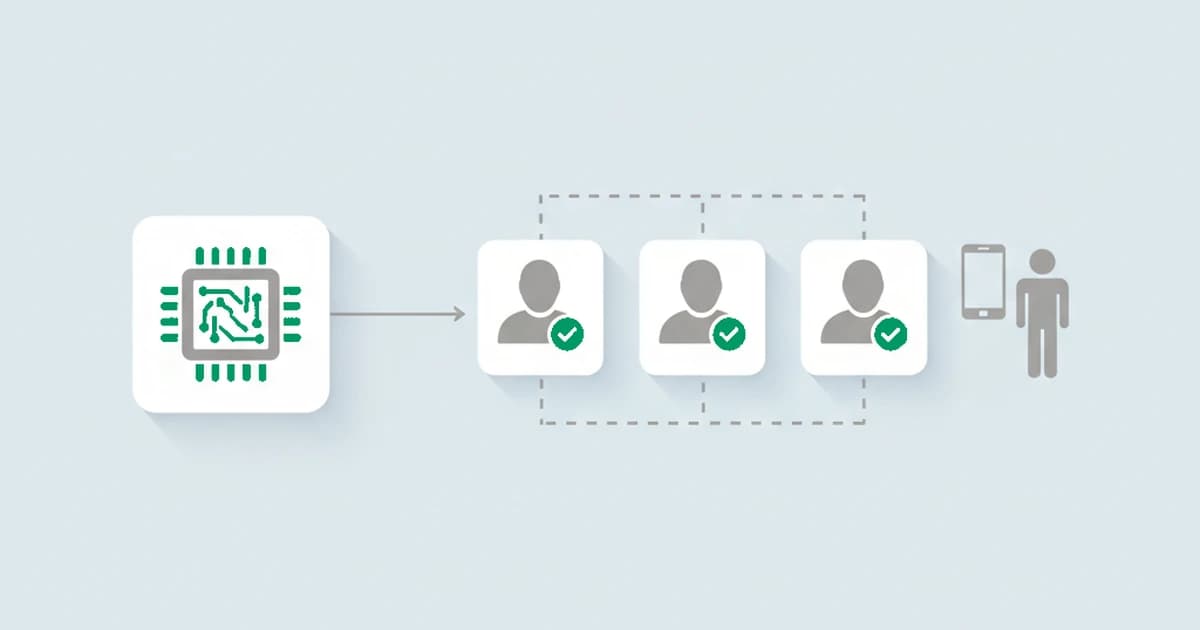
Trial farming and credit farming on an AI product mean running a stack of free trial accounts to drain the free compute credits, over and over, without ever paying. One operator signs up a hundred times, each account claims its free credits, and each of those credits is real GPU time the product pays a cloud provider for. The catch that makes it expensive is that, on an AI product, a "free" account is not free to serve: the moment it calls the model, it spends money.
This is not the in-game sense of the words, which is what a plain search returns. The AI version is one of the cleaner examples of why identity matters more than the offer. This guide explains what trial and credit farming are on an AI product, walks through the operator's own playbook, and points to where it actually gets stopped. Stopping it is the job of preventing free-trial abuse at an AI company.
We ran that loop against our own product in 2026, signing up repeatedly from one machine with a fresh email, cleared cookies, and a rotated IP on every pass. Each signup still resolved to the same device identifier, with recognition holding at 99.9% identification accuracy across those runs, and the accounts surfaced together as a Multi-accounting event. The identities were new. The machine was not, and that is the whole seam farming depends on.
Key takeaways
- Trial farming and credit farming, in this context, mean one operator running many trial accounts to repeatedly claim a product's free compute credits.
- It is a different thing from in-game credit farming, the grind for currency in games like Warframe, which dominates the term elsewhere.
- It hits AI products harder than ordinary SaaS because each farmed account spends real GPU time, so the abuse converts straight into a cloud bill.
- It is caught at the signup, by linking the hundred "new" accounts back to one operator, not by watching the compute after the credits are already burning.
What is trial farming and credit farming (not the gaming kind)?
First, the disambiguation, because the words are overloaded. In gaming, credit farming is the grind for in-game currency, repeating missions in a game to stack up credits for gear. That is the meaning behind most of the volume on the phrase, and it has nothing to do with this.
On an AI or SaaS product, the same words describe abuse: farming the free trials or free credits a product hands out to new users. The mechanic also travels under other names, trial cycling, account farming, multi-accounting, and in iGaming, gnoming, but they are one play: many identities, one operator, claiming a one-per-user offer many times. That structure has a name in the literature, the dynamic John Douceur described in The Sybil Attack at the 2002 IPTPS workshop, where a single actor forges many identities because identities are cheap to mint [2]. The AI twist is only in what the offer is worth, since here the free credit is compute the product pays for in real time.
The operator's playbook
Seen from the operator's side, farming an AI free tier is a cheap, repeatable loop, which is exactly why it scales. The steps rarely change:
- Generate throwaway identities. Disposable or plus-addressed email addresses, sometimes a pool of phone numbers, so each signup looks like a new person at no real cost.
- Reset the visible signals between accounts. Clear cookies, rotate the IP through a VPN or proxy, and in the more serious cases run an anti-detect browser that fakes a fresh device fingerprint per profile.
- Sign up at scale. Often scripted, often parallel, each account claiming the free credit balance the moment it is created.
- Spend the credits and move on. Burn the free compute, whether for personal use, to resell access, or to power another product built on top of someone else's free tier, then start the next batch.
The whole scheme depends on step two working. If every "new" account still traces back to the same device and connection, the hundred identities collapse into one, and the offer stops paying off. That is the seam detection works on.
Why it costs more on an AI product
The reason farming stings more on an AI product is simple economics, and the free-trial abuse guide covers it in full. The difference is where the cost lands:
- On ordinary SaaS, a farmed free account is a database row and some storage, close to a rounding error.
- On an AI product, the same account spends GPU seconds the instant it sends a prompt, so the cost is metered and immediate.
- At operator scale, a hundred parallel accounts turn the free tier from a marketing cost into a line on the cloud bill.
It is the recurring story behind every forum post about a trial key that ran up thousands of dollars in compute overnight. In 2025, Stripe's analysis of first-party fraud found that AI startups with self-serve signups draw far more attempted abuse than enterprise ones, for exactly this reason [1].
Where it gets caught: the signup, not the bill
Because the cost lands the moment a farmed account calls the model, the cheap place to stop it is upstream, at the signup, before any credits or API key are issued. The signal is linkage: the hundred accounts that present as new people share a device, a connection, or a behavioral fingerprint that ties them to one operator. A fresh email and a cleared cookie do not change the machine underneath, so a stable device identity sees the same actor return again and again.
This is an identity question, not a traffic one. Watching GPU usage or rate-limiting keys is your gateway's job and catches the damage after it starts; linking accounts at signup keeps the farmed ones from minting keys in the first place. The two layers complement each other, and the free-trial abuse guide lays out the full signal set and the prevention playbook. The short version: score the identity behind the signup before the credits are live.
How to stop trial farming at signup:
- Read the device and connection on each signup, before any credits or API key are issued.
- Link the new account back to the device and connection behind it, so a hundred "new" users resolve to one operator.
- Act on the linkage: hold the account, issue a smaller starter balance, or require a card.
Preventing trial farming with ShieldLabs
ShieldLabs scores each signup at the identity layer, so the accounts an operator presents as a hundred new users link back to the one device and connection behind them. One JavaScript snippet reads the device and network signals on the signup, returns a risk score from 0 to 100 with the named signals, including the risk signals, a VPN, proxy, or anti-detect browser, that farming leans on, and surfaces when a "new" account is really a returning one.
ShieldLabs scores and names the evidence. You read the score through the API and webhooks and choose the action for each case, whether to require a payment card, issue a smaller starter balance, or hold the account for review, before the GPU credits are live. The full prevention playbook lives in the free-trial abuse guide, the same identity read behind free-trial abuse prevention on any product with a free tier.
Sources
- Stripe: Analyzing first-party fraud trends: account, free trial, and refund abuse (2025)
- John R. Douceur: The Sybil Attack, published in the proceedings of the 1st International Workshop on Peer-to-Peer Systems (IPTPS), 2002
- Wikipedia: Disposable email address
Recommended
Frequently asked questions
- Is credit farming the same as in-game credit farming?
- No. In games, credit farming means grinding for in-game currency, like repeating missions in Warframe to stack credits, and that meaning dominates the term. On an AI or SaaS product, credit farming means running many trial accounts to repeatedly claim the free compute credits a product gives new users. Same words, unrelated activities.
- What is the difference between trial farming and trial cycling?
- They are points on the same scale. Trial cycling is usually one person re-creating a single trial after the last one expires to stay on the free tier. Trial farming is the industrial version: many accounts created in parallel, often scripted, to claim the free offer at volume. Both trace back to one operator behind many identities.
- Why is trial farming worse for AI products than other SaaS?
- Because the free tier has a direct per-use cost. On a normal app a fake account is a cheap database row, but on an AI product each farmed account spends real GPU time the moment it calls the model. The abuser's free access and your cloud bill are the same transaction, so farming converts straight into compute spend.
- How does ShieldLabs detect trial farming?
- ShieldLabs scores each signup and links accounts that present as new people back to the one device and connection behind them. When a new account is really a returning operator, it surfaces a risk score with the named signals, so you can choose the action before the credits are issued. The free tier covers your first 5,000 identifications.
Related articles
Remember This Device for MFA With a Persistent Device ID
Design remember this device for MFA with a revocable trust credential, persistent device context, expiry and step-up authentication for sensitive actions.

How to Detect AI Agents on a Website
Detect AI agents on a website by separating operator identity, automation evidence and authorization. Protect accounts while permitting useful public crawling.

Fraud Detection API for Web Apps: From Browser Signal to Backend Decision
Integrate a fraud detection API into web signup and login with browser collection, verified server results, signed webhooks and clear timeout handling.