

AI Token Abuse: Stop Credit Farming and Unauthorized Use

Last updated on October 29, 2026 · 10 min read
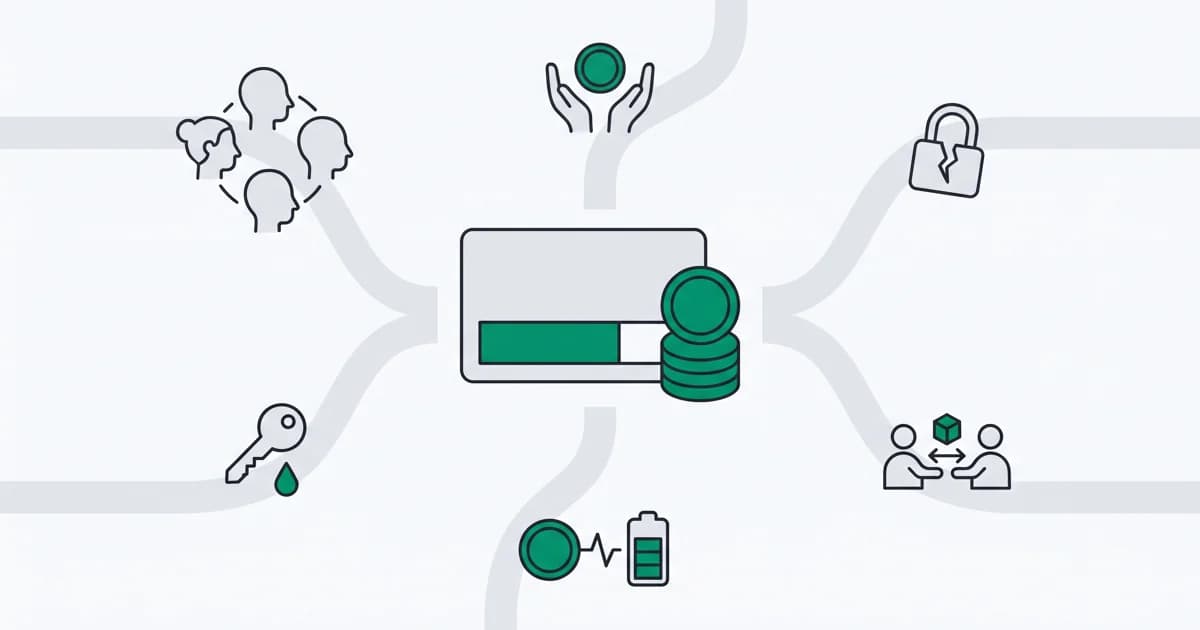
AI token abuse means obtaining or using an AI product's metered resources without permission or outside an offer's terms. It can begin with a repeated free-credit claim, an account takeover, a shared subscription, an exposed API key or a fraudulent payment. The bill rises in each case. The access problem differs.
A useful prevention plan follows the credits: who received them, who can use them, what they consumed and whether the access was legitimate. Signup checks miss compromised paid accounts. Checking only request volume misses repeated grants spread across many accounts.
This guide follows that path from grant to review, with concrete checks and two illustrative investigations. It also explains why automation alone does not prove abuse, and why issued credits are not the same as resource cost.
What is being abused: tokens, credits or credentials?
Model tokens measure the input and output a model processes. They are not login credentials. OpenAI's token guide explains that input, output, cached and reasoning tokens can affect usage and cost differently. Visible words do not tell you the full bill. Use the provider's usage record.
Credits are the product's allowance or billing unit. They may pay for text, images, jobs or other services. A credit does not have a universal token conversion or cash value. Stripe's billing credit documentation distinguishes prepaid and promotional grants and tracks the grants separately from usage-based billing.
API keys and session tokens are credentials: someone who obtains one may gain a path to spend resources, although possession of that key says nothing about the balance available, the cost of a request or whether its owner intended the usage. Keep those meanings separate when an incident is described as someone having “stolen tokens.”
The practical question is which right was violated: eligibility for a grant, access to an account, permission to use a key, or permission to consume a particular allowance. That determines where to investigate first.
Trace AI credit abuse through the product
There are several ways to reach the same pool of credits. Identify the route first.
| Route | What goes wrong | First question to answer |
|---|---|---|
| Credit farming | Related accounts repeatedly claim an introductory benefit | Did each grant meet the offer's eligibility terms? |
| Compromised account | Someone uses another customer's existing balance or billing access | Was the account holder responsible for the access and subsequent changes? |
| Prohibited shared access | A subscription or key serves users beyond its permitted scope | Does the observed use fit the account's actual plan and permissions? |
| Leaked or stolen key (LLMjacking) | A credential is used outside the owner's intended workload | Which key was exposed, and what requests used it? |
| Fraudulent payment funding | A payment enables credits or ongoing usage that later becomes disputed | Which payment authorized which access, and what happened afterward? |
| Resold access | An intermediary sells use of farmed, compromised or otherwise unauthorized access | Which grants, accounts or keys supply the service being resold? |
These routes can combine. A farmed account can be sold, and a compromised account can buy additional credits. Avoid counting one chain as several independent losses just because several teams opened a case.
The economics explain why this matters. An introductory allowance is a cost to fulfill when it is consumed, and requests can continue after the original grant or access mistake. Stripe's first-party fraud analysis identifies repeated AI trial benefits and compute costs as a particular exposure for self-serve AI businesses. Free use alone proves nothing.
Cheap automation can repeat a permitted-looking action many times. However, an accidental retry loop or a legitimate customer's batch job can also spend resources quickly. AI token abuse is an eligibility and permission problem as well as a consumption problem.
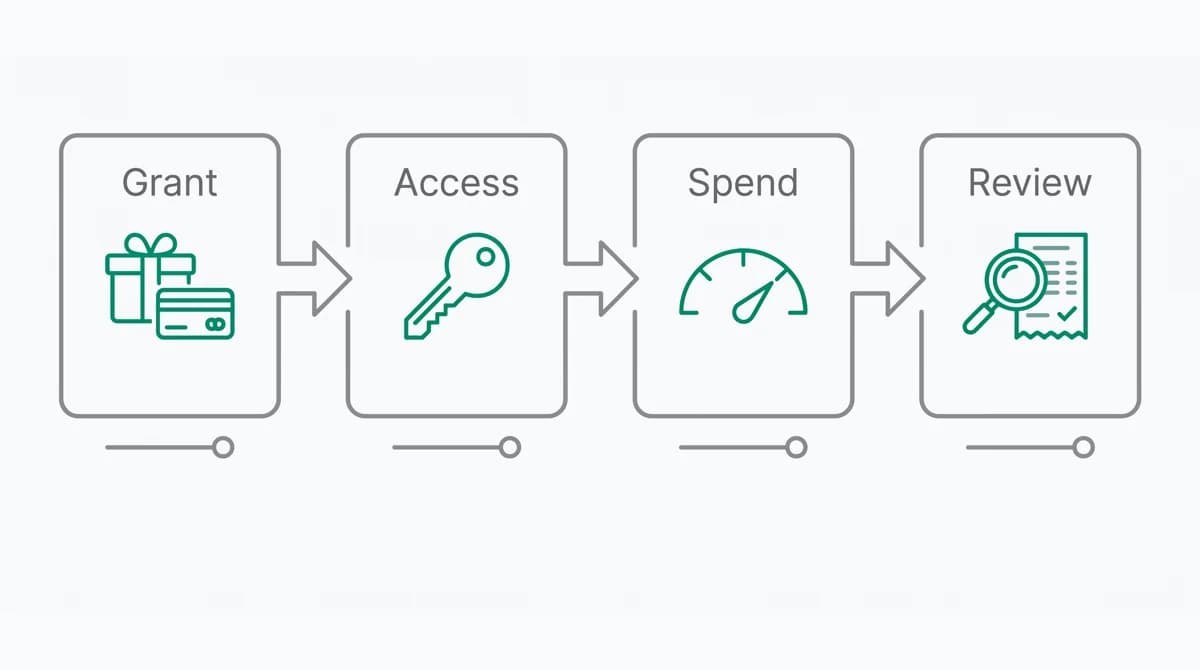
Put a check where a right is created or exercised
Before issuing a grant
Start with eligibility. Define who qualifies for the offer and record the grant once. Check related claims with account and device context, while allowing for shared equipment and legitimate organizations. A shared device does not tell you how many people are involved.
Make the grant operation safe to retry. A request sent again after a timeout should not mint another allowance. Record the offer, qualifying account, grant reference and decision so support can explain why an allowance was issued or held. The trial farming guide covers repeated introductory claims in more detail.
When granting account or API access
Protect recovery, key creation and credential changes alongside login. Use strong authentication, including passkeys or MFA where appropriate. A valid key proves possession. It does not prove the owner intended this use. Limit permissions to the workload that needs them and provide a usable revocation path.
OpenAI's key safety guidance recommends keeping secrets out of client-side environments and repositories, using controlled access, monitoring usage and rotating credentials. In an investigation, keep a non-secret key reference rather than copying the key into a ticket or log. Scan source changes and deployment artifacts for exposed secrets as part of the release process.
Before releasing paid or promotional usage
Check permission in the backend for the requested operation. A browser success screen should not be the authority that creates spendable credits. Connect the grant or pay-as-you-go access to the actual payment and account state required by your product.
Plan for delayed payment updates. Stripe's webhook documentation describes delayed payment events, retries, duplicate events and signature verification. A retry must not top up twice. A successful payment event also does not guarantee that a later dispute cannot occur.
Record subsequent reversals and restrictions explicitly. The payment gateway guide explains how payment and device evidence contribute different parts of that investigation.
While resources are being consumed
Enforce the allowance where requests are admitted, including concurrent requests. Two jobs can read the same balance before either updates it. Both may then approve work against the same credits. Use an appropriate reservation or atomic accounting design, then reconcile the recorded charge with completed work.
Bound requests, output, queued work and concurrent jobs where the workload requires it. OWASP's Unbounded Consumption guidance recommends quotas, rate limits, resource management, timeouts and monitoring. These controls contain exposure; they do not establish that every account qualified for its starting balance.
Test the limit. An alert, a per-minute throttle and a hard spend ceiling are different controls. Observe what happens when a request crosses the threshold rather than assuming that a budget setting immediately stops every in-flight job.
Two investigations that start with a usage spike
These are hypothetical examples. The account counts and credit amounts below are invented to explain the calculation; they are not customer data or model-price estimates.
Repeated promotional grants. An investigation establishes that one operator opened 36 accounts to reclaim a benefit restricted to one introductory grant, with each account receiving 20 credits and 32 of those accounts consuming 15 credits each before the team reviewed the pattern.
| Measure | Calculation | Result |
|---|---|---|
| Credits issued | 36 × 20 | 720 credits |
| Credits consumed | 32 × 15 | 480 credits |
| Unspent balance | 720 − 480 | 240 credits |
Neither 720 nor 480 is automatically a dollar loss. Calculate resource cost from the work actually completed and its cost. Keep the remaining allowance visible as exposure. Restrict confirmed repeated grants before more of the balance is consumed, with a review route for errors. The account count answers how many grants were claimed; the consumption record answers how much work was fulfilled. Neither measure, by itself, tells you the provider bill or the effect on legitimate customers. Those require their own records.
A compromised paid account. A customer reports unfamiliar usage on an established account, so the investigation starts with the access trail, credential changes and key references attached to usage, looking for the point where the customer's intended workload gave way to activity they did not authorize. If a key was exposed, revoke it, check that revocation works and rotate through a trusted workflow. Investigate whether other credentials or recovery paths were also affected.
The second case may contain no repeated signup and no failed payment. Tightening introductory eligibility would not resolve it. Restore the customer's intended access and contain the compromised credential. Check the next permitted request after recovery, too: a customer whose legitimate integration remains locked out still has an unresolved problem. A case is ready to close when the exposed path no longer works, the intended workload can continue and the team has recorded which usage it could confirm as unauthorized. Leave unproven consumption marked as unresolved.
In both cases, preserve the evidence that supports the finding. Record what remains unknown. A family sharing a computer or a customer adding a legitimate server workload should not silently become a confirmed abuse case.
AI-agent identity and the right to spend are separate
An AI agent can operate a valid customer workflow, while a recognized automated client can attempt an action outside the customer's permission and a manual session can violate an introductory offer; client type helps explain the request, but it does not settle eligibility.
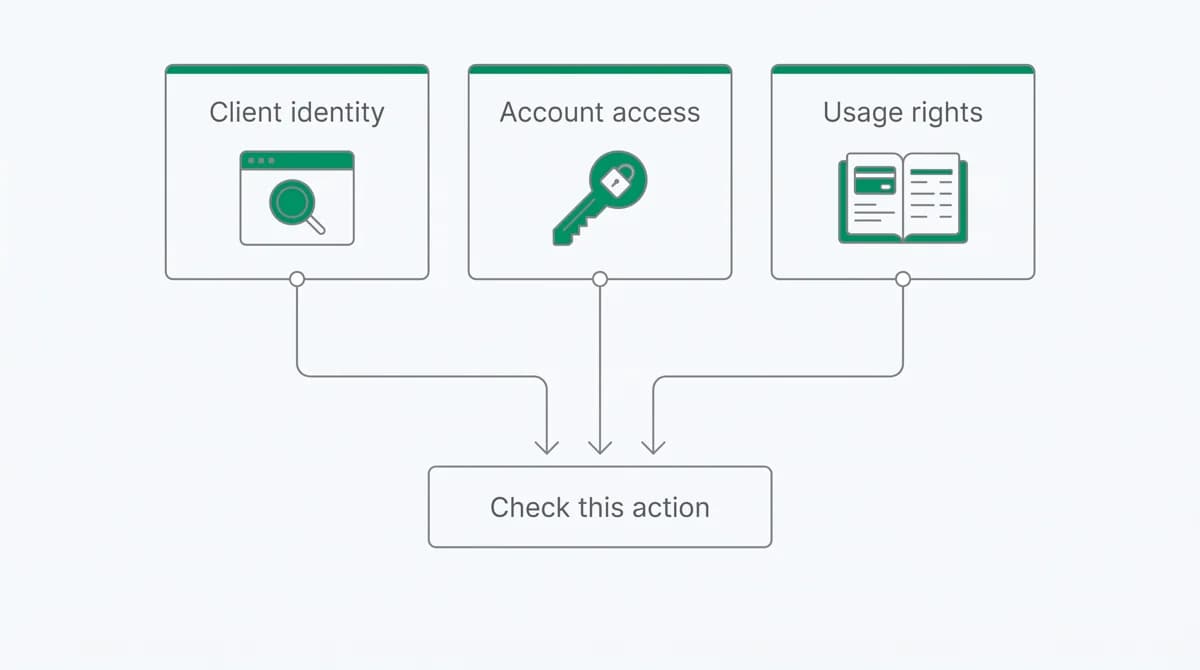
Keep three questions in the investigation:
- Client identity: which automation or client do you observe, and what supports that attribution?
- Account access: which account or credential does the request use, and did the owner intend that access?
- Usage rights: may this account spend this allowance on this operation now?
The AI-agent detection guide explains identity evidence and automation signals. The trial versus API-key abuse comparison separates controls that operate before and after a key exists.
Measure confirmed abuse and customer impact
Follow the grant or key into the usage it enabled. Keep grant reference, account reference, non-secret key reference, usage-event reference and relevant payment reference connected where available. These are application records to design, not universal fields returned by a detection service.
Track confirmed ineligible grants, unauthorized consumption, remaining exposure and affected legitimate customers separately. Review false positives, successful recovery and repeat abuse after a response. Deduplicate by the incident or affected resource so the same usage is not charged to farming, takeover and payment fraud totals simultaneously.
Collect only the investigation data you need with suitable access and retention controls. Do not put raw credentials, payment card details or entire customer prompts into a general fraud log. Useful evidence should help resolve the case without creating another exposure.
Prevent AI token abuse with ShieldLabs
ShieldLabs combines visitor and device identification, bot and AI traffic detection, named risk signals and account-level high-risk events. Multi-accounting and account sharing help investigate related benefit claims and access; account takeover adds context to suspicious account use. These account events are separate from the risk score.
AI Bot and AI Browser classifications help explain automated traffic, with owner information where established. Claimed client identity and verified attribution are distinct in the detection pipeline. That distinction is useful when reviewing an automated credit claim or account action alongside device and network evidence.
Connect that evidence to the grant, access and usage records in your backend. Use the AI free-trial workflow for repeated benefit claims and account takeover detection for suspicious use of an existing account. ShieldLabs helps block fraudulent and abusive traffic across these workflows.
Start Free with 5,000 identifications.
Sources
- OpenAI: Understanding and counting tokens
- Stripe: Billing credits
- Stripe: Analyzing first-party fraud trends
- OpenAI: Best practices for API key safety
- Stripe: Receive events in a webhook endpoint
- OWASP: LLM10:2025 Unbounded Consumption
Recommended
Frequently asked questions
- What is AI token abuse?
- AI token abuse is obtaining or consuming an AI product's metered resources without permission or outside the offer's eligibility terms. It can involve repeated promotional grants, compromised accounts, leaked API keys, prohibited shared access or fraudulent payment funding. Model tokens measure usage; credentials and account relationships explain how someone obtained access to it.
- Is AI token abuse the same as API key abuse?
- API key abuse is one route to unauthorized AI usage. A leaked key can expose an existing account's resources, while credit farming creates repeated accounts to obtain new grants. These require different controls: revoke and investigate a compromised key, and check eligibility and linked activity before issuing promotional credits.
- Does a high token count prove abuse?
- No. A legitimate batch job, long conversation, reasoning workload or customer adoption can increase consumption. Check the permitted workload, account access, grant conditions and usage records. Keep a growing bill, an operational mistake and confirmed unauthorized use as separate outcomes rather than treating every consumption spike as fraud.
- Can rate limits prevent AI credit farming?
- Rate limits contain usage within the identity or resource they measure. A per-key limit does not establish whether several accounts qualify for separate introductory grants. Combine appropriate request and spending limits with eligibility checks, account access protection and evidence connecting related claims. Test the actual enforcement behavior of each control.
- Does detecting an AI agent mean the request is abusive?
- No. AI-agent detection describes an automated client and, where supported by evidence, its origin. A permitted customer integration can be automated. A known client can also attempt an action outside an account's entitlement. Check client identity, account authorization and the right to spend credits separately.
- How should a team respond to a leaked API key?
- Revoke the exposed key, review affected usage and issue a replacement through a trusted workflow. Remove the exposure and investigate the access that made it possible. Verify that the old key no longer works. Keep secrets out of browsers, repositories and logs, and avoid disabling unrelated legitimate customer credentials without evidence.
- How does ShieldLabs help prevent AI token abuse?
- ShieldLabs connects visitor and device identification with bot and AI traffic detection, named risk signals and account-level high-risk events. Teams can investigate repeated credit claims, shared accounts and suspicious access with that evidence. The AI product's backend combines the detections with its credit grants, permissions, usage records and payment state to protect metered resources.
Related articles
How to prevent bonus, promo, and coupon abuse: a detection playbook for developers
How to prevent bonus, promo, and coupon abuse: the mechanic behind it, the signals that flag an abused offer, and how to score a claim before you credit it.
The 8 best bonus and promo abuse prevention tools in 2026
The 8 best bonus and promo abuse prevention tools in 2026, how prevention works by linking many bonus claims back to one person, and how to choose.

The 8 best free-trial abuse prevention tools in 2026
The 8 best free-trial abuse prevention tools in 2026, how prevention works by linking many trial signups back to one device, and how to choose.