

How to prevent friendly fraud with device evidence

Last updated on July 2, 2026 · 9 min read
Mastercard reports that the global cost of chargebacks to merchants is forecast to reach $42 billion by 2028, with nearly half reported as fraudulent. A large share of that is friendly fraud: a real customer who made a purchase, then disputes the charge with their bank as if it never happened. The card is genuine, the buyer is the account holder, and on paper nothing looks wrong, which is exactly why it is so hard to fight.
Friendly fraud is different from the abuse that rings of fake accounts run, and it is different from a stolen card. It is first-party: the person disputing the charge is the person who made it. This guide explains what friendly fraud is, why it is so hard to prove, the honest playbook for reducing it, and how the device behind the purchase becomes evidence when you contest the dispute.
Key takeaways
- Friendly fraud is a first-party dispute: a real customer buys something, then charges it back as unauthorized or "never received," recovering the money while keeping the goods.
- It is hard to prove because the card, the billing details, and the buyer are all genuine. The bank sees a valid cardholder disputing a valid charge.
- Prevention is mostly operational: clear billing descriptors, easy refunds and support, delivery and usage records, and card checks at purchase reduce the disputes that start in the first place.
- When a dispute does come, the strongest evidence is the link between the purchase and the account's own device. A returning device tied to the account's history says the buyer is the account holder, not an impostor.
What is friendly fraud?
Friendly fraud is when a legitimate cardholder makes a purchase and later disputes it with their bank as fraudulent or unauthorized, then keeps the product or service while the money is returned. The term is a little ironic: there is nothing friendly about it for the merchant, who loses the sale, the goods, and often a chargeback fee on top.
It goes by a few names. The card networks increasingly call it first-party fraud, because the fraud comes from the first party to the transaction, the customer, rather than a third-party thief. The common types:
- Forgotten or unrecognized charges. A shopper does not recognize a renewal or a cryptic descriptor and disputes it instead of asking.
- Household or authorized use. A family member used the card, and the account holder disputes a charge they did not personally make.
- Item not received or not as described. A buyer claims a delivered order never arrived, or was wrong, to get the money back.
- Deliberate abuse. Someone buys with the full intention of charging it back later to keep the goods for free.
That range matters, because friendly fraud is a spectrum from honest confusion to intentional abuse. A customer who genuinely does not recognize a charge is not the same as one who games the dispute process on purpose, and the response to each is different. What they share is the mechanism: a real cardholder, a real card, and a dispute the bank has little reason to question.
Why friendly fraud is so hard to prove
Friendly fraud is hard to prove because every signal a fraud system normally relies on comes back clean. The card is valid, the billing address matches, the CVV checks out, and the person filing the dispute is the actual account holder. There is no stolen credential to flag and no mismatch to catch, so the tools built to stop third-party fraud have nothing to grab onto.
The dispute process itself leans toward the cardholder. When a customer tells their bank they did not authorize a charge, the bank generally issues a provisional refund and asks the merchant to prove otherwise. The burden of proof lands on the business, and it lands after the fact, once the goods have shipped or the service has been used. Friendly fraud is growing for the same reason: Juniper Research expects friendly fraud to make up 28 percent of all chargebacks globally by 2031, up from 22 percent in 2026, as more consumers learn how easy the dispute path is. It is already a large share of fraud overall: LexisNexis Risk Solutions reported that first-party fraud has doubled in a year to 36 percent of all fraud events, the category that friendly fraud sits inside.
The result is a gap. A business can do everything right at checkout and still lose the dispute, because "the payment was valid" is not the same as "the cardholder authorized it and received what they paid for." Closing that gap means holding evidence that ties the specific purchase to the specific customer, which is where the account's own device comes in.
The contrast with a stolen-card case is what makes the device the deciding evidence:
| Friendly (first-party) fraud | Stolen-card (third-party) fraud | |
|---|---|---|
| Who made the purchase | The genuine cardholder | A third party using stolen credentials |
| Card and billing checks | All pass | Often pass |
| Who there is to identify | No impostor to catch | The impostor |
| Device behind the purchase | The account's own familiar device | A device the account never used |
The honest playbook: reducing friendly fraud before it starts
Most friendly fraud is prevented operationally, not by a detection model, and the first-party ones especially respond to plain good practice. The disputes you never receive are the cheapest to win. The measures that actually move the number:
- Clear billing descriptors. A large share of "I don't recognize this charge" disputes come from a cryptic name on the statement. Make the descriptor match your brand so customers recognize their own purchase.
- Easy refunds and responsive support. Many customers dispute because charging back felt easier than reaching you. A visible refund path and fast support redirect those cases before they become chargebacks.
- Delivery and usage records. Keep proof of delivery, tracking, login and usage timestamps, and IP and device records tied to the order. This is the evidence you submit if a dispute is filed.
- Card and identity checks at purchase. AVS and CVV matching, and 3-D Secure where it fits, confirm the card details at the moment of sale and shift some liability, though they do nothing once a genuine cardholder decides to dispute.
- Set expectations on subscriptions. Renewal reminders, clear cancellation, and pre-billing notices cut the "I forgot I was subscribed" disputes that make up a big slice of first-party fraud.
None of these catch the deliberate abuser who buys intending to charge back. For that, and for winning the disputes that do come, you need something the operational measures do not provide: proof of who was behind the purchase.
The device is the evidence a valid card cannot give you
Here is the part that separates friendly fraud from every other kind. The problem is not a fake identity; it is a real one denying its own action. So the useful question is not "is this card stolen" but "is the device disputing the charge the same device that has used this account all along."
A persistent device identifier answers that. When a returning customer signs in and buys from the same handful of devices they have always used, and one of those devices made the disputed purchase, that is a strong, specific record that the account holder authorized the charge. It is the difference between "a valid payment happened" and "this customer's own device completed this order," which is the evidence a representment actually needs.
The card networks have written this into their rules. Visa's Compelling Evidence 3.0, in force since 2023, lets a merchant contest a card-absent fraud dispute with a history of prior undisputed transactions, and it names device ID or fingerprint and IP address among the core data elements, requiring that at least one of the matched points be the device or the IP. That turns "the purchase came from the account's own device" from an internal hunch into evidence an issuer is obligated to weigh.
We tested this against the reset tricks a disputing customer never bothers with. When we measured a returning customer across cleared cookies and a rotated IP, the persistent device identifier still tied the new session back to the same account's device, because it is derived from the device rather than stored in the browser. That link is exactly what a representment needs, and it matters more every year, with friendly fraud projected to reach 28 percent of all chargebacks.
It cuts the other way too, and that is what keeps it honest. If a purchase came from a device the account had never used, over an anonymized connection, the dispute may be genuine third-party fraud rather than friendly fraud, and the customer deserves the refund. The device record does not assume guilt. It tells you which story the evidence supports, so you contest the disputes you can prove and refund the ones you cannot.
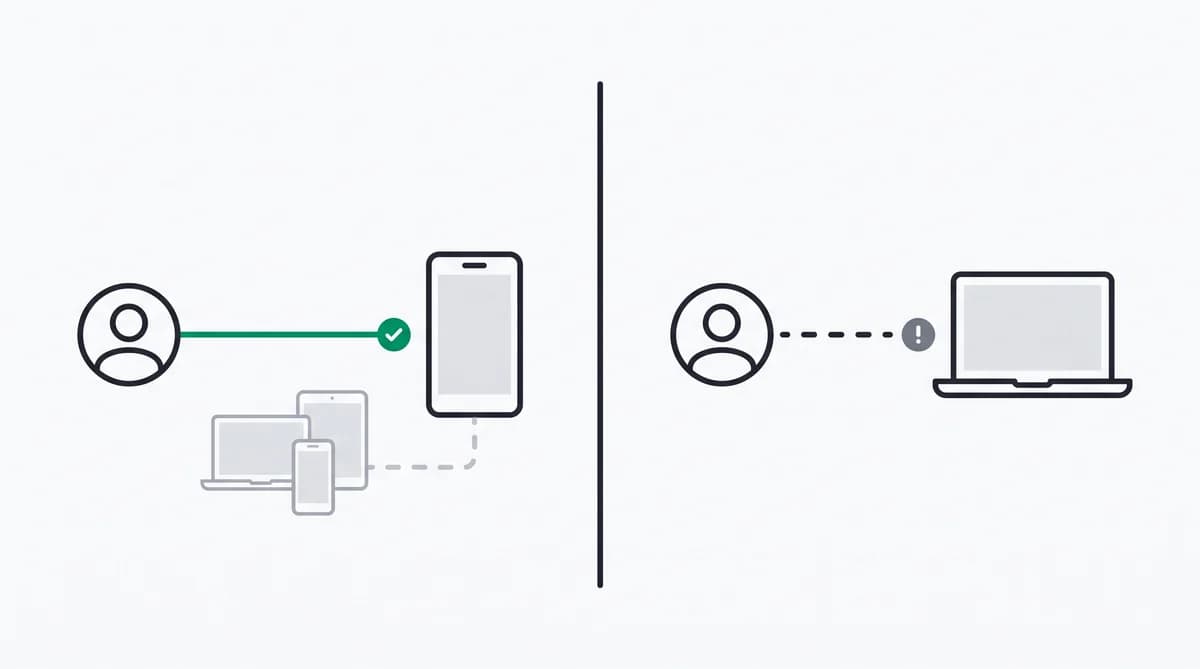
Read at the moment of purchase, the same signals also help you sort the spectrum. A checkout from a device seen across many unrelated accounts, or behind an anti-detect browser, looks less like an honest customer who will forget a renewal and more like organized abuse. That read informs how much friction or review a high-value order deserves before it ships.
Which industries friendly fraud hits hardest
Friendly fraud follows recurring billing and easy delivery, so the businesses hit hardest are the ones where a charge is simple to dispute after the value is already in hand:
- Subscriptions and SaaS. Forgotten renewals and cryptic descriptors drive the single biggest slice of first-party disputes, where a customer does not recognize a charge they set up months ago.
- E-commerce and retail. "Item never arrived" and "not as described" disputes let a buyer keep a physical product and recover the money after it ships.
- Digital goods and gaming. Instant delivery and in-game purchases get disputed as unauthorized long after the value is consumed, and a household member's spending is a common trigger.
- Travel and hospitality. High-ticket bookings get disputed after the trip is taken, where the amount makes even a single chargeback expensive.
- Food delivery and rideshare. High order volume and a low per-order value make "never arrived" disputes easy to file at scale.
Across all of them the card and the cardholder check out clean, so the device tying the purchase to the account's own history is the evidence that separates an honest dispute from abuse.
Preventing friendly fraud with ShieldLabs
ShieldLabs gives your team the device evidence that a valid card cannot. You add one JavaScript snippet to your checkout and account pages, tie it to your customer and order IDs, and each visit returns persistent identification plus a risk score from 0 to 100 with the named signals behind it. The identifier links a purchase back to the account's own returning device even after cleared cookies and a rotated IP, so when a customer disputes a charge their device made, you hold the record that the buyer was the account holder.
The same read at checkout surfaces the risk signals, a VPN, proxy, or anti-detect browser, and a device seen across many accounts, which ShieldLabs detects as Multi-accounting, that separate an ordinary customer from deliberate abuse before a high-value order ships. ShieldLabs scores the session and names the evidence, and your dispute-management process handles the chargeback outcome. You read the risk score and named signals through the API and webhooks and choose which orders to hold for review and which disputes to contest. The free tier covers your first 5,000 identifications.
Sources
- Mastercard: Scaling efforts to combat friendly fraud (2025)
- Juniper Research: Friendly Fraud to Make Up 28 percent of Chargebacks Globally by 2031 (2026)
- Wikipedia: Friendly fraud
- Wikipedia: Chargeback
- LexisNexis Risk Solutions: Global State of Fraud and Identity
Frequently asked questions
- What is an example of friendly fraud?
- A common example is a subscription renewal. A customer signed up months ago, forgets about it, sees the renewal on their statement, does not recognize it, and disputes it with their bank as an unauthorized charge instead of asking for a refund. Other examples are a buyer who claims an item never arrived when tracking shows it did, or a household member using the card without the account holder's knowledge. In each case a real cardholder disputes a charge they or their household actually made.
- Is friendly fraud illegal?
- Deliberately disputing a charge you know is valid to keep both the money and the goods is a form of fraud and can be treated as such, though banks and merchants rarely pursue small cases and much friendly fraud is honest confusion rather than intent. In practice it is handled as a payment dispute between the customer, the bank, and the merchant far more often than as a criminal matter, which is part of why it is so common.
- How is friendly fraud different from a stolen card?
- With a stolen card, a third party uses credentials the real owner never authorized, so the goal is to catch the impostor. With friendly fraud, the genuine cardholder made the purchase and later disputes it, so there is no impostor to catch. The card checks all pass either way; what separates them is whether the device and history behind the purchase belong to the account holder or to someone else.
- Can you prevent friendly fraud entirely?
- No, because you cannot stop a real customer from filing a dispute with their bank. What you can do is reduce how many disputes start, with clear billing descriptors, easy refunds, and delivery records, and hold evidence that ties each purchase to the account's own device so you can contest the disputes that are not genuine. Prevention here means fewer disputes and stronger evidence, not a guarantee.
- Does ShieldLabs stop chargebacks?
- ShieldLabs gives your team the device evidence to contest chargebacks. It gives every purchase persistent identification and a risk score with the named signals, so you can tell an account's own device from an unfamiliar one and choose which disputes to contest. Your representment process acts on that evidence, and the free tier covers your first 5,000 identifications.
Related articles

Stop Sybil Attacks Without KYC: Evidence-First Prevention for Marketplaces
Build an evidence-first defense for marketplace Sybil attacks: payment-weighted reputation, graph-based detection, device and anonymity signals, plus...


How to stop multi-accounting in online gambling: sportsbooks, poker, and casinos
How to stop multi-accounting in online gambling: why players open multiple betting accounts, the signals that link them to one person, and an operator playbook.

How to detect betting bots on sportsbooks, casinos, and poker sites
How to detect betting bots: the five kinds operators face, the device, network, and timing signals that expose them, and how to stop bot-driven abuse.