

How to detect ad fraud: types, cost, and the signals that catch it

Last updated on July 6, 2026 · 12 min read
Ad fraud is any attempt to defraud digital advertising by generating fake clicks, impressions, conversions, installs, or leads that no real person ever made, so the budget pays out for activity that was never going to convert. It is not a rare edge case. Juniper Research estimated that 22 percent of digital advertising spend in 2023 was lost to fraud, roughly $84 billion worldwide.
Some of it is automated and some is run by hand, but the result is the same: a campaign report that looks healthy because the fake activity is mixed in with the real. In years marketing B2B products, I measured how much of a paid channel's "performance" disappeared once invalid traffic was filtered out, and the gap was always bigger than the dashboard suggested. This guide explains what ad fraud is, the main types, what it costs, and how it is detected.
Key takeaways
- Ad fraud is fake advertising activity, clicks, impressions, conversions, installs, or leads, generated to drain budgets or collect payouts without any real intent behind it.
- It runs on two engines: bots and automation on one side, and human click farms and fraudulent operators on the other. Both produce activity that looks legitimate in a report.
- The cost is large and mostly invisible: an estimated fifth or more of digital ad spend, lost not just as wasted budget but as poisoned attribution data that misdirects the next campaign.
- No single check catches all of it. Bot and invalid-traffic filtering, traffic-quality scoring, and identity and risk signals each cover a different slice.
What is ad fraud?
Ad fraud is the practice of fraudulently creating or simulating online advertising events, impressions, clicks, conversions, or installs, to take money from advertisers and publishers. The defining trait is intent: the activity is manufactured to look like a real person engaging with an ad when no one did, so the advertiser pays and the fraudster collects.
It spans the whole funnel. At the top, fake impressions and clicks inflate the numbers a publisher or an ad network bills for. Further down, fake conversions, app installs, and lead-form submissions trigger the payouts that performance campaigns are built to reward.
The common thread is that the activity is fabricated, and it is mixed in with genuine traffic so it is hard to separate after the fact. Advertising fraud and ad fraud mean the same thing; the term covers both the desktop-and-web and the mobile-app sides of the problem.
How much does ad fraud cost?
Ad fraud is one of the largest and least-visible costs in digital marketing. Juniper Research put the share of digital ad spend lost to fraud at 22 percent in 2023, about $84 billion globally, and the figure has trended up year over year as more spend moves online. The reason it stays invisible is that fraud inflates the same metrics teams use to judge success, so a channel that is quietly half-fake can read as a top performer.
The cost is not only the wasted budget. Every fake click or conversion also corrupts the attribution data a marketing team steers by:
- Wasted spend. Money pays out for activity that was never going to convert, directly and immediately.
- Poisoned attribution. Fake conversions and installs make a fraudulent channel look efficient, so the next budget cycle pours more money into it and away from the channels that actually work.
- Bad optimization. Automated bidding and lookalike models trained on fraudulent signals learn to chase more of the same fake activity.
- Damaged trust. When the gap between reported and real performance finally shows up in revenue, it erodes confidence in the whole measurement stack.
What are the main types of ad fraud?
Ad fraud takes many forms, but they cluster into a handful of recognizable categories. Naming them helps, because each leaves a slightly different trail.
| Type | What it is |
|---|---|
| Click fraud | Repeated fake clicks on an ad, by bots or by people, to drain a competitor's budget or inflate a publisher's payout. The most common form of ad fraud. |
| Impression fraud | Charging for ad views that no human saw, including ad stacking (many ads layered in one slot) and pixel stuffing (an ad crammed into a 1x1 pixel). |
| Invalid traffic (IVT) | The umbrella term for non-human or non-genuine traffic, split into general invalid traffic (known bots, crawlers) and sophisticated invalid traffic (bots built to mimic human behavior). |
| Fake installs and mobile fraud | App installs faked to collect a payout, including install hijacking, click injection, and click spam that steals credit for an organic install. |
| Affiliate and lead-gen fraud | Fabricated referrals, sign-ups, or lead-form submissions run across many fake identities to collect per-action payouts. |
| Domain spoofing | Misrepresenting a low-value site as a premium one so an advertiser pays a premium rate for junk inventory. |
| Cookie stuffing and ad injection | Dropping affiliate cookies a user never earned, or injecting ads into pages without the publisher's consent. |
The line worth drawing is between the automated end and the human end. Click fraud, impression fraud, and most invalid traffic are bot-driven and need bot and IVT filtering. Affiliate fraud, lead-gen fraud, and human click farms are run by people using real-looking browsers and accounts, which is a different detection problem entirely.
How does ad fraud work?
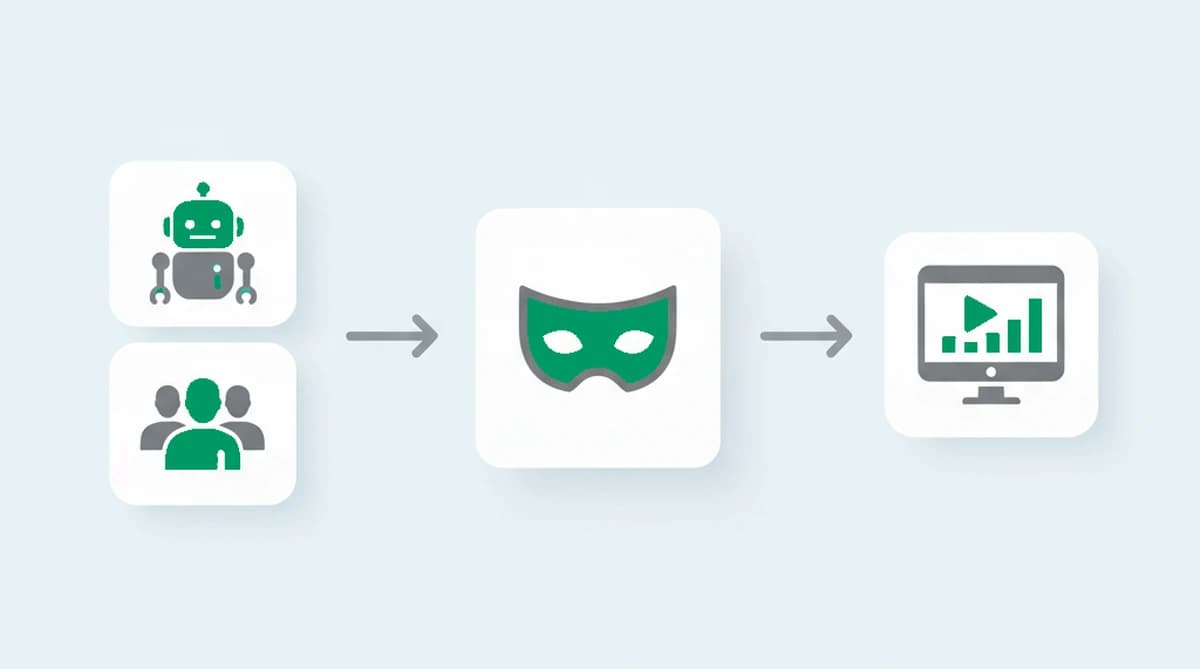
Ad fraud works by manufacturing advertising activity at scale and routing it through the same supply chain that carries legitimate traffic. On the automated side, botnets and headless browsers generate clicks and impressions, often from compromised devices or rented infrastructure, and sophisticated bots mimic human mouse movement and timing to slip past basic filters. The 2025 Imperva Bad Bot Report found automated bot traffic made up 51 percent of all web traffic, the raw material of the automated end. On the human side, click farms pay people to click ads, install apps, or fill out lead forms, and operators run many "different" users from a small number of machines.
What ties both sides together is the need to look like many separate, legitimate people. To do that at scale, the activity is routed through proxies, VPNs, and datacenter connections to vary the apparent location, and through anti-detect browsers that spoof the device fingerprint so each session looks like a fresh user. The fraud has to hide behind anonymity and fabricated identity, and that is exactly the layer that gives a coordinated operation away: the cheap-to-change attributes vary per session while the device and network underneath repeat.
When we ran click-farm-style traffic through anti-detect browsers and datacenter proxies against our own detection, that seam held: the cheap-to-change attributes varied on every session while the device and network underneath stayed put, so many "separate" users still collapsed onto one device with 99.9% identification accuracy. Whatever the operation swaps on the surface, the repeat underneath is the part it cannot reissue per session, which is why the anonymized layer is where a coordinated campaign shows through.
Who does ad fraud hurt?
Ad fraud takes from everyone in the chain except the fraudster.
- Advertisers pay for clicks, impressions, and conversions that never came from a real prospect, and then misallocate the next budget based on the poisoned numbers.
- Publishers with genuine audiences lose trust and revenue when fraudulent inventory floods the market and drives down the value of every ad slot.
- Ad networks and platforms carry the reputational and financial cost of fraud that rides their pipes, and spend heavily to filter it.
- Real users see a worse experience as fraud funds low-quality sites and aggressive ad injection.
How is ad fraud detected and prevented?
No single technique catches everything, so a real defense layers several, each covering a different slice of the problem.
- Bot and invalid-traffic filtering. Industry IVT measurement, accredited against standards from bodies like the Media Rating Council, screens known bots and sophisticated automation out of the counted traffic. This is the front line against the automated end.
- Traffic-quality and behavioral analysis. Sudden spikes, abnormal click-to-conversion ratios, impossible session timing, and high bounce with inflated click-through are the patterns that flag a fraudulent source.
- Mobile measurement partners. On the app side, attribution providers apply fraud filters to catch install hijacking, click injection, and click spam before a payout fires.
- Identity and risk signals. Reading whether a click or install arrives over a VPN, anonymous proxy, or datacenter connection, through an anti-detect browser, or from a device already seen behind other "new" users catches the anonymized and human-click-farm slice that behavioral filters alone can miss.
- Lists and reputation. Blocklists of known fraudulent IPs, domains, and placements raise the cost of the cheapest, highest-volume fraud.
The takeaway is that ad-fraud defense is correlation, not one check. The automated end needs bot and IVT filtering; the human and anonymized end needs identity and risk signals; and the strongest setups read both.
Detecting the anonymized slice of ad fraud with ShieldLabs
ShieldLabs is built for the hardest slice: the fraud that hides behind automation, anonymity, and fabricated identity, which is where bot traffic, human click farms, fake-lead operations, and repeat-device click fraud live.
It runs on your landing page or signup flow through one JavaScript snippet, and it scores every visitor on the first visit. Each visit returns a risk score from 0 to 100 with the risk signals behind it: a VPN, an anonymous proxy, a datacenter connection, or an anti-detect browser. At the center is a persistent device identifier that ties a "fresh" click or signup back to a device already seen, so a click farm running many "users" from a few machines reads as one device behind many sessions, surfaced through ready-made multi-accounting detection, one of the four High-Risk Events.
You read the score through the API and webhooks and choose the action for each high-risk click or lead, so anonymized or low-quality traffic is flagged before it poisons your attribution data. It surfaces the evidence, which is what lets it sit alongside your IVT filtering and add the device, identity, and anonymity read that list-based filtering does not produce. The same angle runs on the ad fraud prevention solution page.
See which channels bring anonymized or low-quality traffic
Scoring each click is the detection. The dashboard is where it turns into a budget decision you can make without writing a rule, because it shows your traffic quality broken down the way ad spend is actually allocated.
- Risk by channel. Each acquisition channel, Google Ads, Meta, TikTok, LinkedIn, organic, referral, or direct, carries its own risk badge, so you can see at a glance which source brings the most anonymized or duplicated traffic and shift budget before the next campaign commits.
- A trusted-to-dangerous split. Every request lands in a Trusted, Suspicious, or Dangerous band, so the share of your traffic that is anonymized shows up as one distribution instead of a guess.
- The connection and anonymity mix. The breakdown of VPN, proxy, and datacenter connections behind your visitors sits in its own view next to the channel data, alongside the source details, the referrers and UTM parameters, behind each click.
- A trend, not a one-off. Because it updates as traffic arrives, a channel that quietly turns fraud-heavy reads as a rising line rather than a number you only notice at reconciliation.
The value is visibility before action: you can see how much of your paid traffic is real, and where the fake share concentrates, before deciding what to do about it. That is what keeps invalid clicks from quietly distorting the CAC, ROAS, and cohort numbers your team steers by.
Sources
- Business of Apps, citing Juniper Research: Ad Fraud Statistics (2025)
- Wikipedia: Ad fraud
- Media Rating Council: Invalid Traffic Detection and Filtration Standards (industry standard)
- Imperva: 2025 Bad Bot Report (2025)
Recommended
Frequently asked questions
- What is an example of ad fraud?
- A common example is click fraud: a script or a paid click farm clicks a competitor's search ads to drain the daily budget, or a publisher's own ads to inflate the payout. The clicks come from real-looking browsers, often routed through proxies or anti-detect browsers so each looks like a separate person, but none was ever a genuine prospect.
- What is the most common type of ad fraud?
- Click fraud is generally the most common type. It is the act of generating fake clicks on an ad, by bots or by people, with no intention of converting, which inflates click-through rates and drains budgets. It is common because it is cheap to produce and hard to tell from genuine clicks without reading the traffic behind them.
- Is ad fraud illegal?
- In many places it is. Ad fraud can fall under fraud, computer-misuse, and deceptive-marketing laws, and large operations have been prosecuted, but enforcement is hard because it crosses borders and hides behind anonymized infrastructure. For most advertisers the practical defense is detection, not legal action.
- Why is ad fraud bad for advertisers?
- Beyond the wasted spend, ad fraud corrupts the data a marketing team relies on. Fake conversions make a fraudulent channel look efficient, so budget flows toward it and away from channels that work, and automated bidding learns to chase more fake activity. The damage compounds until the gap shows up in revenue.
- How does ShieldLabs help with ad fraud?
- ShieldLabs scores the post-click session that reaches your page, whether from an ad or a signup, for bot and automation signals and risk signals, a VPN, proxy, or anti-detect browser, and ties it through persistent identification, so bot, anonymized, and click-farm traffic is flagged before it reaches your attribution data. It adds the device, identity, and anonymity read that complements the invalid-traffic filtering your ad stack runs.
Related articles
Remember This Device for MFA With a Persistent Device ID
Design remember this device for MFA with a revocable trust credential, persistent device context, expiry and step-up authentication for sensitive actions.

How to Detect AI Agents on a Website
Detect AI agents on a website by separating operator identity, automation evidence and authorization. Protect accounts while permitting useful public crawling.

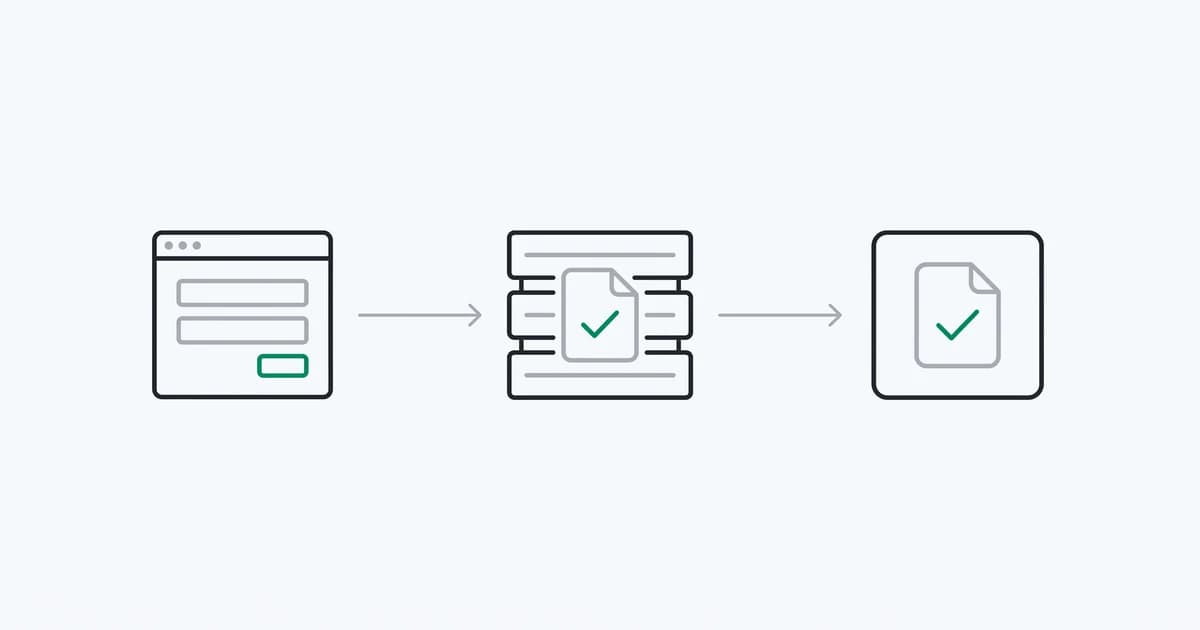
Fraud Detection API for Web Apps: From Browser Signal to Backend Decision
Integrate a fraud detection API into web signup and login with browser collection, verified server results, signed webhooks and clear timeout handling.